Discovery: Two thumbnail-sized bird figurines carved from mammoth ivory were recovered at Hohle Fels in 2025 from Aurignacian layers dated to about 40,000 years ago. Significance: Each carving measures under half an inch, demonstrating exceptional miniature ivory-carving skill and careful observation of bird anatomy and behavior. Interpretation: One figure may depict a ptarmigan; the other shows outstretched wings that could indicate flight, landing or courtship. Display: The pieces will be exhibited in Blaubeuren through April 2027.
Tiny Mammoth-Ivory Bird Figurines From Ice Age Unearthed at Hohle Fels
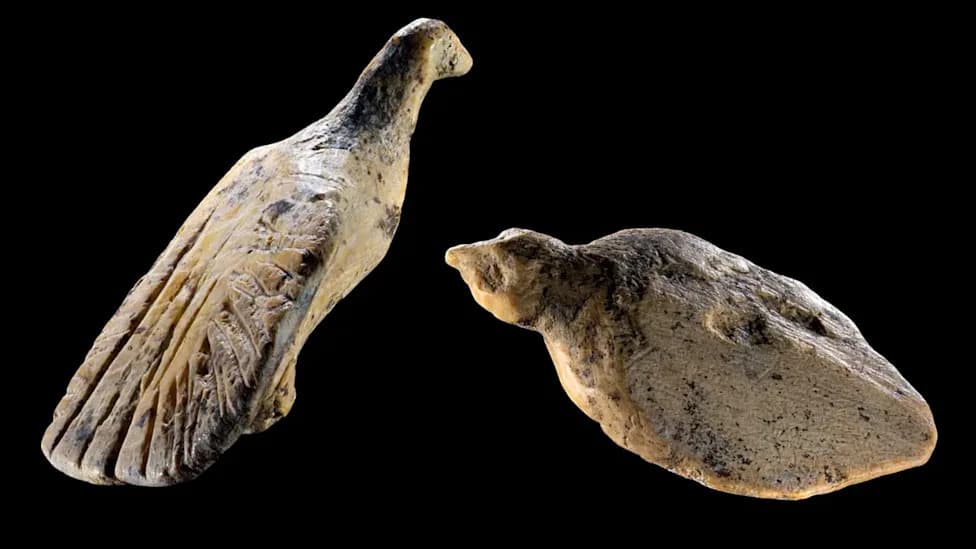
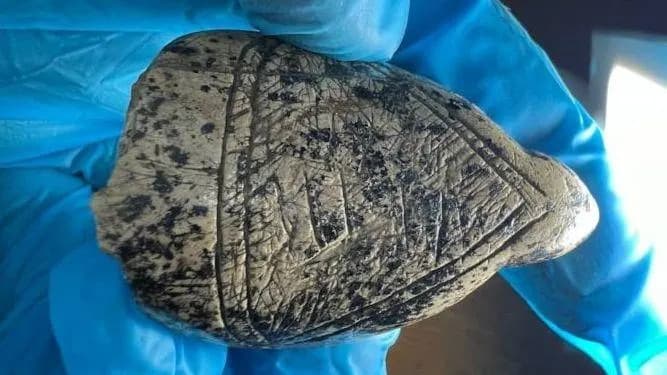
Two bird figurines carved from ivory found at the site of Hohle Fels Cave, approximately 40,000 years old.
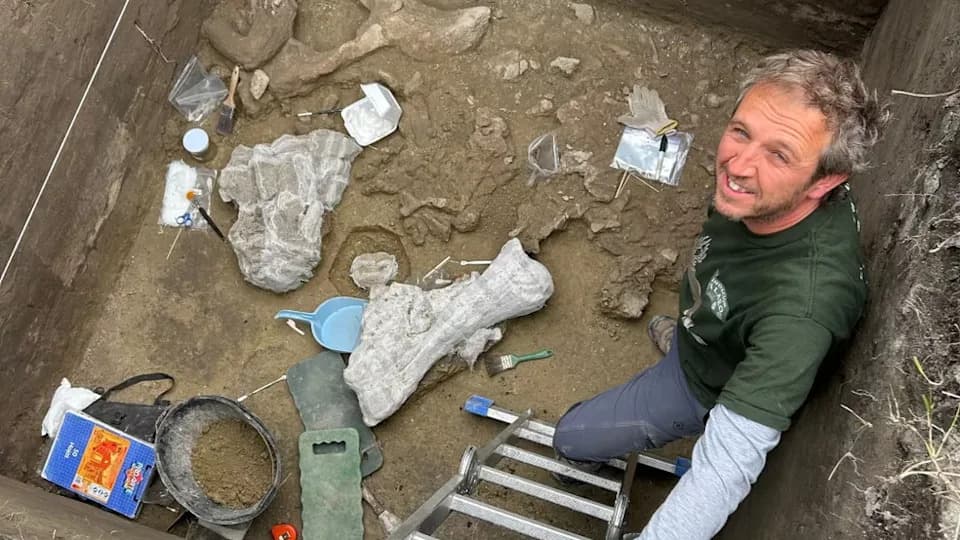
For decades, the Hohle Fels cave in southwestern Germany has been a rich source of Ice Age art and artifacts. Excavations at the site have produced ancient musical instruments, personal ornaments and even the world’s oldest known human figurine. In 2025, archaeologists added two exceptionally small bird carvings to that list: thumbnail-sized sculptures carved from mammoth ivory and recovered from deposits dated to roughly 40,000 years ago.
Miniature Mastery From the Aurignacian
The pair of carvings came from Aurignacian layers—one of the earliest cultural phases documented in Europe—and were found less than five feet (about 1.5 meters) apart. Each figurine measures under half an inch (under ~12.7 mm), far smaller than the typical 1–4 inch (2.5–10 cm) figurines known from this period. Their size and fine detail highlight remarkable skill in miniature ivory carving.
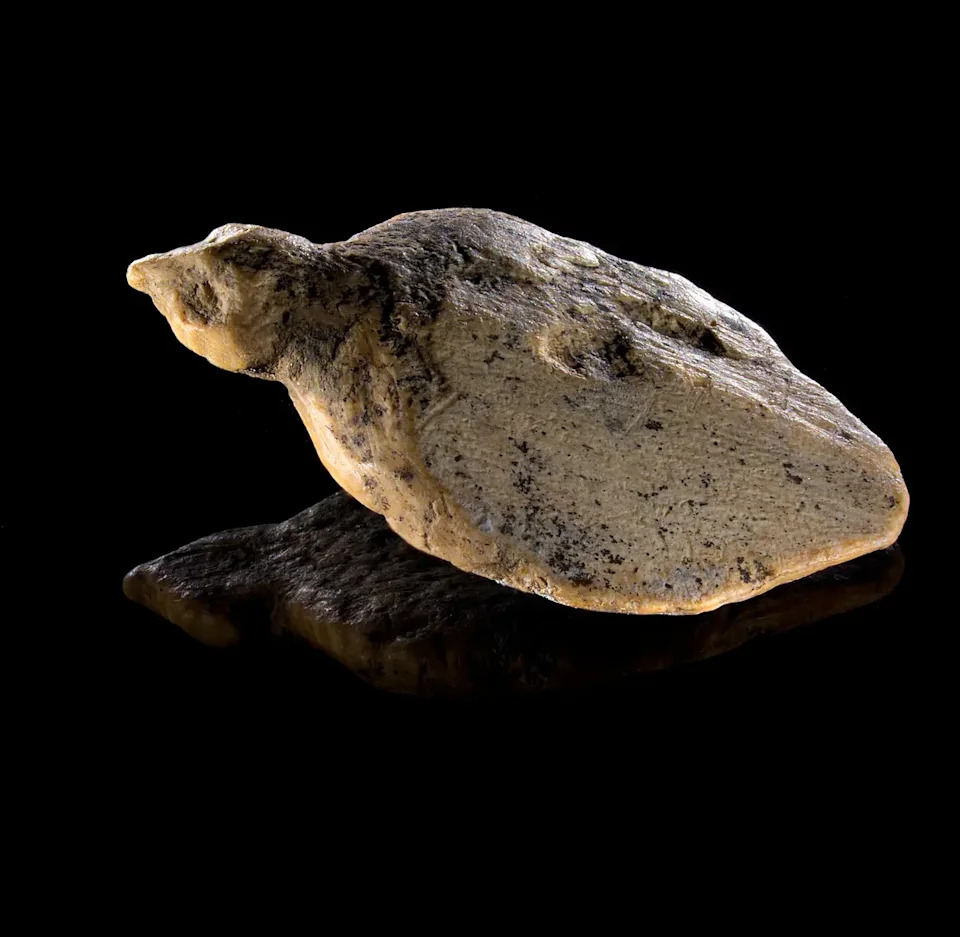
Depiction of a lying bird from the Ice Age site of Hohle Fels.Image: University of Tübingen
"The figurines demonstrate that the earliest artists were skilled ivory-carvers, who could depict delicate motifs in miniature form," said Nicholas Conard, an archaeologist at the University of Tübingen who led the excavation.
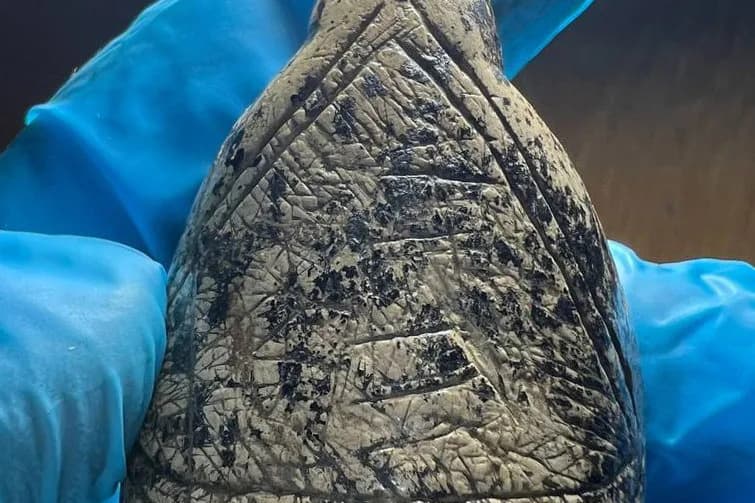
One carving appears intact and shows a bird in a brooding posture; the other is incomplete but displays outstretched wings that could indicate flight, landing or a courtship display. Because they were recovered so close together and share stylistic features, the researchers suggest they may have been made by the same artist.
Species and Cultural Context
The team proposes that one figure may represent a ptarmigan, a grouse family bird that is commonly depicted among Hohle Fels artifacts and still occurs in the region today. The second carving could also be a ptarmigan, another member of the grouse family, or even a bird of prey. Regardless of precise identification, the miniatures offer a rare glimpse into the Ice Age fauna of the region and how people observed and incorporated birds into their lives.
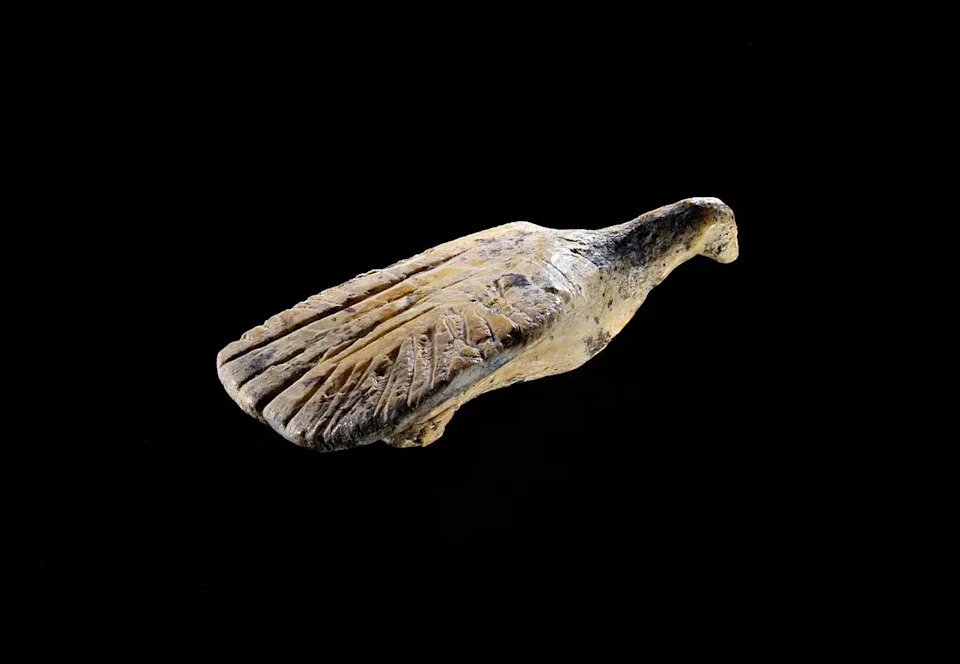
Depiction of a bird with outstretched wings from the site of Hohle Fels Cave.Image: University of Tübingen.
"Our region and landscape have always been the home of a vast range of birds, and nearby Lake Schmiechen is today a bird sanctuary," said Stefanie Kölbl, managing director of the Museum of Prehistory and Ice Age Art in Blaubeuren. "Even 40,000 years ago birds were here. Their song filled the air, and some species came in annual migrations. The inhabitants sometimes used hollow bird bones and mammoth ivory to make flutes that produced magical sounds."
Despite—or because of—their tiny size, the carvings raise intriguing questions about their original purpose. Were they charms or personal talismans? Group emblems or identity markers? Or did they serve a symbolic, ritual or educational role? Further excavation and study at Hohle Fels may provide additional context.
The two bird figurines are scheduled to be on public display at the Museum of Prehistory and Ice Age Art in Blaubeuren through April 2027.
Help us improve.