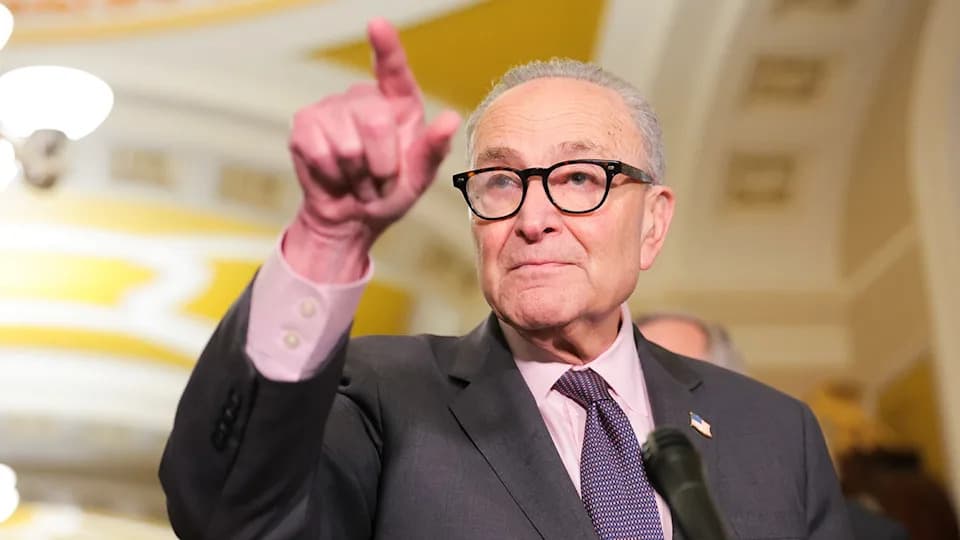
Senate Democrats, led by Minority Leader Chuck Schumer (D-N.Y.), voted down a GOP amendment that would have required identification to cast ballots in federal elections — a measure Republicans framed as a straightforward "voter ID" test. The amendment, offered by Sen. Jon Husted (R-Ohio) and attached to late-night floor activity tied to the SAVE America Act, failed on party lines.
What Happened
In the early hours of Saturday, Republicans made a last-minute push to pass a narrowed voter ID proposal. Schumer and every Senate Democrat voted against the Husted amendment, even though Schumer has publicly said that "Democrats support voter ID" and referenced similar language in past legislation such as the Freedom to Vote bill.
What the Amendment Would Do
The Husted amendment would have prohibited state and local election officials from providing a ballot for federal contests unless a voter presented an accepted form of identification. The amendment listed qualifying documents including an unexpired driver's license with photo, an unexpired state-issued photo ID, a valid passport, a valid military or veteran photo ID, and an unexpired tribal photo ID.
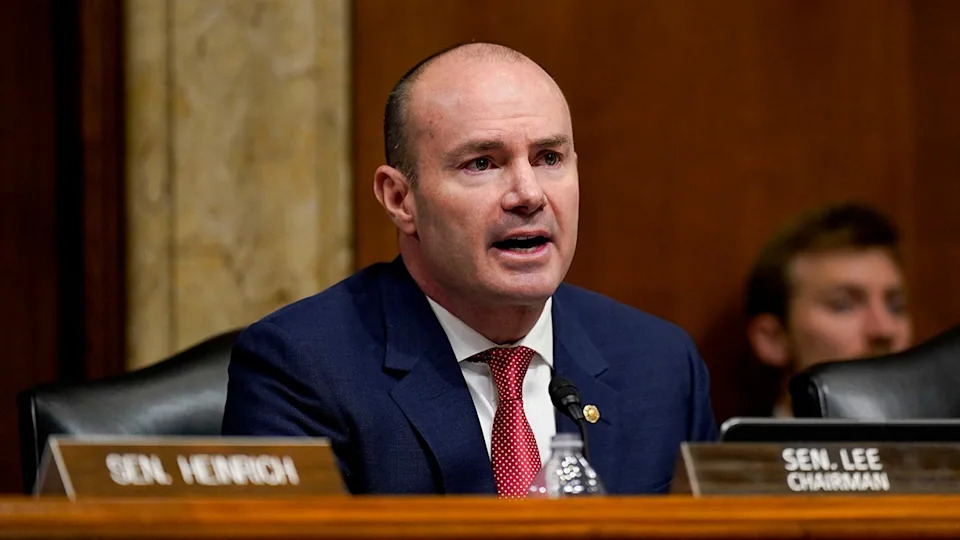
Senator Mike Lee, a Republican from Utah and chairman of the Senate Energy and Natural Resources Committee, during a confirmation hearing in Washington, DC, US, on Thursday, Jan. 16, 2025.
Background And Context
Identification is already required in 36 states: 23 require a photo ID and 13 accept other documents such as a bank statement. Of those states, nine are represented in the Senate by Democrats. Republicans say the amendment was a straightforward test of Democrats' previously stated support for voter ID; Democrats and some voting-rights advocates raise concerns about federal mandates that could affect state election administration and ballot access.
March Vote: This was not the first time the Husted measure failed in the Senate. Republicans also failed to attach it to the SAVE America Act in March, with the vote falling on party lines then as well.
Political Stakes
Republicans pursued the late-night vote after concluding that the broader SAVE America Act — a top priority for former President Donald Trump — would not pass or receive consideration before the Senate's summer recess. The maneuver was framed by supporters like Sen. Mike Lee (R-Utah) as a test of consistency for lawmakers who have voiced support for voter ID in the past. Senators will not return to Washington until early September, ahead of competitive midterm elections that could reshape Senate control.
Bottom Line: The amendment failed along party lines, highlighting the continuing divide over federal voter ID mandates versus state-controlled election rules, and setting up another point of contention for campaigns this fall.