The Senate confirmed James Macy and David Prouty to the five-member National Labor Relations Board as part of a 51-47 vote that approved more than 70 nominees, solidifying Republican control. Macy is a longtime employer-side attorney and current Department of Labor official; Prouty is a former union lawyer beginning a second term. The appointments increase the GOP’s ability to revisit pro-union NLRB precedents amid ongoing legal challenges — including a high-profile removal case by Gwynne Wilcox that may head to the Supreme Court.
Senate Confirms Trump Picks to NLRB, Cementing Republican Control After 51-47 Vote
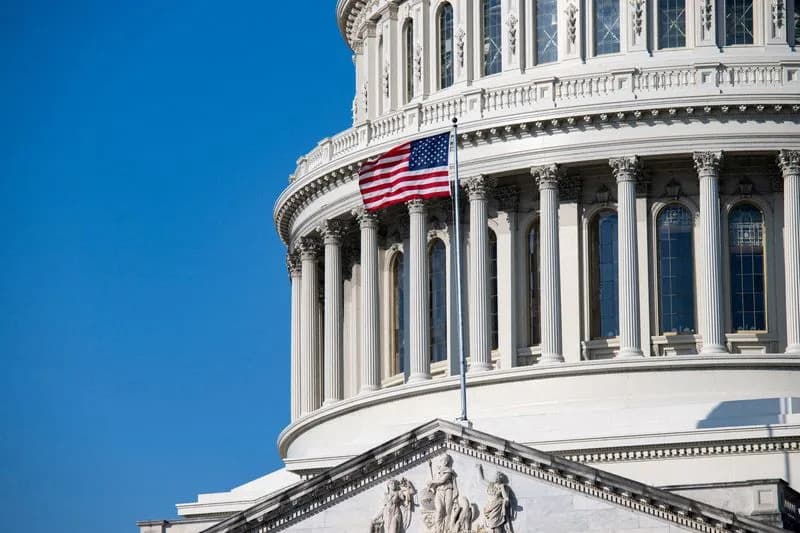
FILE PHOTO: The American flag waves from the U.S. Capitol in Washington, D.C., U.S., March 1, 2026. REUTERS/Annabelle Gordon/File Photo
The U.S. Senate on Friday confirmed President Donald Trump’s nominees to fill two seats on the National Labor Relations Board, giving Republicans the votes needed to reshape key labor-policy decisions. Lawmakers approved a package of more than 70 nominations by a 51-47 vote, including the appointments of James Macy and David Prouty.
Macy, a Republican who spent roughly four decades representing employers in labor disputes, has served in several roles at the U.S. Department of Labor since last year. Prouty, a former union attorney who joined the NLRB in 2021 as its only Democratic member, will begin a second term on the five-member board.
What This Means For The NLRB
The NLRB oversees private-sector union elections and reviews complaints alleging unlawful interference with organizing and other labor violations. By long-standing practice, the board is composed of five members: two Democrats, two Republicans and a chair from the president’s party. The board already had a 2-1 Republican majority before this confirmation, and Macy and Prouty’s appointments solidify Republican control.
By tradition, overturning existing board precedent requires the votes of three members. Trump’s other appointees, Scott Mayer and James Murphy, indicated during confirmation that they would respect that practice, but together the appointees are expected to revisit several pro-union policies that supported a recent surge in organizing.
Policy Moves And Legal Battles
Murphy, who serves as chair, and Mayer have already reinstated a Trump-era rule that raises the bar for classifying companies as “joint employers” of contract and franchise workers, and they transferred jurisdiction over a SpaceX case to another federal labor agency. Several major companies, including Amazon.com and SpaceX, are challenging the NLRB’s internal enforcement process — which allows the general counsel’s office to bring complaints that administrative judges and the board ultimately decide — arguing it raises constitutional concerns.
Quorum Loss And The Wilcox Case
Last year the board lost a three-member quorum after the president dismissed Democratic member Gwynne Wilcox, leaving hundreds of cases unresolved for nearly a year. Wilcox sued and was briefly reinstated by a trial judge, but a federal appeals court stayed and then reversed that ruling. Her challenge hinges on statutory protections that limit removal of NLRB members, a legal question now tied to a Supreme Court decision upholding the president’s removal of an FTC commissioner. Wilcox’s petition asking the Supreme Court to review her case remains pending.
Macy and Prouty could not immediately be reached for comment. The confirmations mark a consequential moment for labor policy enforcement and set the stage for further legal and administrative battles over workplace organizing and employer liability.
Help us improve.