Secretary Linda McMahon’s "National Call to Action" asks nearly every U.S. postsecondary institution to publish commitments to teaching, research and national service on their websites by the end of 2026. Unlike last October’s compact, the new letter avoids explicit funding threats and anti-trans language, but it amplifies political pressure by addressing almost 4,000 institutions. Observers warn the move will expose and deepen divisions across campuses, producing enthusiastic compliance, silence, or reluctant statements crafted to avoid backlash.
McMahon’s National Call To Universities: A Political Move Dressed As A Campus Exercise
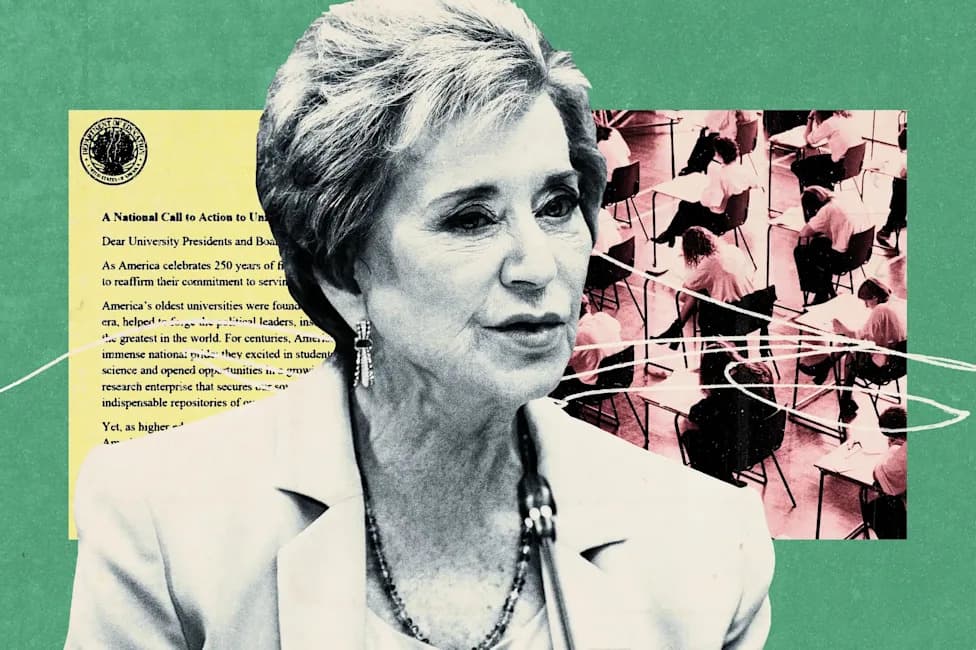
Linda McMahon’s “National Call to Action” turns a federal demand into a public assignment that could divide American higher education.
Secretary of Education Linda McMahon has circulated a letter titled "A National Call to Action to University Presidents and Governing Boards," asking nearly every U.S. postsecondary institution to publicly describe its commitments to "rigorous teaching, pathbreaking research, and national service" and to post those statements prominently on institutional websites by the end of 2026. Though less coercive in tone than last October’s "Compact for Academic Excellence in Higher Education," the new directive is widely read as a political maneuver that could deepen divisions across American higher education.
Background
In October 2025 the Department of Education asked nine elite institutions to sign a compact that would have required policy changes aligned with the administration’s preferences — including contentious positions on biological sex, caps on international enrollments, and a tuition freeze — and threatened to withhold federal funds for noncompliance. The demand drew sharp criticism; law professor Erwin Chemerinsky called the funding threat "unconstitutional" and "extortion, plain and simple." None of the nine targeted universities signed the compact, and the initiative largely collapsed.
What’s Different Now
The November/December follow-up drops explicit anti-trans language and the direct threat to cut federal funds. Instead of pressing nine elite campuses, McMahon’s letter addresses nearly 4,000 Title IV degree-granting institutions. Rather than an ultimatum, the Department effectively assigned a public-facing "term paper": institutions must explain their commitments to core academic functions and display those explanations publicly before the end of 2026. No word limits were set and discussion prompts were included.
Why This Matters
The tactic is strategically clever: by broadening the audience, the Department turns a narrow dispute with a handful of elite schools into a nationwide request that invites public scrutiny, political pressure, and media attention. Even if a small percentage of institutions respond, the exercise will pull students, faculty, alumni, donors, state officials, and partisan commentators into contested debates about university priorities and free expression.
How Institutions Are Likely To Respond
Expect three broad responses:
- Enthusiastic Compliance: Public universities in conservative states and private religious or conservative colleges may post celebratory statements aligning with the Department’s framing.
- Silence or Nonresponse: Many institutions may ignore the request, risking criticism from conservative commentators who will portray nonresponse as unpatriotic or out of step with parents' expectations.
- Reluctant Compliance: Some campuses will produce carefully worded statements prepared by administrators and trustees to avoid political backlash, even where students and faculty oppose participation.
What To Watch
Key indicators will include which institutions post responses, how campuses frame academic freedom and free speech, whether any responses trigger legal or funding challenges, and how state governments and accrediting bodies react. The Department’s move could sharpen tensions between elite research universities and regional colleges, making sector-wide coordination more difficult.
Bottom Line
While many observers agree that U.S. higher education could benefit from thoughtful reform, critics say McMahon’s "Call to Action" is less about pedagogical improvement and more about insulating certain political views from critique and turning campus culture into a public battleground. By converting a narrow demand into a nationwide public assignment, the Department has expanded the stage for a political fight over academic values and free expression.
Help us improve.