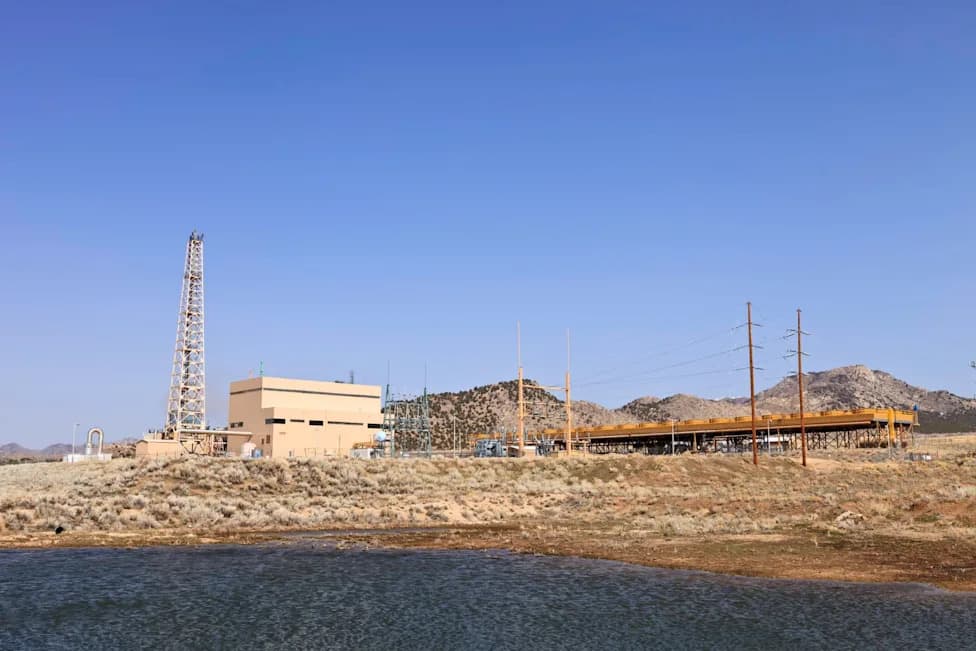
UDOT has launched uFLY, a series of hybrid‑electric aircraft demonstrations with Ampaire's modified Cessna 337 EEL testbed flying from Salt Lake City to Cedar City. The flights are part of the FAA's multi‑year eVTOL Integration Pilot Program (eIPP), which will collect real‑world operational data across 26 states to inform future regulations. Ampaire aims to progress to demonstrations of its Eco Caravan retrofit, and uFLY will evaluate use cases across urban, rural, mountainous and wildfire‑prone areas. Results will help shape procedures and infrastructure planning for advanced air mobility.
Utah Launches Real-World Hybrid‑Electric Aircraft Demonstrations With Ampaire EEL
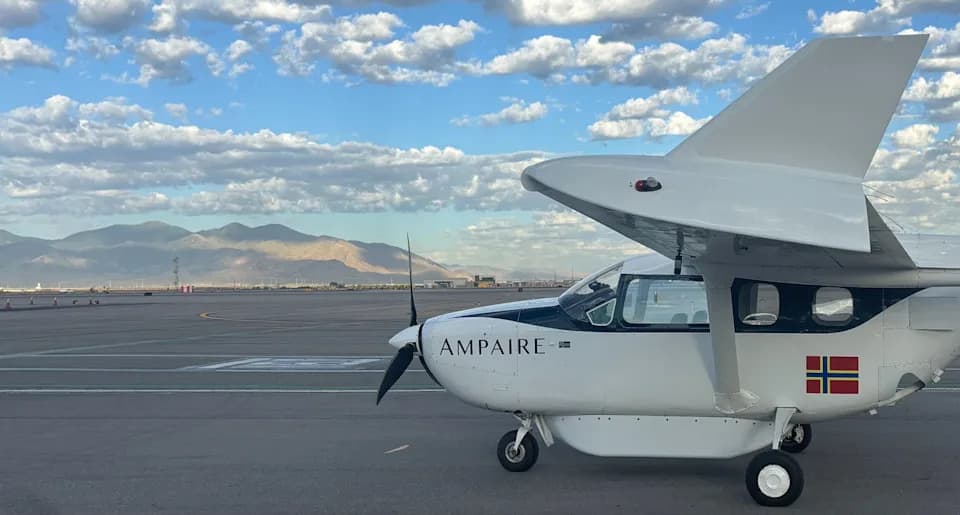
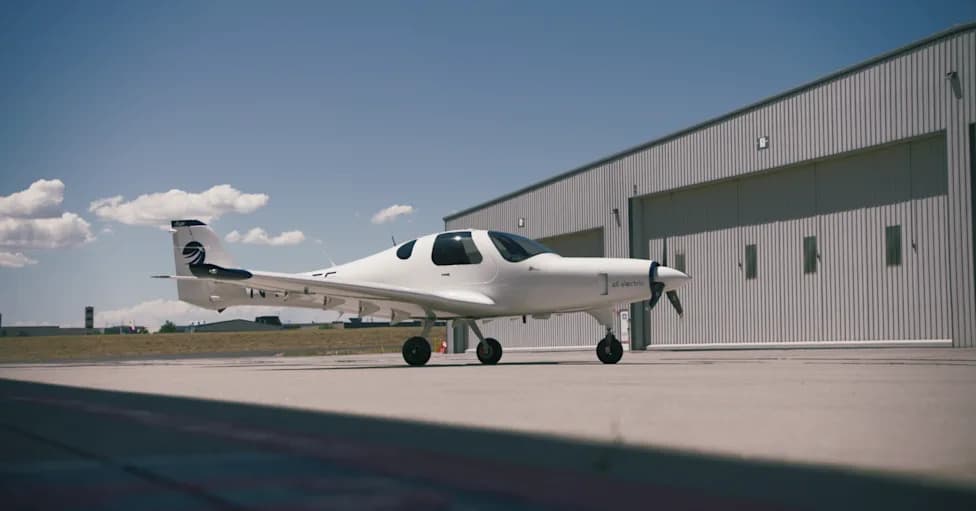
Ampaire's hybrid-electric EEL testbed landed and took off at Salt Lake City International Airport (KSLC) on Thursday in the 'first of several' planned demonstrations, per UDOT. [Credit: Ampaire]
The Utah Department of Transportation (UDOT) has kicked off a series of real‑world hybrid‑electric aircraft demonstrations, beginning with Ampaire's modified Cessna 337 EEL testbed. On Thursday morning the EEL completed a roughly 240–250 mile leg from Salt Lake City to Cedar City as part of uFLY, UDOT's portion of the Federal Aviation Administration's (FAA) eVTOL Integration Pilot Program (eIPP).
What Happened
The California company Ampaire flew its hybrid‑electric EEL—built from a modified Cessna 337 Skymaster—into Salt Lake City and then on to Cedar City, testing hybrid propulsion and operational procedures in Utah's varied terrain. The aircraft uses the AMP‑H570 hybrid propulsion system: an electric motor driving the nose propeller and a combustion engine driving the aft propeller. Ampaire says the powertrain can recharge in flight, reducing the need for new ground charging infrastructure at airports.
According to Ampaire and FlightAware tracking, the mission included three legs: Long Beach (KLGB) to Salt Lake City (KSLC) — about 648 miles in 4 hours 18 minutes on a single charge — then Salt Lake City to Cedar City (KCDC) — roughly 240 miles in 1 hour 45 minutes — and a return to Long Beach. Ampaire estimated the three‑leg campaign covered about 1,340 miles over roughly 10 hours.
Why It Matters
The eIPP was launched to gather operational data from electric, hybrid and autonomous aircraft so regulators can identify gaps and refine standards for integrating advanced air mobility into the National Airspace System. Over the program's expected three‑year span, the FAA plans demonstrations across 26 states. uFLY—led by UDOT in partnership with Oregon, Idaho, Arizona and Oklahoma—is one of eight FAA lead projects and includes more than 30 public and private partners.
UDOT said uFLY will test advanced aircraft operations across urban centers, rural corridors, mountainous terrain and wildfire‑prone areas to evaluate use cases such as cargo delivery, emergency response, wildfire support and future passenger service. In addition to Ampaire's EEL and its planned Eco Caravan (a converted Cessna 208B intended to reduce fuel burn by 50–70%), UDOT expects demonstrations from Joby Aviation and Beta Technologies.
"uFLY is about moving hybrid‑electric aviation from demonstration into real‑world operations," said Kevin Noertker, Ampaire co‑founder and CEO.
Operational And Program Details
Beta Technologies conducted the first official eIPP operations in July, ferrying organs for United Therapeutics in Maryland and Virginia. Last year, UPS Flight Forward staged a simulated cargo feeder route in Salt Lake City using Beta's all‑electric Alia CX300. UDOT's aeronautics division is using mobile command centers equipped with workstations and satellite connectivity to collect FAA data, coordinate demonstrations, and monitor live video and flight telemetry.
The FAA said it will use lessons learned from the demonstrations to identify regulatory gaps, improve procedures, and support safe integration of advanced air mobility. UDOT and other lead partners plan further demonstrations in 2026, and the Texas Department of Transportation may begin its activities in September.
Help us improve.