The kitefin shark (Dalatias licha) may use its bioluminescence not only to blend with downwelling light but also as a lateral "searchlight" to find prey. Shipboard measurements of eight sharks show a ventral bluish-green glow peaking at ~491 nm that matches ambient light at 480–540 m, while unusually strong sideways emission—especially near the head—could illuminate nearby prey. A dim but conspicuous dorsal glow may serve signaling or attraction roles; in situ observations are needed to confirm behavior.
Glowing Kitefin Sharks May Use Their Light as a Searchlight to Find Prey, Study Suggests
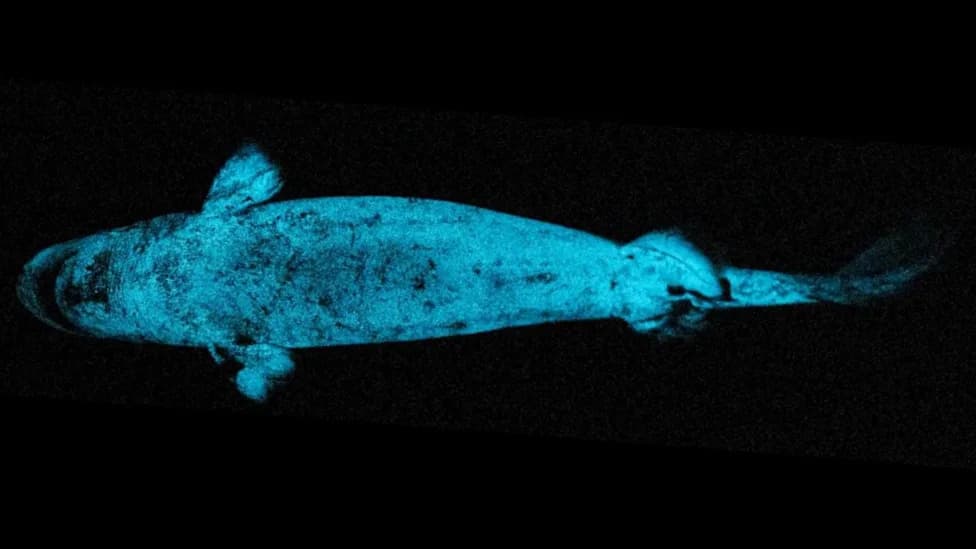
The kitefin shark is the world's largest bioluminescent vertebrate. (Claes et al., iScience, 2026)
The kitefin shark (Dalatias licha) — the largest known bioluminescent vertebrate — may do more with its glow than simply hide. New measurements suggest the shark’s light not only matches downwelling daylight for camouflage but also projects sideways like a biological searchlight, potentially helping it locate prey on the seafloor.
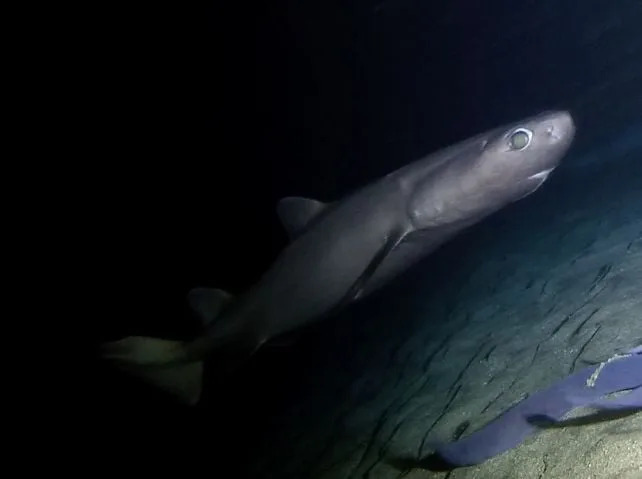
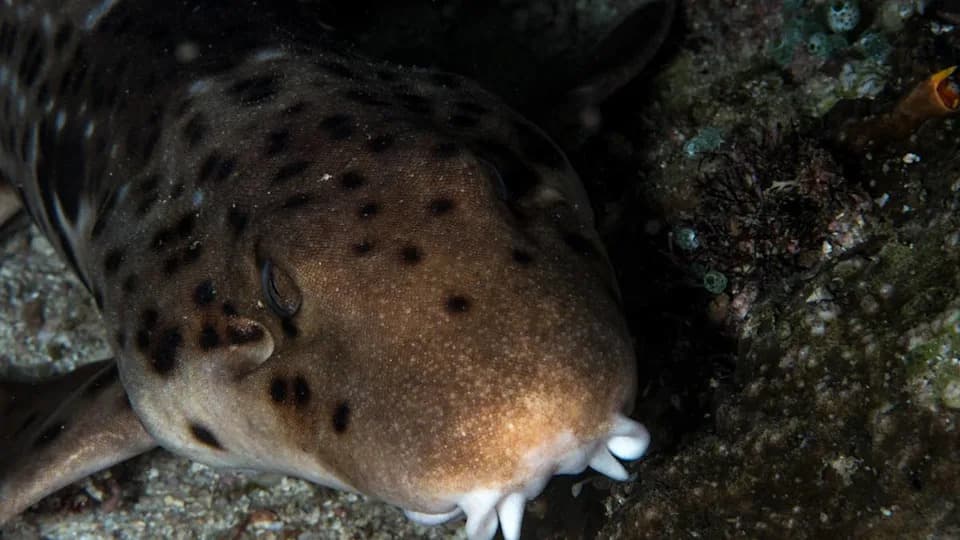
The kitefin shark in its habitat deep under the sea. (jgrimshaw/iNaturalist,CC BY-NC 4.0)
What Researchers Did
A team led by marine biologist Julien Claes (Université catholique de Louvain) examined eight live kitefin sharks recovered as bycatch during a research survey on Chatham Rise, east of New Zealand. Onboard the survey vessel the researchers measured three properties of the sharks’ glow: intensity (brightness), spectral color (wavelength), and angular distribution (which directions the light is emitted).
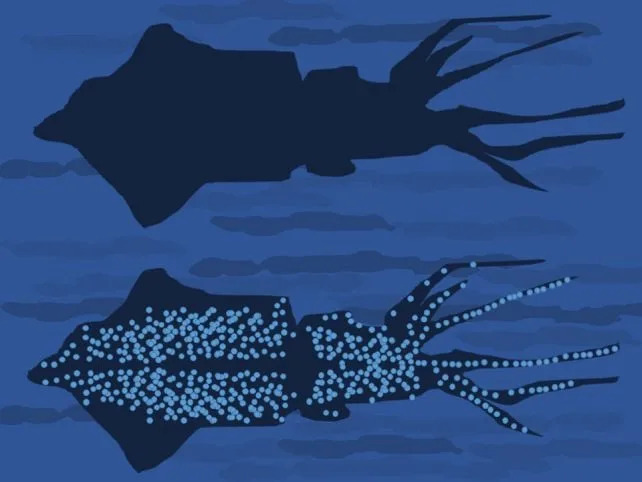
A diagram showing how counterillumination works to conceal the firefly squid. (Ian Alexander/Wikimedia Commons,CC BY-SA 4.0)
Key Findings
Ventral Glow Matches Ambient Light: The underside emission is bluish-green, peaking near 491 nm, and its brightness corresponds to predicted downwelling daylight at roughly 480–540 meters — the shark’s typical depth range — consistent with classic counterillumination camouflage.
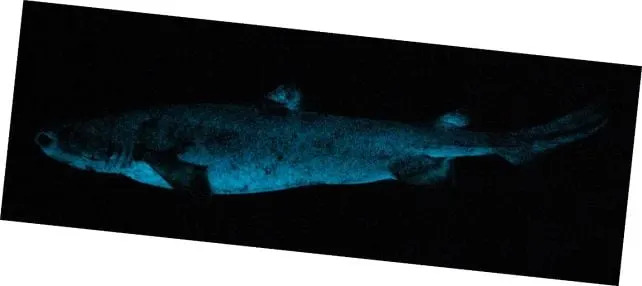
The glowing shark as seen from the side. (Claes et al.,iScience, 2026)
Unexpected Lateral Emission: Unlike typical counterilluminating species that tightly match downwelling light, the kitefin’s bioluminescence spreads markedly sideways. This lateral emission is strongest around the head region (snout, jaws and pectoral fins), which could illuminate nearby water and seafloor to reveal prey.
YouTube Thumbnail
Dorsal Fin Glow Is Not Camouflage: The dorsal fin emits light about an order of magnitude dimmer than the belly but remains roughly two orders of magnitude brighter than ambient upwelling light. Approached from the side, this fin would be conspicuous rather than concealed, suggesting possible roles in intraspecific signaling or prey attraction.

Subscribe to ScienceAlert's free fact-checked newsletter
Ecological Context and Possible Functions
The kitefin is an unusually slow swimmer (roughly 13 cm per second) yet preys on relatively fast, visually capable animals such as lanternsharks and cephalopods. A dual strategy — downward-directed light for concealment from observers below combined with targeted sideways illumination to spot prey — would help a slow-moving predator hunt effectively in dim, deep habitats.
"One parsimonious explanation is that this excess lateral emission functions as a biological searchlight, illuminating the seafloor to the sides of the shark and potentially enhancing prey detection in the otherwise dark benthic environment," the authors write.
Limitations and Next Steps
All data came from physical measurements of animals brought to the surface and examined aboard ship. Bringing deep-sea animals to the surface can alter physiology and behavior, so direct in situ observations are necessary to confirm whether kitefins actively use lateral bioluminescence as a searchlight, a signal, or a lure.
Nevertheless, the study — published in iScience — expands our understanding of counterillumination, showing it can be multifunctional: simultaneously masking an animal from some observers while helping it locate or attract others.
Why This Matters
These findings challenge the narrow view of counterillumination as solely predator-avoidance camouflage and highlight the diverse ecological roles that bioluminescence can play in the deep sea. Future in situ imaging and behavioral studies will be crucial to test these hypotheses and reveal how kitefin sharks use light in their daily lives.
Help us improve.