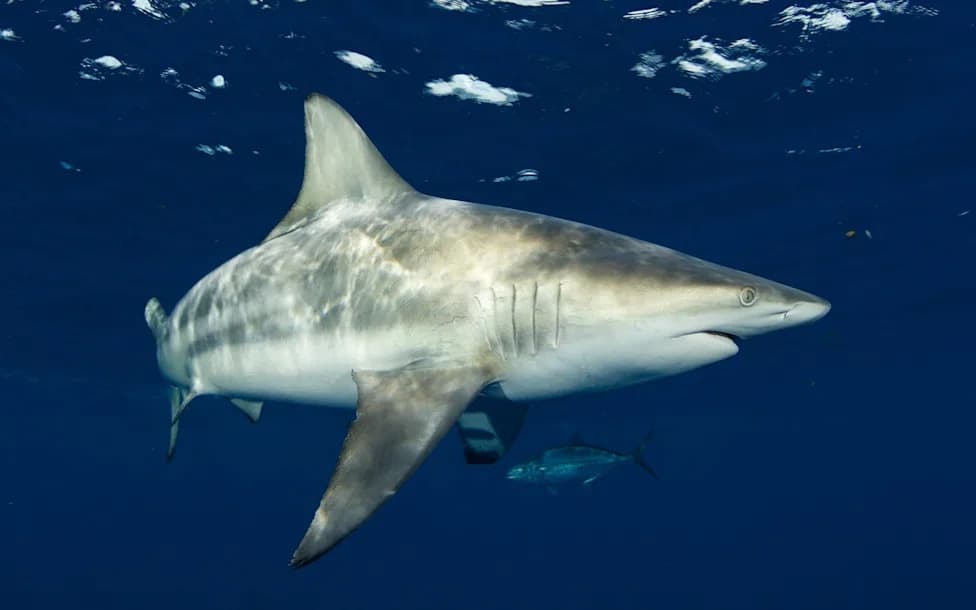
Scientists used drone video and an underwater speaker off three southeast Florida inlets to test how far blacktip sharks respond to sound. The sharks reacted only to low-frequency pulsed tones, with the farthest response at 74.0 metres (243 ft); a 10 kHz control tone produced zero reactions in 209 trials. Most responses occurred inside a zone previously thought to be silent, and sharks typically turned sharply away (average 72.7 degrees) and fled. The findings suggest sharks can detect far-field cues and have broader hearing than commonly assumed.
Sharks Can Hear Low Sounds From 243 Feet Away — And They Often Flee

blacktip shark© Gino Santa Maria/Shutterstock.com
The water was shallow enough for an adult to stand on the bottom. A speaker placed on the sand pulsed a deep, bass-like thump, and a blacktip shark most of a football field away made a sudden sideways bolt and vanished. Scientists recorded that reaction with a drone off three southeast Florida inlets; the farthest individual observed responding was 74.0 metres (243 feet) from the speaker.

Why Hundreds of Blacktip Sharks Migrate Past This Florida Beach©Gino Santa Maria/Shutterstock.com
What the Researchers Did
Researchers used a drone to film wild blacktip sharks (Carcharhinus limbatus) near Jupiter Beach, Palm Beach and Pompano Beach in water roughly 2 to 5 metres deep. An underwater speaker played three low-frequency pulsed sounds and, as a control, a much higher 10 kHz tone. Across 209 plays of the 10 kHz signal, sharks showed no response. The low-frequency thumps, by contrast, produced clear reactions.
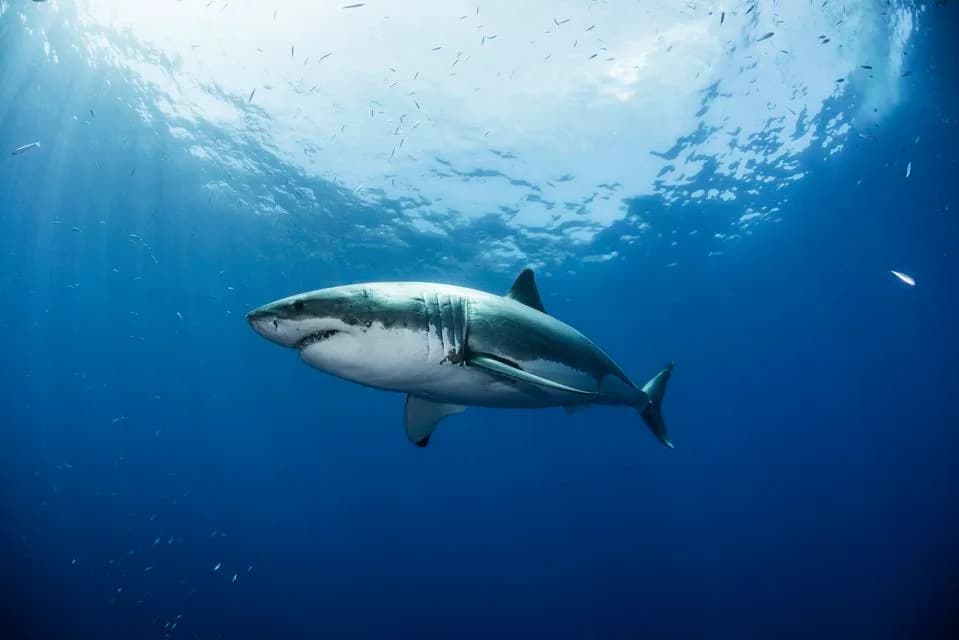
Are Sharks Blind?©frantisekhojdysz/Shutterstock.com
How Sharks Reacted
While 74.0 metres is the record distance for a single shark reaction, most responses occurred closer but still farther than scientists previously expected. Every low-frequency stimulus produced reactions from at least 62 metres (203 feet), and for the two lowest frequency bands the typical response distance was a bit more than half the maximum.
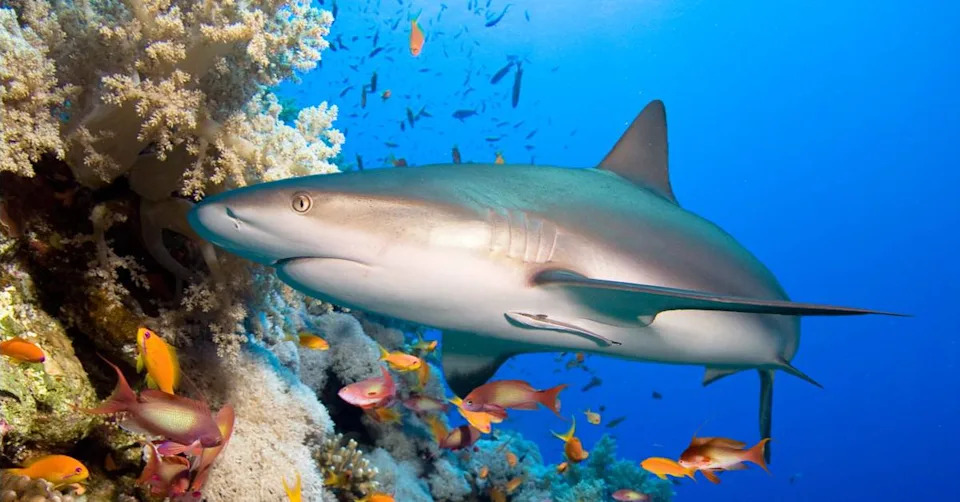
Do Sharks Have Ears? Can They Hear?©iStock.com/Whitepointer
When sharks detected the pulses, they did not investigate. Instead they executed abrupt turns away from the speaker, with individual turn angles ranging from about 20 to 160 degrees and an average turn of 72.7 degrees — nearly a right angle — before swimming off at speed. Remarkably, roughly seven in ten reactions occurred inside a zone researchers had assumed would be effectively silent to sharks.
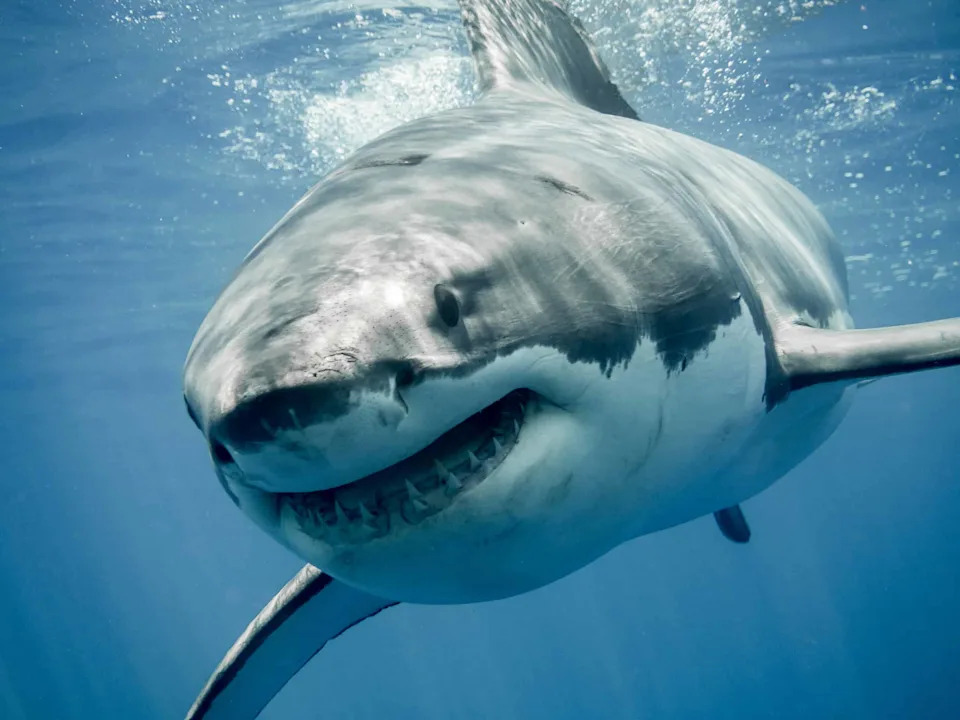
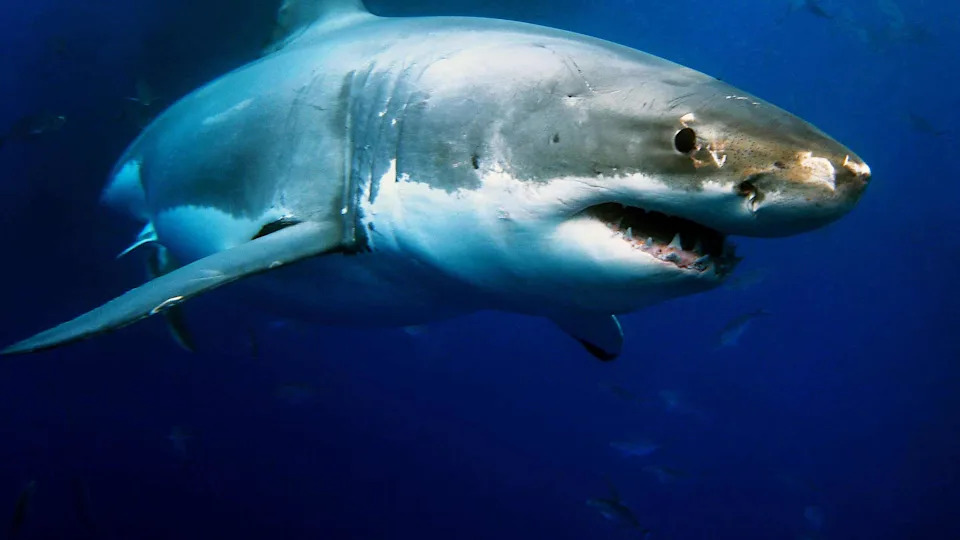
How Far Can Sharks Smell Blood?©Ramon Carretero/Shutterstock.com
Why This Matters
Close to a sound source, water is pushed back and forth by each pulse (the near field). Farther away, that direct particle motion fades and the disturbance propagates mainly as a pressure wave (the far field). Scientists had assumed sharks would be insensitive to cues in that far-field zone at these distances. The new footage shows blacktip sharks responding from deep inside that zone, implying they can sense faint particle motion or other cues at ranges not previously demonstrated.
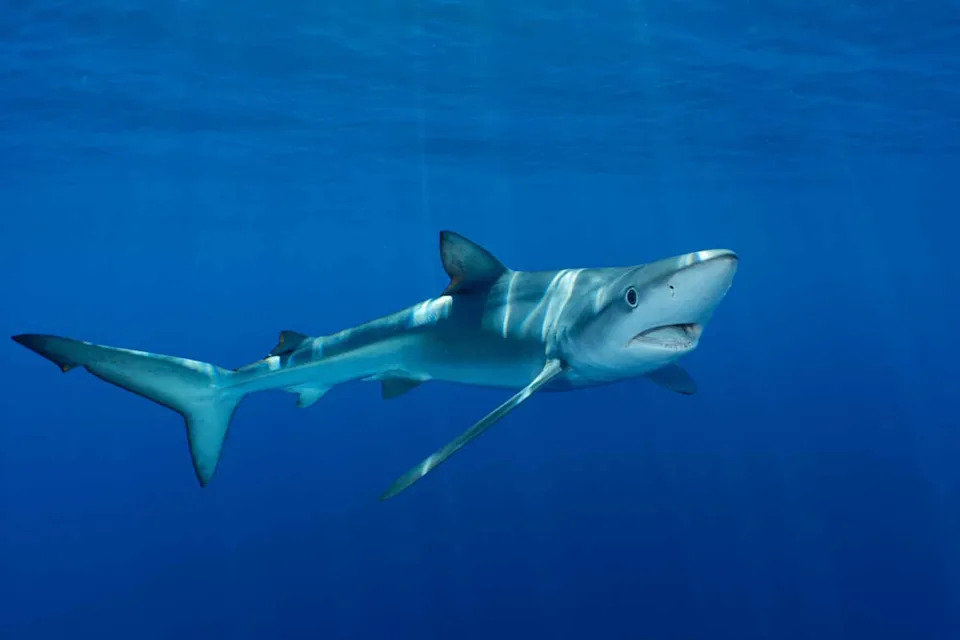
Can Sharks Smell or Sense Fear?©Samy Kassem/Shutterstock.com
Other studies support the idea that shark inner ears collect sound from all directions, so the Florida observations add to mounting evidence that shark hearing is functionally broader than traditional textbook descriptions suggest. Because hearing can operate at longer range than other underwater senses, an ability to detect and localize distant sounds could be an important ecological advantage.
Clearing Up the Drama
Contrary to dramatic portrayals, these sharks didn't home in on the noise: they fled. No human screaming or natural splashing was used in the experiments — only artificial low-frequency pulses — so the fair takeaway is this: blacktip sharks can detect loud, low-frequency sounds from distances up to 243 feet, and their common response in this study was to turn away and leave.
Bottom line: Sharks hear farther than many scientists expected, but in this case the sound made them swim off rather than toward the source.
Help us improve.