President Donald Trump may face pressure to make an unusual concession — ceding some practical control over the Strait of Hormuz — to secure a temporary deal with Iran that reopens the vital shipping lane. Iran insists on a measure of authority after months of conflict, while U.S. officials reject arrangements that would formalize Iranian control or permit tolls. The war has strained U.S. munitions stocks and increased political pressure ahead of the midterms. Negotiators reportedly are close to a temporary, toll-free arrangement that would route ships in via Iran and out via Oman.
Reopening The Strait Of Hormuz Could Force Trump Into A Rare Compromise, Officials Say
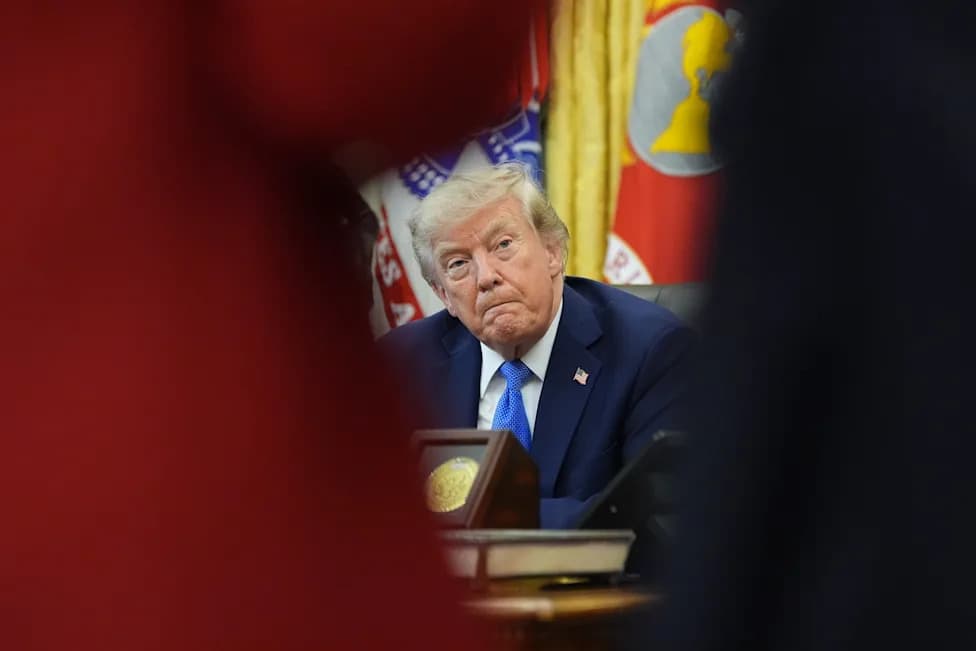
President Donald Trump speaks in the Oval Office of the White House, Thursday, Aug. 6, 2026, in Washington. (AP Photo/Alex Brandon)(AP Photo/Alex Brandon)
To secure an agreement with Iran that reopens the strategically and economically vital Strait of Hormuz, President Donald Trump may have to accept a concession that runs counter to his usual posture: compromise.
Why the Strait Matters
The Strait of Hormuz is a narrow choke point through which roughly 20% of the world’s oil typically transits. Control or disruption of the waterway can have immediate effects on global energy markets and shipping routes, making any deal over its management geopolitically sensitive.
Sticking Points In Negotiations
Negotiators have focused on who controls access through the strait. U.S. officials have ruled out any arrangement that would effectively formalize Iranian control or allow Tehran to charge fees. Iran, however, insists on some measure of authority over movements in the strait and has said the waterway will not simply revert to the fully open international status it held before the conflict.
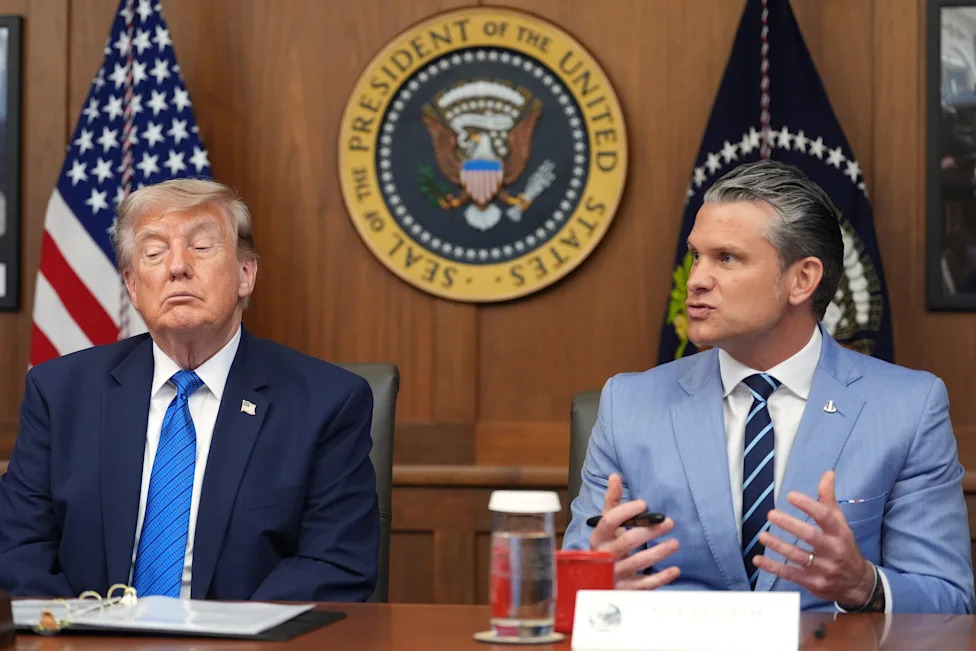
Defense Secretary Pete Hegseth speaks alongside President Donald Trump during a cabinet meeting, Friday, July 31, 2026, at Camp David, the presidential retreat, near Thurmont, Md., Friday, July 31, 2026. (AP Photo/Jacquelyn Martin)(AP Photo/Jacquelyn Martin)
“He divides the world into winners and losers, and this would make him a loser,” said Eliot Cohen, who served as counselor at the State Department during the George W. Bush administration. “And the image of being a loser, I think, would be intolerable for him.”
Military Strain And Domestic Pressure
The war has also placed strain on U.S. munitions supplies. Administration officials and independent analysts, including the Center for Strategic and International Studies, report declining inventories of some advanced weapons, particularly missile interceptors. That shortfall has prompted Pentagon officials to press Capitol Hill for billions in additional funding.
President Trump has publicly downplayed shortages, asserting on social media that the military still has “massive amounts” of weapons and that production is ongoing. He has also threatened legal action against those he says leaked information about stockpiles. At the same time, public opinion appears to have soured: a late-July AP-NORC poll found about two-thirds of U.S. adults say the war with Iran has not been worthwhile.
What A Temporary Deal Could Look Like
Reports suggest negotiators are discussing a temporary, practical arrangement to reopen the strait: ships would enter the Persian Gulf via a route monitored or controlled by Iran and exit through a route overseen by Oman. U.S. officials have emphasized that any lanes would be toll-free and that Washington opposes arrangements that would allow Iran to charge fees.
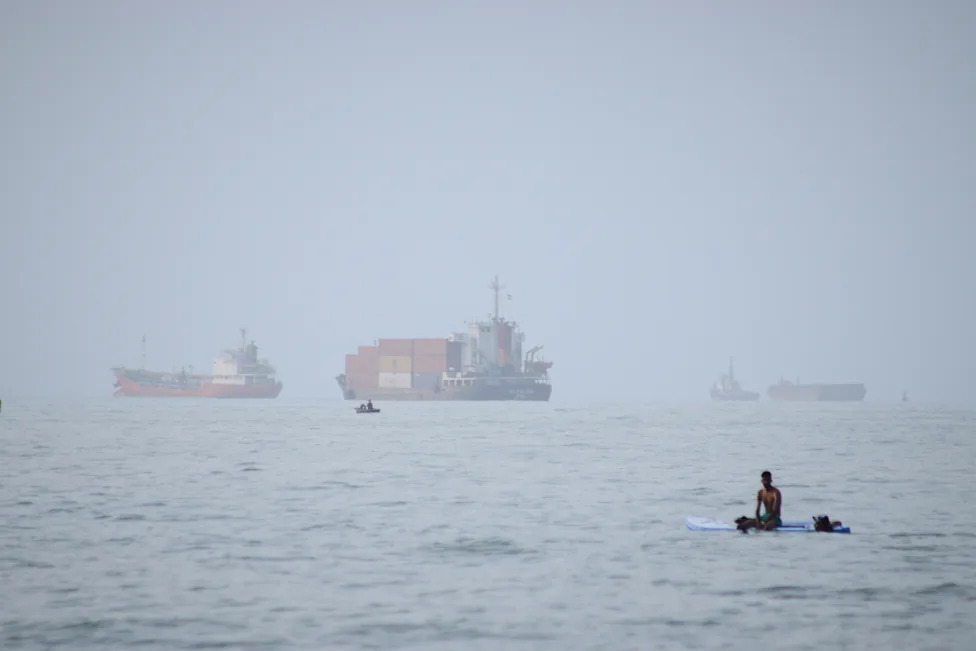
A man sits on a surfboard as a container ship and other commercial vessels appear anchored in the Strait of Hormuz off Bandar Abbas, Iran, Monday, July 27, 2026. (Razieh Poudat/ISNA via AP)(AP Photo/Razieh Poudat)
Current Status And Risks
Even with talks underway, the waterway remains risky. In recent days at least two ships were struck and several others reported near-misses or warnings from groups claiming affiliation with Iran’s Islamic Revolutionary Guard, according to maritime data firm Lloyd's List Intelligence. Vessel transits have risen to 84 last week from 45 the week before but remain far below the roughly 700 weekly transits typical before the crisis.
U.S. and Iranian officials say they are close to a temporary deal, but the political cost of conceding any control could be significant for the U.S. president, analysts say. Whether economic pressure and rising domestic concern will push the administration toward compromise remains a central question in the negotiations.
Reporting contributions: Associated Press reporters Lisa Mascaro, Darlene Superville and Michelle L. Price in Washington contributed to this report.
Help us improve.