Hundreds of unaccompanied children who crossed into Ceuta during a mass migrant surge are sleeping rough and face serious risks of abuse and trafficking. Ceuta officials say about 1,100 children need help but the enclave has capacity for only 90, and emergency shelters are being set up. Spain approved a €25 million package, but efforts to relocate minors face political resistance. At least 80 people died on the Spanish side during the border surge, with 11 reported dead in Morocco.
Hundreds of Unaccompanied Children Sleeping Rough in Ceuta Face Abuse and Exploitation, Aid Groups Warn
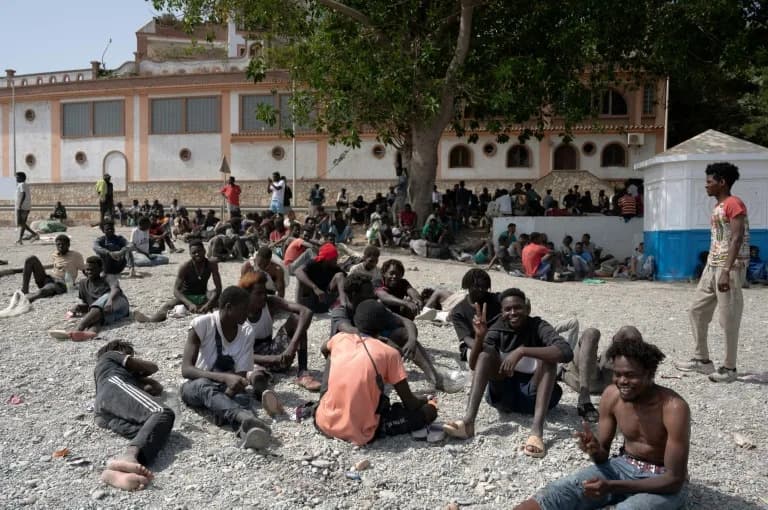
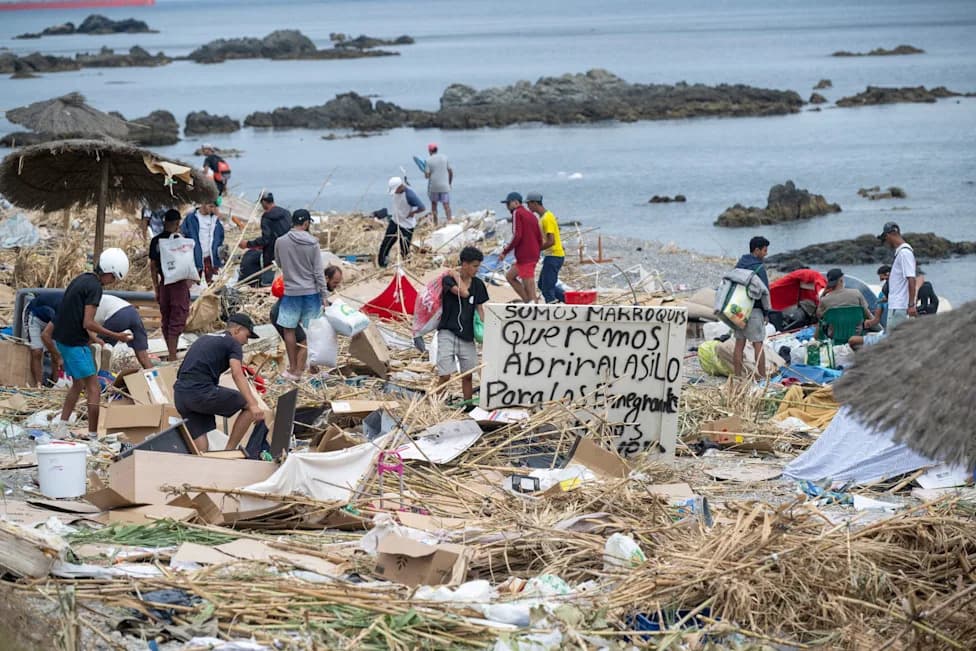
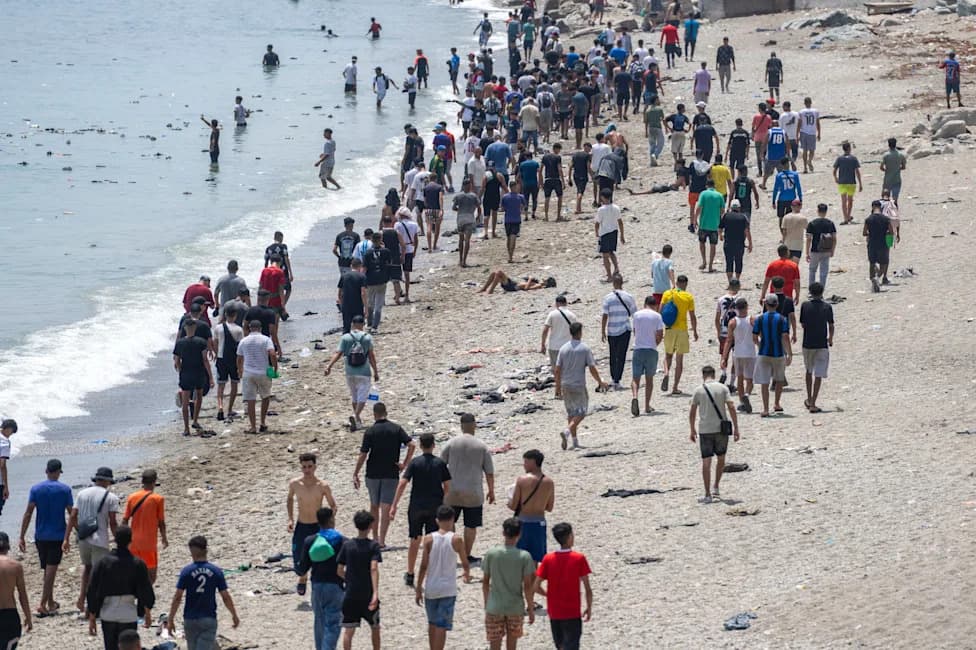
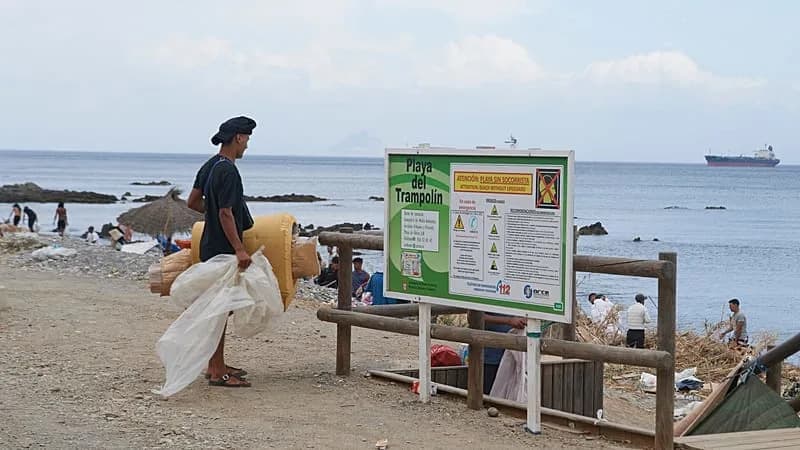
Migrants camped on Ceuta's Trampolin beach - pictured here on August 1, 2026 (JORGE GUERRERO)
Hundreds of unaccompanied children who crossed into the Spanish enclave of Ceuta during a mass surge on July 30-31 are sleeping on the streets and face heightened risks of abuse, exploitation and trafficking, aid organisations and local charities warned.
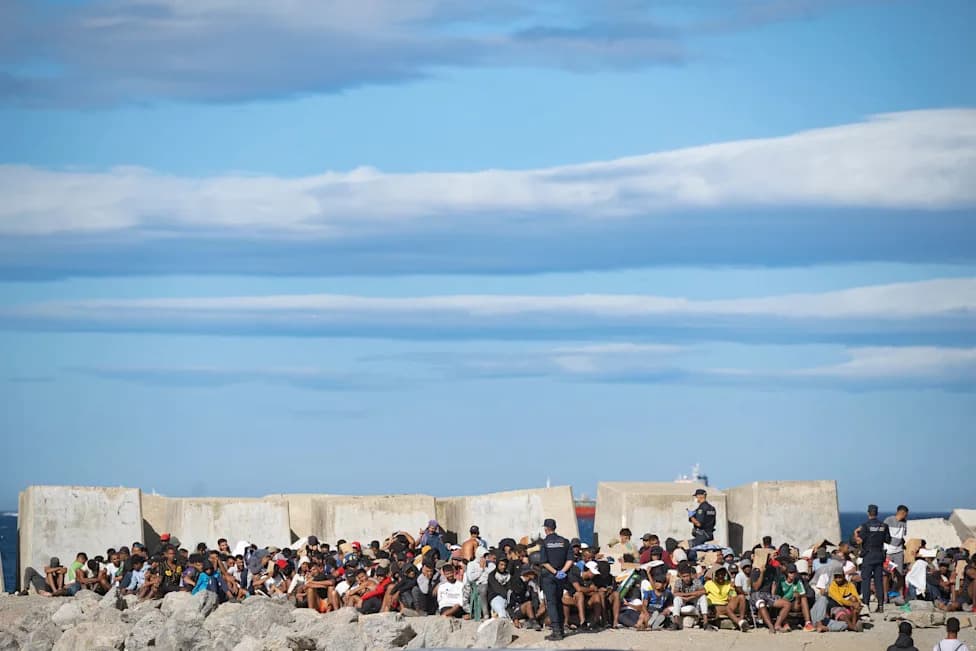
Although Spanish authorities say the vast majority of the migrants who entered Ceuta from Morocco have since returned, the enclave is struggling to provide safe, legal shelter for Moroccan minors who remain and cannot be immediately deported.
"Every day that passes without a solution and without safe accommodation means leaving these children — especially these girls — exposed to all kinds of abuse," said Jose Miguel Morales, head of Federacion Sur Acoge.
Sleeping Rough
Spain's government reported that roughly 70,000 of about 72,000 people who surged into Ceuta have returned to Morocco, leaving an estimated 2,000 on the enclave. Opposition-run local authorities and some charities say the number remaining is higher and includes more than 1,000 unaccompanied minors.
AFP reporters in the days after the influx observed children with limited access to food, water, shelter and sanitation. Groups of young men and boys were seen gathering in wooded areas and on beaches; many were resting with only small bundles of belongings and makeshift sun protection such as plastic bags or T-shirts.
Conditions and Protection Concerns
Save the Children and other groups urged an urgent, systematic registration of all minors, warning that girls are particularly vulnerable to violence, trafficking and exploitation if they remain unregistered and unprotected.
Local charities report they have been providing the only reliable supplies for many children. Ceuta charity Luna Blanca said it had distributed between 3,500 and 4,000 meals daily since the influx began. Volunteers and residents have provided water, food and basic aid where reception facilities are full.
Authorities Overwhelmed and Emergency Response
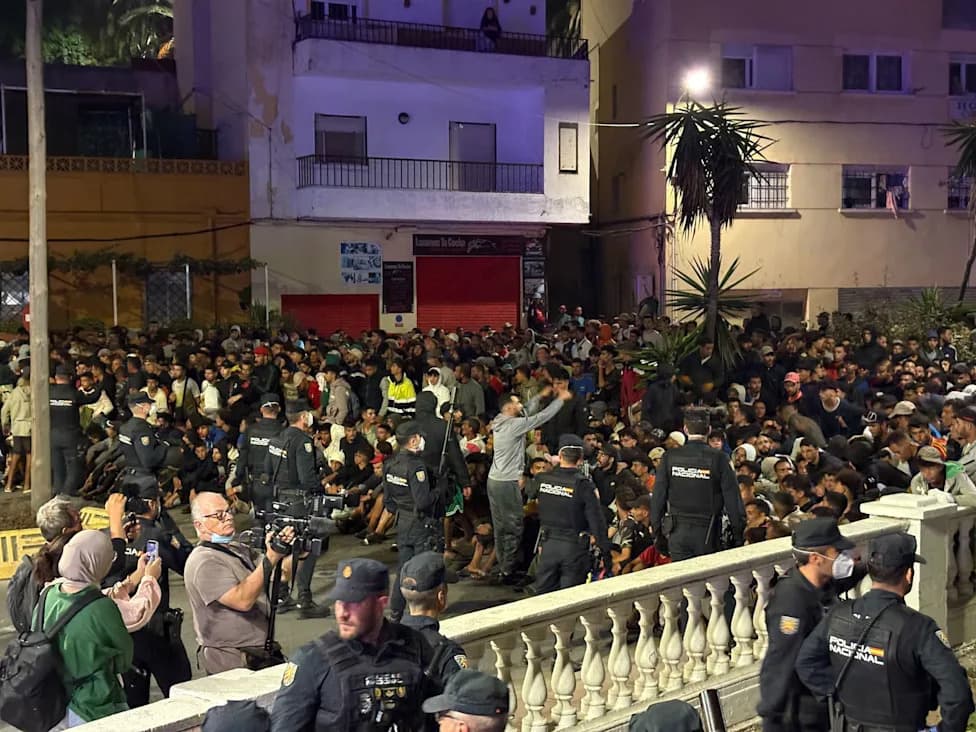
Ceuta officials reported around 1,100 children needing attention despite the city's theoretical capacity of just 90 places. "Our capacity has been completely overwhelmed," said Alejandro Ramirez, Ceuta's vice-president, calling the situation "unsustainable." Authorities said they are racing to convert schools, warehouses and other spaces into emergency shelters while coordinating transfers elsewhere in Spain.
Madrid announced a €25 million emergency package to support unaccompanied minors in Ceuta, but plans to redistribute children across Spain have met political resistance from several regional governments opposed to taking in migrant minors.
A Moroccan diplomatic source told state agency MAP that Rabat has committed to identifying unaccompanied minors with a view to facilitating returns, but legal and administrative obstacles remain on both sides.
Political Backlash and Human Cost
Transfers of minors to other Spanish regions have been met with opposition from the conservative Popular Party and the far-right Vox, whose leaders vowed to block relocations. Vox leader Santiago Abascal wrote on social media that public funds should not be spent on what he described as "illegal migrants."
The human cost of the rush was severe: Spanish authorities reported at least 80 deaths on the Spanish side of the frontier during the main push into Ceuta, while Moroccan officials reported 11 fatalities on their side.
"We want to reach Europe and fulfill our dreams and those of our families," said Ahmad, a migrant from Yemen, underscoring the desperation driving the journey.
What happens next: Aid groups continue to press for rapid registration, safe accommodation, child protection teams and clearer cooperation between Spanish and Moroccan authorities to ensure swift and safe solutions for unaccompanied minors.
Help us improve.