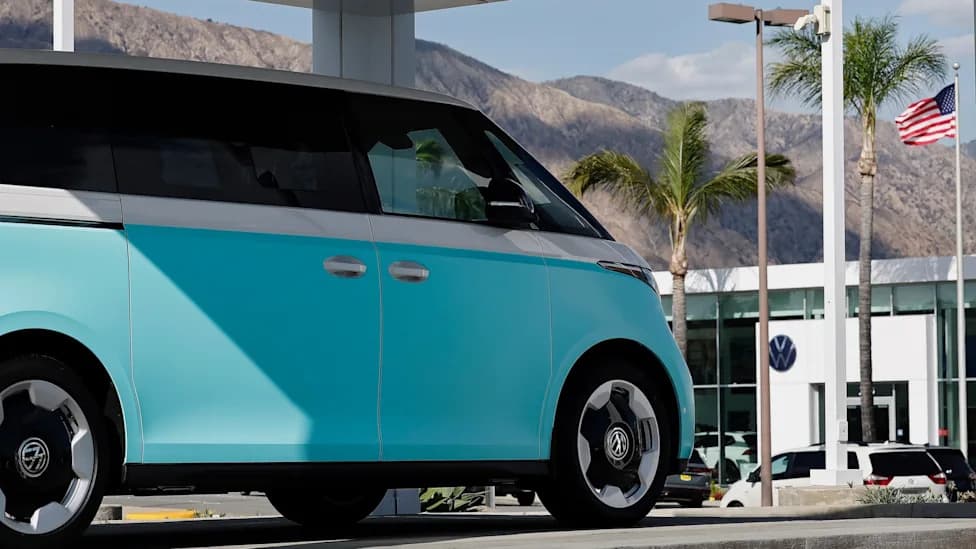
A few years ago, environmental scientist Elliot Campbell started asking drivers why they might — or might not — switch to an electric vehicle (EV). Many answered with the same concern: building an EV creates emissions, so wouldn’t it be better for the planet to keep a working gasoline car on the road?
Campbell, a professor at the University of California, Santa Cruz, set out to answer that question. His new study, published in the journal Science, finds that replacing even a two‑year‑old gasoline car with an EV reduces lifetime greenhouse‑gas emissions by roughly 50 percent.
He acknowledged that not everyone can afford to replace a nearly new car. Still, that example underscores the study’s broader finding: the emissions saved while driving an EV quickly offset the emissions generated during its manufacture. Campbell said the result surprised many students and ran counter to his own instincts. “I like to repair things and keep them going,” he said. “But we found there is a big advantage to retiring the gas vehicles early.”
Conservative Approach — EVs Still Win
To be cautious, Campbell designed the analysis to give internal‑combustion vehicles every reasonable advantage. Notably, the study treated the manufacturing emissions of the gasoline car as a sunk cost and excluded them from the comparison. Even with that bias, EVs came out ahead — suggesting that climate‑conscious drivers who can switch should do so as soon as it’s practical.
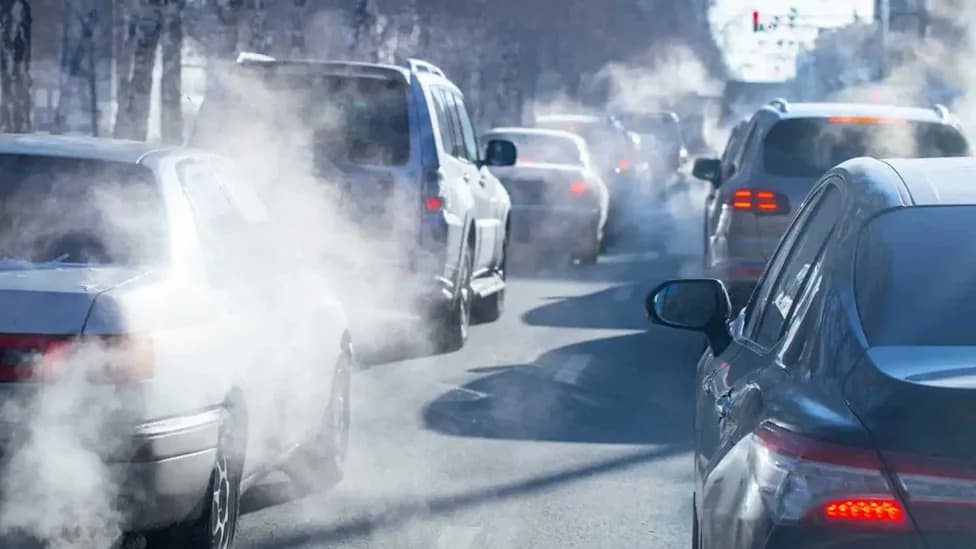
“You’re just delaying the benefits longer and longer,” Campbell said, adding that removing high‑pollution vehicles from roads also improves local air quality.
How Quickly EVs Pay Back Their Carbon Debt
Independent work by David Reichmuth of the Union of Concerned Scientists, which aligns with Campbell’s findings, found that EVs typically reach a carbon break‑even point at about 18,000 miles — roughly 18 months of driving for the average U.S. driver. Campbell and his coauthor estimate that a new EV must be driven about 4,400 miles (for a car) or roughly 6,700 miles (for a light truck) to repay the manufacturing carbon debt. Both thresholds are well below the U.S. average annual mileage of about 12,500 miles per driver.
The environmental advantage depends on regional electricity sources. Where grids are clean, the benefit is largest: in upstate New York — with significant hydroelectric generation — driving an EV is roughly equivalent to driving a gasoline car that gets about 219 mpg. Even in parts of the Rocky Mountain region, where coal and gas are more common, an EV still outperforms any gasoline car achieving less than about 68 mpg.
Exceptions And Important Caveats
The study identifies only a few clear exceptions to the general conclusion that replacing a gasoline car with an EV reduces lifetime greenhouse‑gas emissions. Exceptions include some plug‑in hybrid electric vehicles (PHEVs) with large batteries and long gasoline ranges, and very low‑mileage use cases — for example, a second household car driven only a few thousand miles a year.
Campbell and other experts note several limitations of the current analysis: it does not evaluate the financial costs of switching (EVs often have higher upfront prices but lower operating costs), and it does not fully account for the emissions associated with extracting and delivering gasoline to the pump. The researchers also point to improving battery recycling and a cleaner power grid as factors that will strengthen the EV advantage over time.
Policy Implications
The most direct policy takeaway is that incentives to retire high‑pollution gasoline cars could yield climate and local air‑quality benefits. Past programs — such as the 2009 federal Car Allowance Rebate System (“cash for clunkers”) — showed strong demand for such incentives. Other experts argue for earlier intervention: make EVs the attractive default at point of sale so fewer gasoline cars are sold in the first place.
For now, Campbell is clear: “We’re trying to show that there’s not an environmental motivation for extending the lifetime of a gas vehicle. Electric vehicles are a very clear winner.”
This story was originally published by Grist under the headline “Your gas car works fine. Consider an EV anyway, scientists say.” on Aug. 6, 2026.