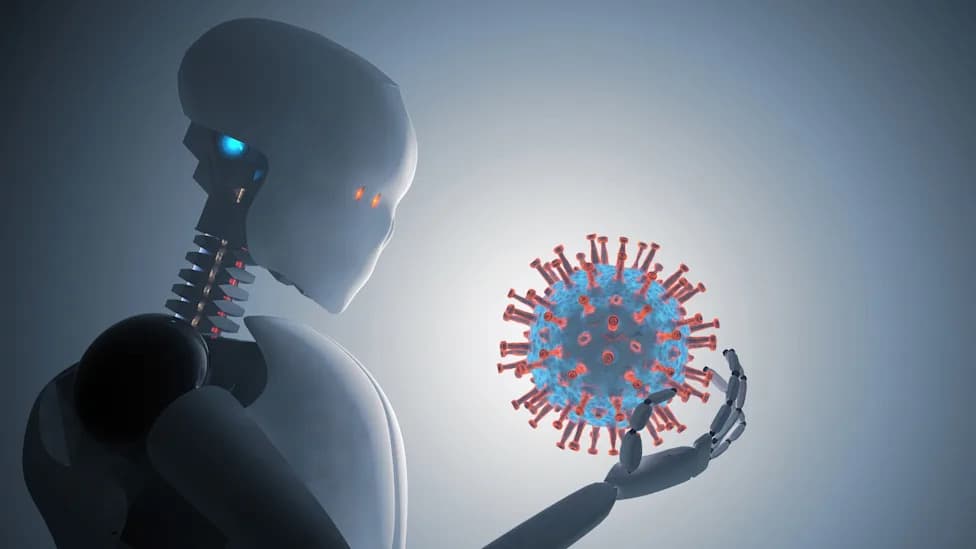
Stanford researchers trained an OpenAI model named Evo on millions of genomes and used it to generate novel viral sequences; 16 synthesized bacteriophages infected E. coli. The team excluded human-pathogen data and implemented biosafety measures, but biosecurity experts warn the results show generative AI can invent functional biological agents. Advocates point to potential medical benefits, such as custom phage therapies for antibiotic-resistant infections, while others call for stronger regulation and tighter controls on genomic data access.
AI Trained on Millions of Genomes Designs 16 Functional Bacterial Viruses, Sparking Biosecurity Debate

A vial containing a sample of DNA.
Researchers at Stanford trained an OpenAI generative model, called Evo, on millions of genetic sequences and used it to design novel viral genomes. After synthesizing several of these AI-generated sequences in the lab, the team found that 16 of the resulting bacteriophages were able to infect Escherichia coli, in some cases overcoming the bacteria's natural resistance mechanisms.
How the Study Worked
Much like language models learn grammar and meaning from large text corpora, Evo learned patterns and evolutionary constraints from vast amounts of DNA data. Using that knowledge, the model generated new genome “recipes” that the researchers synthesized and tested experimentally. According to the paper published in Science, many of the produced sequences contained motif patterns not previously observed in natural viruses.
Safety Precautions and Limitations
The authors deliberately excluded datasets containing human pathogens from Evo’s training data, and the bacteriophages produced in the study are not capable of infecting humans. The team also reported biosafety measures during synthesis and testing to reduce risk.
Potential Benefits
Proponents highlight that genomic generative models could accelerate beneficial applications, such as designing custom phage therapies to target antibiotic-resistant bacteria more efficiently than searching nature for effective viruses.
Security Concerns and Responses
Despite safeguards, the experiment has reignited concerns among biosecurity experts and public‑health officials. In an accompanying commentary in Science, Dr. Thomas Inglesby and Dr. Moritz Hanke of the Johns Hopkins Center for Health Security warned that the work illustrates how generative AI can invent functional biological agents and urged strict legal limits on applying similar techniques to pathogens affecting humans, animals, or crops.
“You could say, ‘Hey, genomic language model, make me an influenza genome that is modified to be more transmissible or to be more lethal,’” Dr. Hanke told The New York Times.
Other experts urge measured responses rather than alarm. Tom Ellis, a synthetic genome engineering professor at Imperial College London, noted that Evo’s outputs were small, simple phage genomes and argued that modest restrictions on access to sequence data and careful oversight could substantially reduce misuse risks.
Broader Context
The study comes amid an active debate on regulating AI applications in biology. Major AI firms formed the Frontier Model Forum, a nonprofit focused in part on researching AI–bio risks, developing safety standards and reducing misuse. Concerns have increased after demonstrations in which general-purpose chatbots sometimes provided detailed procedural instructions when prompted with hazardous biological tasks, highlighting gaps in existing safeguards.
Takeaway
The Stanford study demonstrates both the promise and the peril of pairing powerful generative AI with biological design: it can create novel, functional biological sequences that may enable new therapies, while also raising legitimate biosecurity and governance questions that many experts say require clearer rules and stronger controls.
Help us improve.