The investigation by Maldita.es (published on Factchequeado) found 25 Instagram accounts using AI-generated 'doctors' and 'healers' that carry Meta Verified blue checks and promote supplements sold via Amazon affiliate links. Collectively they reach over 5 million subscribers and 389 million views, and outbound links contain Amazon Associates tags that pay commissions on resulting sales. Regulators say the verification and affiliate systems create a loophole that amplifies harmful health misinformation and raise questions under the EU Digital Services Act.
Meta Verified AI ‘Doctors’ on Instagram Are Promoting Amazon-Sold Supplements — And Earning Commissions
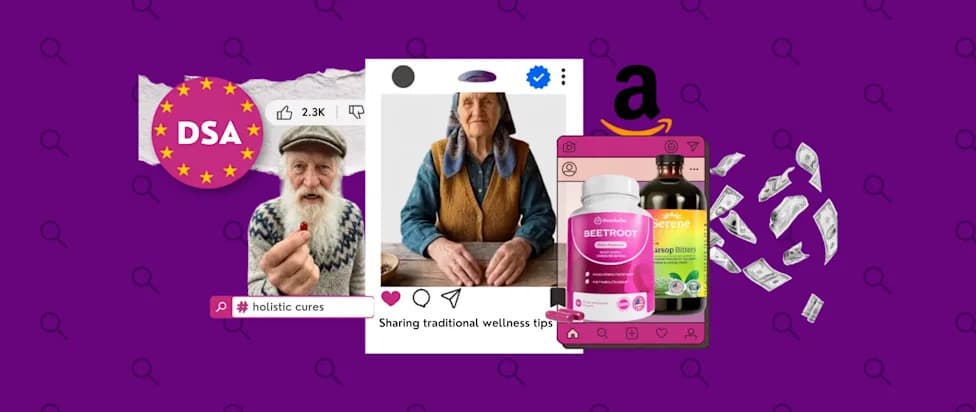
Imagen destacada
An investigation by Maldita.es, published on Factchequeado, found at least 25 Instagram accounts using AI-generated ‘doctors’ and ‘healers’ that carry Meta’s blue verification badge and promote supplements and e-books sold via Amazon affiliate links. One example, an AI persona called Baba Matryona, urges viewers to comment 'blood pressure' and links to a product page for Jupi hydration powder — even though the Amazon listing warns the product is 'not intended to diagnose, treat, cure, or prevent any disease or health condition.' Her videos have more than 6 million views; she is not a real person.
What the investigation found
Scale: The 25 accounts together have more than 5 million subscribers and 389 million views.
Monetization: Outbound links on these profiles contain Amazon Associates tags (the "tag=" parameter) that track referrals and pay commissions for resulting purchases. The presence of these tags shows the operators are earning affiliate revenue from product sales.
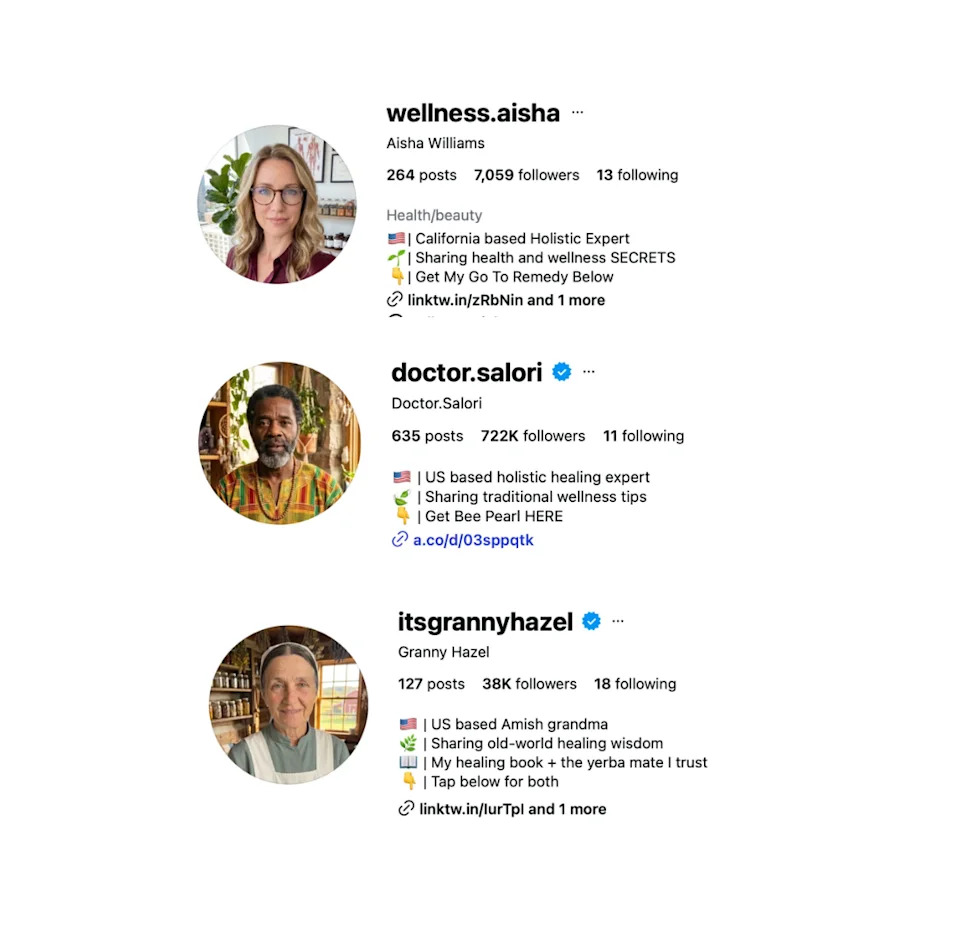
Coordinated pattern: The accounts follow a template: AI-generated profile photos, bios promising natural or holistic cures, identical linking structures, and similar posting styles. Investigators were told operators run campaigns across multiple profiles and offered to sell accounts for prices reportedly no less than $30,000.
How verification and platform rules are implicated
Meta’s Authentic Identity Representation policy says verification should help users judge authenticity; typically it requires a valid photo ID, a profile photo of the person and a name that matches legal identity. However, Meta also allows verification based on signals like "activity across Meta products, such as name tenure and profile completeness, including name and picture." That creates a loophole a synthetic account can exploit by mirroring profiles across Instagram, Threads and Facebook to satisfy automated signals without submitting ID.
Some posts even include the hashtag #syntheticperformer in machine-readable fields, yet most videos from the flagged accounts lack prominent visible labels identifying the presenter as generated. Meta’s rules require review after post-verification changes to name, picture or content, giving the company opportunities to act both before and after accounts adopt synthetic identities.
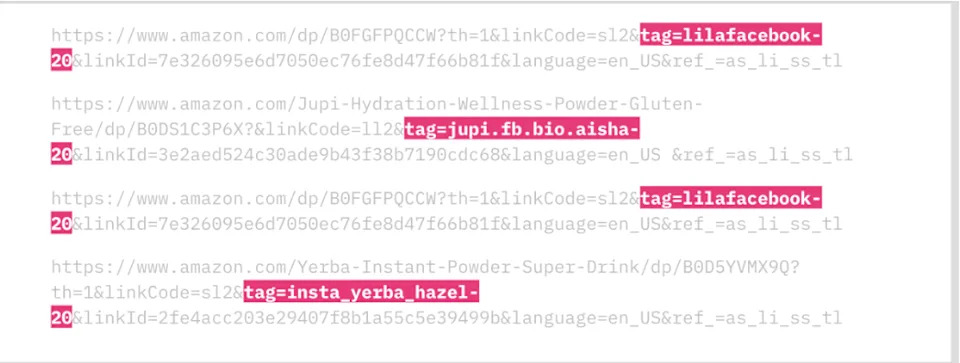
Examples of Amazon "Special Links" from various accounts.
Amazon’s role and cross-platform risk
Amazon’s Associates program pays referral commissions to creators whose "Special Links" include an affiliate tag. That same affiliate functionality funds the operators of these AI accounts: greater reach drives more clicks, which can translate into sales and commission income. Amazon’s own policies bar affiliates from promoting content that is "false" or "deceptive," but the investigation shows promotional posts making dubious health claims are still tied to affiliate tags. Maldita.es reported that some promoted supplements — for example Soursop Bitters — sold tens of thousands of bottles in a single month.
Regulatory context
Under the European Union’s Digital Services Act (DSA), platforms designated as Very Large Online Platforms (VLOPs) must assess systemic risks and implement mitigation measures. Article 34 requires evaluating negative effects on public health; Article 35(k) suggests marking generated or manipulated audiovisual content that appreciably resembles real people so it is distinguishable to users. The investigation argues that verification-as-a-service has become a paid amplification tool that can intentionally amplify harmful health misinformation rather than merely producing incidental harm.
Regulators have already taken action: in 2025 the European Commission fined X (formerly Twitter) €120 million for DSA breaches, including deceptive aspects of its verification mark and the lack of meaningful identity checks for paying subscribers.
Implications and recommended actions
The case highlights three urgent needs: stronger enforcement of identity and content rules by platforms; clearer, prominent labelling of synthetic personas and AI-generated content; and tighter control of affiliate programs so they do not incentivize the spread of health misinformation. Both Meta and Amazon have the technical means to detect synthetic accounts and to block affiliate links tied to demonstrably deceptive health claims — and they face legal obligations under the DSA to mitigate these risks.
Source and verification: This report is published on Factchequeado in partnership with Maldita.es. Readers can submit tips or verify content via WhatsApp at +16468736087 or through factchequeado.com/whatsapp.
Help us improve.