Wildfires and smoke increasingly cross borders, prompting international transfers of crews, aircraft and equipment that function as pragmatic climate diplomacy. Current cooperation is heavily weighted toward emergency suppression and often neglects contamination testing, housing reconstruction, insurance disputes and long-term public-health recovery. Experts call for pre-season preparedness, shared smoke protocols, interoperable systems and Indigenous-led prevention to ensure aid covers the full disaster cycle.
Wildfires Cross Borders — Why Diplomacy Must Extend Beyond Firefighting
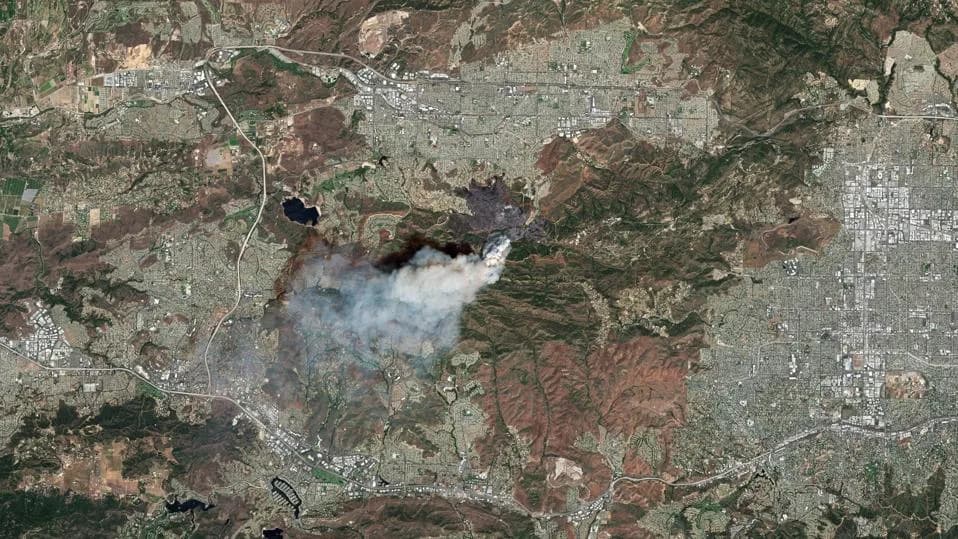
SIMI VALLEY, CALIFORNIA - 19 MAY 2026: Satellite view of the Sandy Fire in Simi Valley, California on May 19, 2026 shows thick smoke plumes rising as nearly 1,700 acres have burned. The wildfire has destroyed at least one home and prompted mandatory evacuation orders across Bell Canyon, Santa Susana, Cheseboro, Burro Flats, and parts of Los Angeles County, displacing around 17,000 residents. Hundreds of firefighters, helicopters, and water tankers continue aggressive efforts to contain the flames amid strong winds and low humidity. (Photo by Gallo Images/Orbital Horizon/Copernicus Sentinel Data 2026)Gallo Images via Getty Images
A satellite image from Simi Valley, California, on May 19, 2026, showed thick smoke rising from the Sandy Fire as nearly 1,700 acres burned. The blaze destroyed at least one home and forced mandatory evacuations in Bell Canyon, Santa Susana, Cheseboro, Burro Flats and parts of Los Angeles County, temporarily displacing about 17,000 people. Hundreds of firefighters, helicopters and water tankers continued aggressive containment efforts amid strong winds and low humidity.
Cross-Border Smoke and Shifting Diplomacy
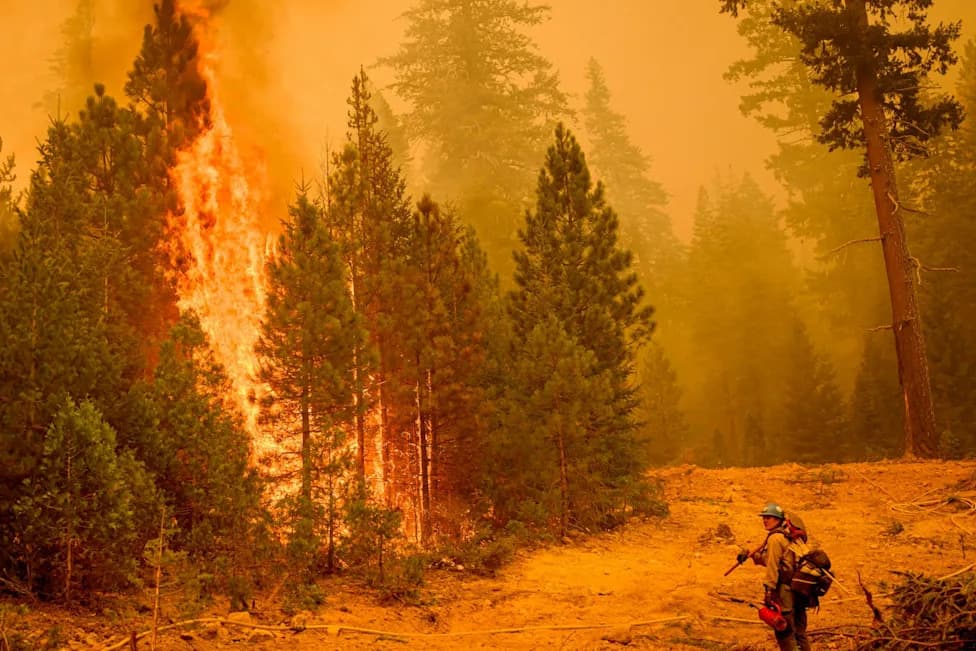
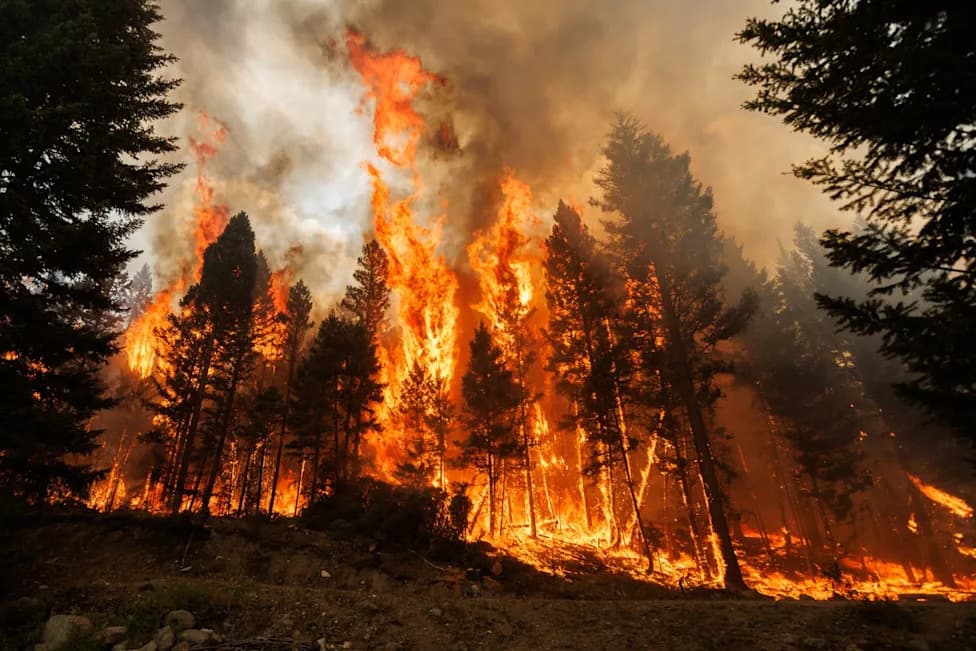
This summer, smoke from hundreds of Canadian wildfires drifted into the United States, degrading air quality from the Great Lakes to the East Coast. Across the Atlantic, fires prompted evacuations in France and Spain while extreme heat and drought put other European countries at heightened risk. Governments frequently respond by sending personnel, aircraft, satellite data and equipment across borders — a pragmatic form of climate diplomacy driven by urgent operational need.
Established Systems for Mutual Aid
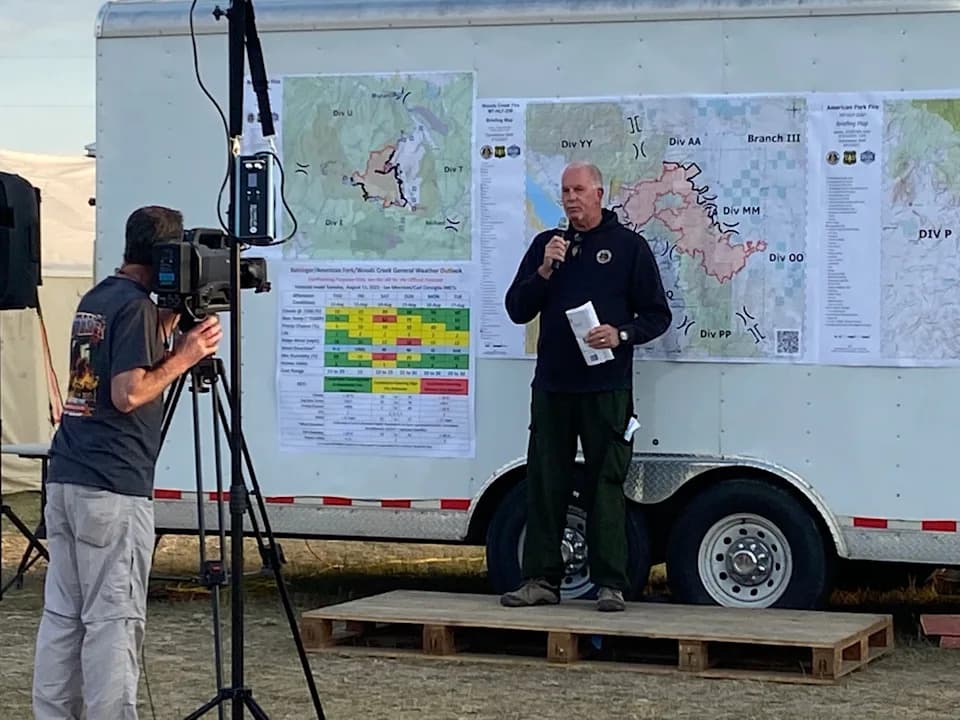
International wildfire assistance is not new. The United States and Canada operate under a formal plan to share personnel and equipment when domestic resources are overwhelmed. The Canadian Interagency Forest Fire Centre coordinates mutual aid among federal, provincial and territorial agencies and manages international requests. In July, Australia and New Zealand sent 74 specialists to support the U.S. Pacific Northwest, relying on shared training and compatible incident-command systems.
Europe is building a comparable model through the EU Civil Protection Mechanism. Ahead of the 2026 season the EU prepositioned more than 770 firefighters in high-risk countries and maintained a RescEU reserve that included 22 aircraft and five helicopters. The EU also plans a permanent firefighting fleet due for delivery between 2027 and 2030.
Diplomatic Value — And Its Limits
These deployments carry diplomatic value: offers of assistance can open narrow channels of cooperation even between politically divided parties. A McGill University commentary on "wildfire diplomacy" highlighted, for example, a 2025 offer of help from Turkish Cypriot authorities to Greek Cypriots via U.N. peacekeepers—an operational bridge though not a political solution.
"We must prepare for risks before disasters strike, and not simply react afterwards," EU Crisis Management Commissioner Hadja Lahbib told Reuters, urging greater investment in prevention and forest management.
But the model has limits. International aid depends on one nation having spare capacity when another needs help. As fire seasons lengthen and overlap globally, that spare capacity becomes less reliable: the same aircraft and specialized crews may be needed in multiple places at once.
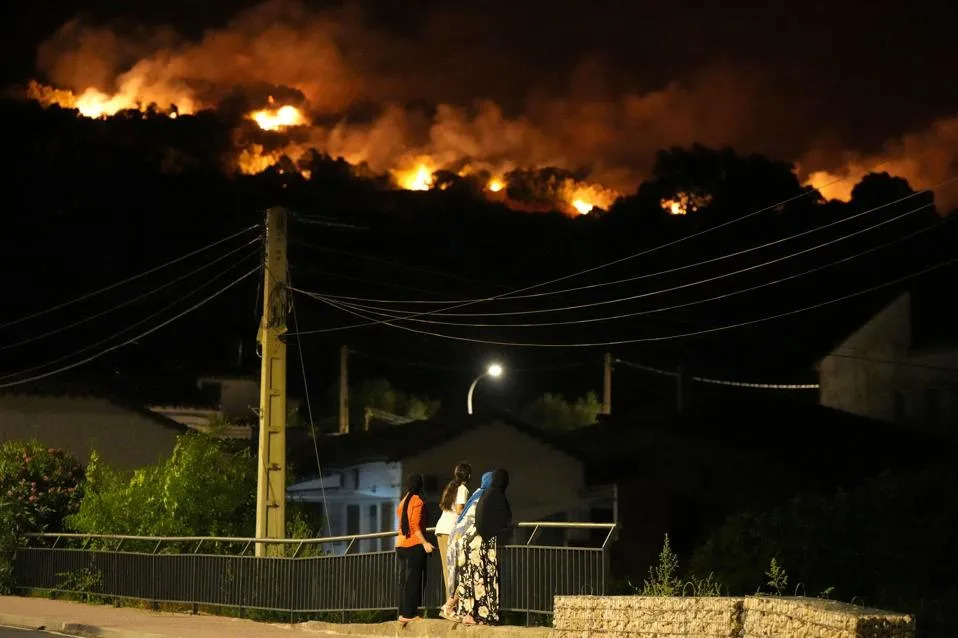
Residents watch the flames on hill crests as firefighters battle a wildfire in Cebreros area, near Avila, 80 kms west of Madrid at night on July 24, 2026. The worst wildfires in the Madrid region's history rage west of the Spanish capital, forcing authorities to evacuate or order around 40,000 people to remain indoors. (Photo by Cesar MANSO / AFP via Getty Images)
Smoke, Public Health and Recovery Gaps
Smoke exposes another governance shortfall. In mid-July, Canada reported 858 active fires, 111 of them out of control, and smoke from those blazes affected communities across the American Midwest and Northeast. Yet air-quality warnings, worker protections, school-closure guidance, mask distribution and access to clean indoor air remain largely governed by separate national and local systems. A bilateral plan that moves firefighters across a border does not automatically provide an asthmatic child in Detroit or an outdoor worker in New York with an air filter, paid leave or medical care.
Los Angeles illustrates why cooperation must include long-term recovery. January 2025 fires destroyed thousands of structures and spread toxic ash into homes that remained standing. Public-health officials identified potential contamination from lead, asbestos, arsenic and other hazardous materials, prompting disputes over who should test and remediate affected properties. One community testing program found that 63% of sampled homes still had floor-lead levels above federal safety thresholds even after cleaning, according to LAist.
Reconstruction has been slow: residents faced permit delays, insurance claims, contractor shortages and financing barriers. The U.S. Small Business Administration extended loan-disbursement deadlines for Los Angeles survivors three times; approved borrowers were ultimately given up to 24 months to access funds (compared with the usual six months). The SBA approved more than $3.4 billion for nearly 13,000 borrowers — a necessary but partial response that revealed deeper problems in post-fire recovery systems.
Toward Full-Cycle Wildfire Diplomacy
If wildfire diplomacy is to be more than temporary exchanges of personnel and planes, governments should extend cooperation across the full disaster cycle:
- Joint investment in fire-weather forecasting, satellite monitoring and interoperable equipment;
- Shared pre-season preparedness, compatible incident-command training and coordinated prepositioning of resources;
- Cross-border smoke protocols and minimum protections for schools, outdoor workers and medically vulnerable populations;
- Common recovery standards for contamination testing, debris removal, resilient reconstruction and insurance oversight;
- Support for long-term capacity building in lower-income countries and communities instead of episodic emergency deployments;
- Integration of Indigenous fire stewardship into prevention partnerships, with Indigenous nations directing how their knowledge is used, protected and compensated.
Why It Matters
Planes and crews arriving from another country provide a powerful image of solidarity, but the harder test begins after they depart. Effective wildfire diplomacy should not only help governments extinguish the same blaze; it should help communities breathe safely, return home and recover without carrying the disaster's burdens for years.
This article was originally published on Forbes.com.
Help us improve.