Kenya has released a detailed carbon markets guide and capped international carbon credit sales at a 10 million metric ton CO2e budget through 2030, with annual limits of 1.67 million metric tons. The guide creates an Article 6 approval framework and replaces the previous three-stage sign-off process with clearer, binding decision tools. Renewable energy, transportation and waste projects are prioritized; forests and land-use initiatives are temporarily excluded pending stronger baselines. Authorities say the measures protect Kenya’s NDC, strengthen climate integrity and make approvals more predictable for investors.
Kenya Issues Carbon Markets Rulebook and Caps International Carbon Credit Sales Through 2030
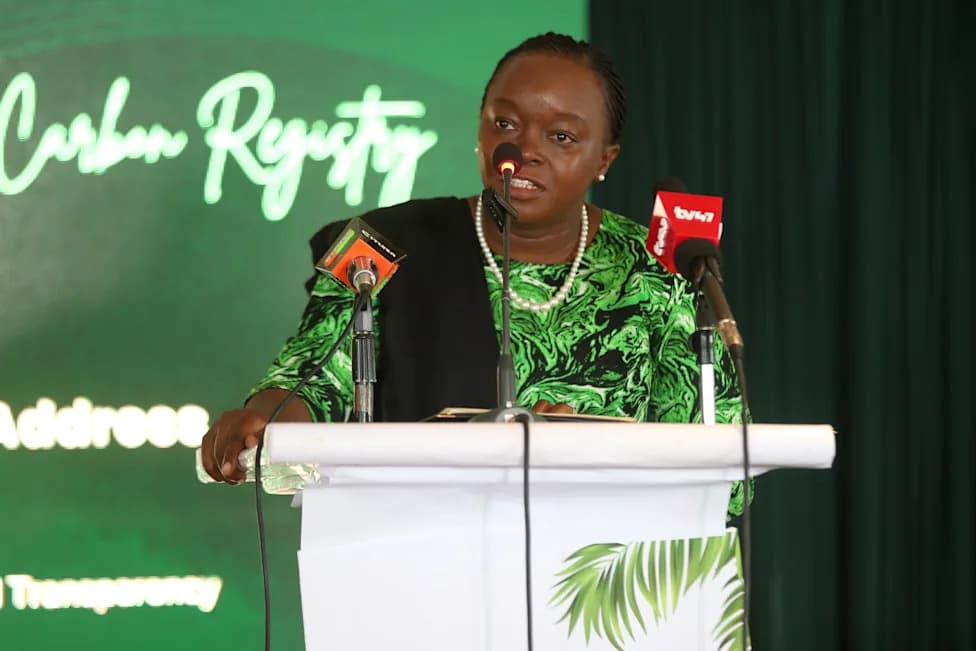
FILE - Deborah Mlongo Barasa, Cabinet Secretary for Environment, Climate Change and Forestry in Kenya, speaks during the launch of the National Carbon Registry in Nairobi, Kenya, Feb. 17, 2026. (AP Photo/Henry Naminde, File)
Kenya has published a comprehensive carbon markets guide and introduced a cap on the volume of carbon credits it will authorize for sale to overseas buyers. The government set a 10 million metric ton carbon dioxide equivalent (CO2e) budget for international transactions through 2030, with annual allocations capped at 1.67 million metric tons.
New Framework and Article 6
The guide establishes a formal approval framework for projects under Article 6 of the Paris Agreement, which enables the cross-border trade of emissions reductions. It replaces the previously uncertain three-stage approval pathway (No-Objection, Approval and Authorization) with clearer, binding decision tools to be used across a project’s lifecycle.
Scope, Priorities and Exclusions
The national carbon budget covers emissions reductions generated in the energy, transportation, industrial processes and waste sectors. The guide introduces a conditional priority list focused on renewable energy, transportation and waste projects to speed review of projects aligned with national priorities. Forests and other land-use projects are excluded for now while Kenya strengthens baselines and data systems to manage reversal risks.
Objectives and Expected Impacts
Officials say the cap is intended to prevent Kenya from overselling offsets it may later need to meet its Nationally Determined Contribution (NDC) and to protect climate integrity. Environment Cabinet Secretary Deborah Barasa said the measure "introduces a national carbon budget for trading to safeguard our NDC." Environment and Climate Change Principal Secretary Festus Ng'eno added that predictability, transparency and institutional coherence will attract quality investment and ensure local communities benefit.
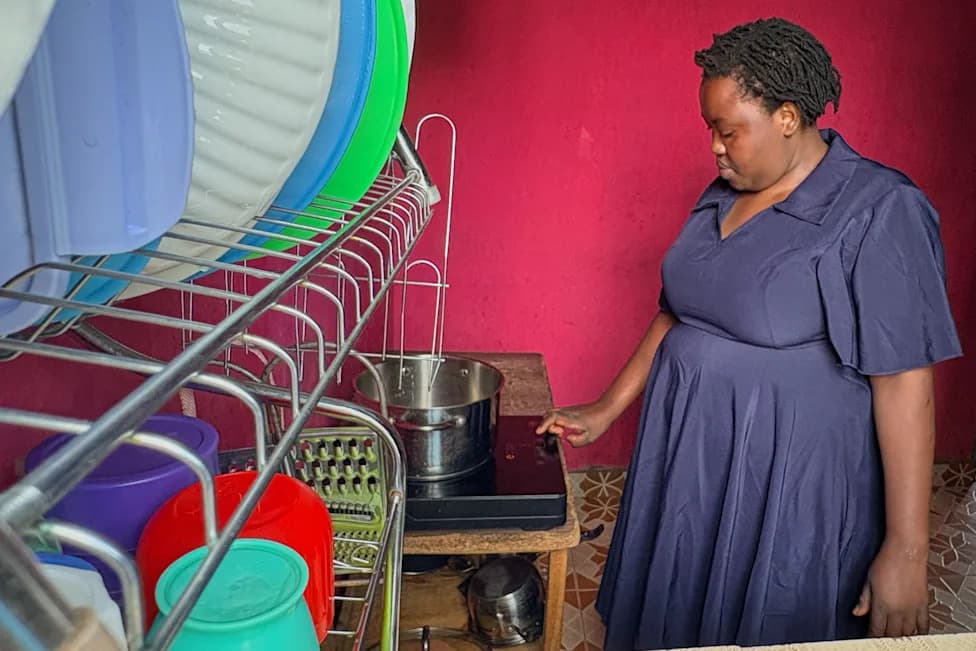
Kenya has attracted carbon-market investments in clean cooking, renewable energy, mangrove restoration and forest conservation. The government says the new guide will make decisions more predictable for investors while protecting Kenya’s climate goals and ensuring national benefits are prioritized.
Based on reporting by The Associated Press.
Help us improve.