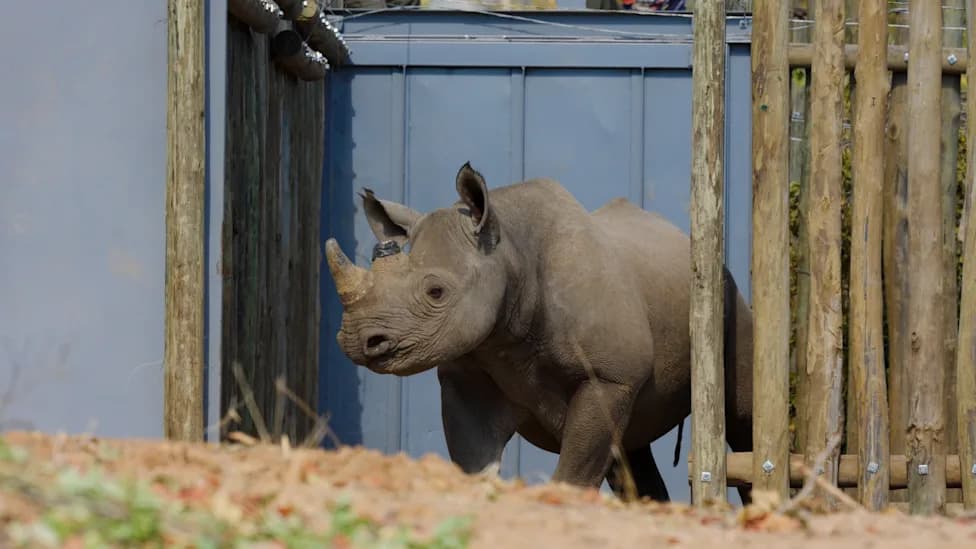
The first night the black rhinos returned to Matusadona National Park in May, park manager Mike Pelham unrolled a bedroll and stepped into the dark to be near them. Under a clear sky, 17 large rhinos stood inside their bomas — secure holding enclosures where they acclimatized before release. "The first few nights I slept by the boma walls so I could listen to them," Pelham recalls. "Seeing them come back feels like a dream fulfilled."
Background: A Long Fight Against Poaching
Commercial poaching that surged from the 1970s onward devastated black rhino populations across Africa. At one point more than 90% of black rhinos in Zimbabwe and large parts of the continent were lost. International bans on horn trade date to 1977, but poaching continued; black rhinos have been listed as critically endangered since 1996 and number roughly 6,788 individuals across about a dozen African countries today.
In the 1980s the Zambezi Valley held the continent’s largest contiguous black rhino population — more than 500 animals — in a rich landscape of riverine habitat, mopane woodlands, and broad plains that support a wide array of wildlife. But by the end of 1993 Matusadona’s population had fallen to just 16 animals. In response, ZimParks established Intensive Protection Zones (IPZs) and relocated survivors to private and protected lands to keep the genetics alive.
How The Comeback Was Built
After years of decline and a nadir when the last camera-trap record in Matusadona was taken on 16 July 2016, a coordinated recovery effort gained traction. In 2019 ZimParks partnered with African Parks to form the Matusadona Conservation Trust, and a formal park logo — a black rhino silhouette — appeared on uniforms in 2020 as a public promise to restore the species.
"These are Zimbabwean rhino, they belong to the people of the country," says Pelham. "We're not just bringing any rhinos back; we're bringing your rhinos home."
The initial May release involved 17 rhinos, all held first in bomas to settle before wider release into a newly fenced IPZ along Lake Kariba’s shoreline. These animals are direct descendants of Zambezi Valley stock, preserving important local genetic diversity rather than being foreign transplants.
Community Partnership And Protection
The Conservation Trust places community benefits at its core: across Matusadona 99% of employees are Zimbabwean and 84% come from the four local chiefdoms. Projects include local hiring and training, school meal programs (over 5,000 children fed during last year’s drought), and procurement priorities for nearby communities. Vimbayi Nebiri, the Trust’s Community Development Coordinator and daughter of Chief Nebiri, leads engagement to ensure people’s safety concerns and needs are heard.
Anti-poaching capacity has been rebuilt: more rangers, vehicles, fuel, and training replace the lean years when only 20 patrol rangers covered the whole park. The goal is to scale the ranger force toward roughly 100 personnel to sustain effective patrols and rapid response.
Science, Scale-Up And Risks
Phase two planning is already underway. Conservationists such as Raoul du Toit and Natasha Anderson are preparing to release about 20 additional rhinos, selected for genetic complementarity from Bubye Valley Conservancy, to expand genetic diversity and move toward a national meta-population strategy — interconnected, genetically robust rhino populations across Zimbabwe. Matusadona is intended to become both a recipient and eventual source population for public land meta-populations.
Yet risks remain. Poaching is the greatest ongoing threat; staff describe it as a hazard that, like a bush fire, can be very difficult to contain once it starts. Long-term success depends on sustained funding, consistent community trust and benefits, continued training and equipment for rangers, and constant vigilance.
What This Return Represents
The reintroduction at Matusadona is scientifically notable because it restores local genetic lineage, and culturally resonant because it fulfills decades of promise to local communities and park staff. For many who guarded hope through the park’s darkest years, the sight of rhinos returning carries powerful emotional weight — a reminder that long-term, community-focused conservation can work, even if the road ahead remains difficult.
As Admire Mrewa, the park’s rhino monitoring coordinator, sets a drone into the dawn skies to scan the mopane woodlands for the bright thermal signatures of rhinos, the everyday work of keeping them is visible: patient, vigilant and unglamorous, but essential. Returning the rhinos was only the beginning; keeping them here will require the same persistence that brought them home.