The century‑old bouba/kiki effect — matching rounded shapes with 'Bouba' and spiky shapes with 'Kiki' — was tested in nine macaques at Singapore's Mandai Wildlife Reserve. After a sound‑free familiarization, monkeys heard repeated 'Bouba' or 'Kiki' while choosing between round and spiky lids; choices were counterbalanced and untrained. Animals tended to pick the round lid during 'Bouba' playback and the spiky lid during 'Kiki', with results above chance. The findings, reported as a bioRxiv preprint, suggest an ancient perceptual bias but require replication and peer review.
Monkeys Show the 'Bouba–Kiki' Sound–Shape Link Once Thought Unique to Humans
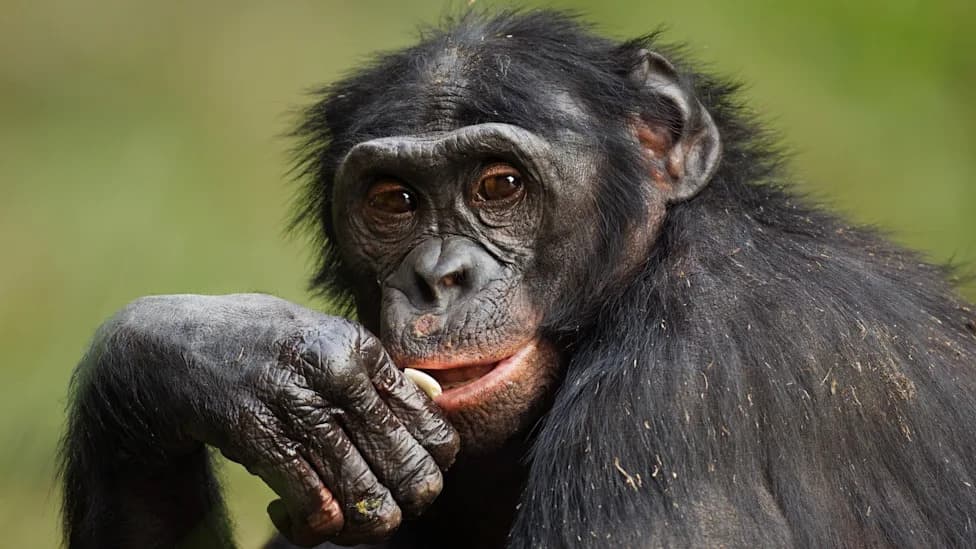
(Anup Shah/Getty Images + Andrew Dunn/Wikimedia Commons)
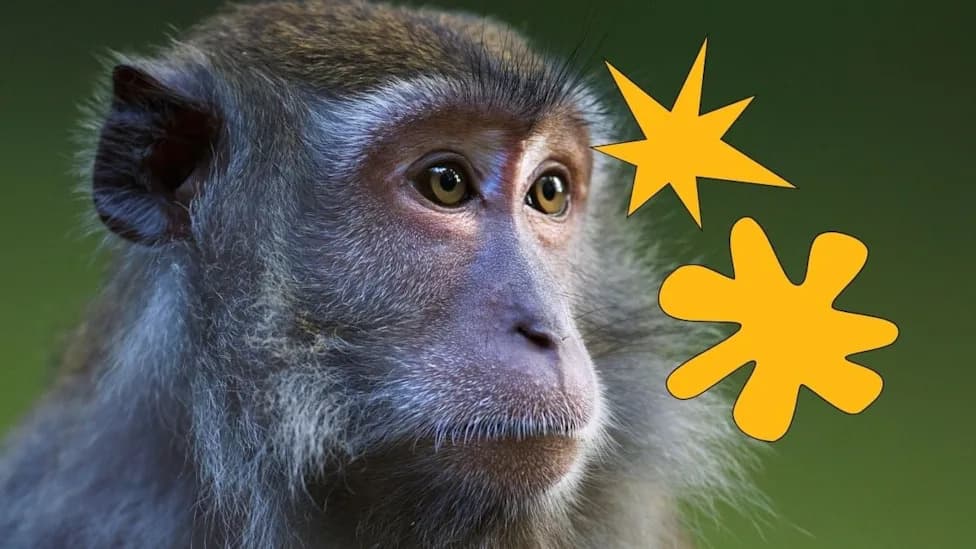
The classic "bouba/kiki" demonstration — in which people reliably match a rounded shape with the name 'Bouba' and a jagged shape with 'Kiki' — may not be uniquely human. A new preprint reports that macaque monkeys showed the same intuitive crossmodal mapping, suggesting this perceptual bias could be deeper in the primate lineage.
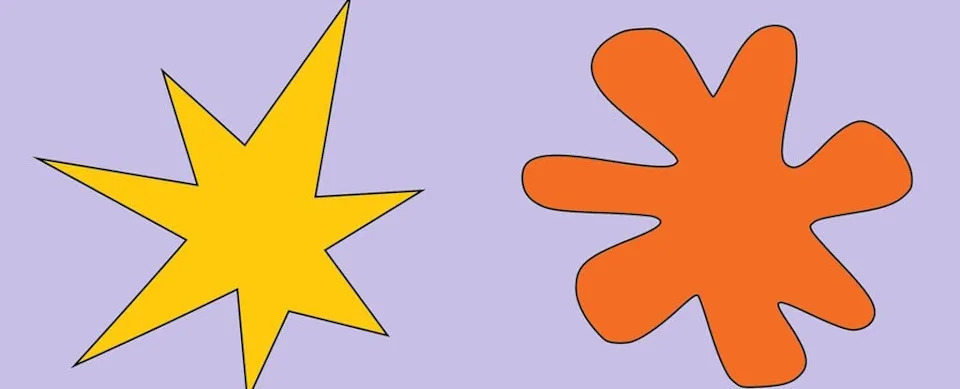
The shapes used in the 'bouba/kiki' experiments.(Andrew Dunn/Wikimedia Commons/CC BY-SA 3.0)
How the Study Worked
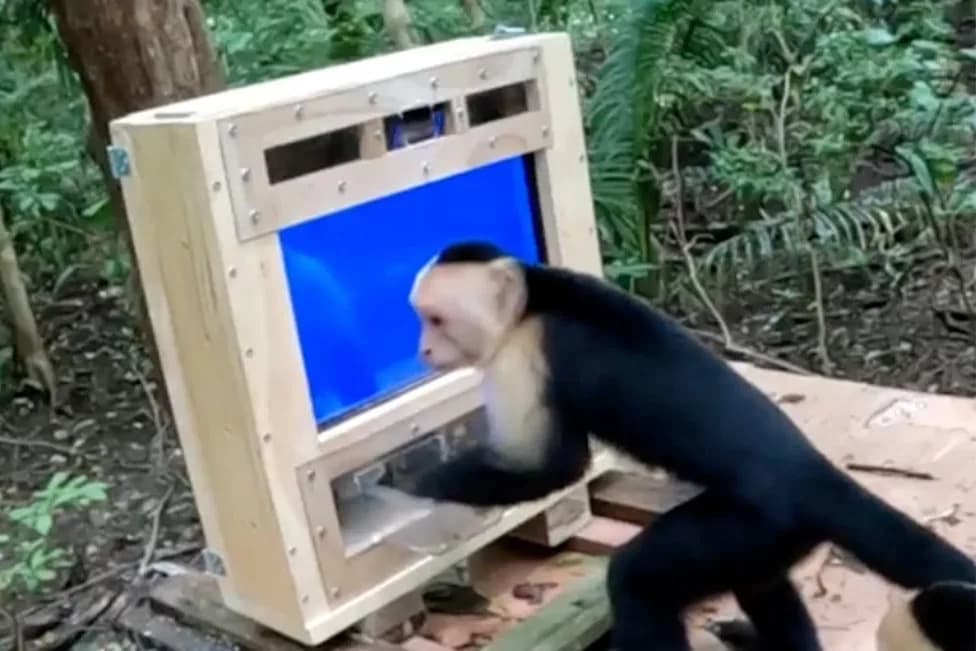
Researchers tested nine macaques housed at the Mandai Wildlife Reserve in Singapore: eight long‑tailed macaques (Macaca fascicularis) and one southern pig‑tailed macaque (Macaca nemestrina) (Loconsole et al., bioRxiv, 2026). The experiment used two phases: a training/familiarization phase and the main test phase.

YouTube Thumbnail
Familiarization: To avoid biasing the animals with sound cues, each monkey first learned to choose a marked cup. Two covered cups were presented; one lid was blank and the other showed a hybrid shape combining rounded and spiky features. Food was consistently hidden beneath the marked (hybrid) lid so animals learned to select the marked cup.
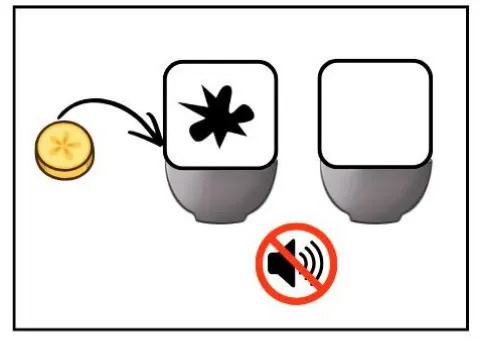
Food was hidden in the cup with the shape on the lid. (Loconsole et al., bioRxiv, 2026)
Test: In the test phase the two lids displayed the canonical Bouba (rounded) and Kiki (spiky) shapes. A recording repeatedly played either the spoken word 'Bouba' or 'Kiki' in the background. Each monkey completed 24 trials arranged as short blocks of three; the positions of the shapes and which word played were counterbalanced so no single visual or auditory cue always predicted reward.
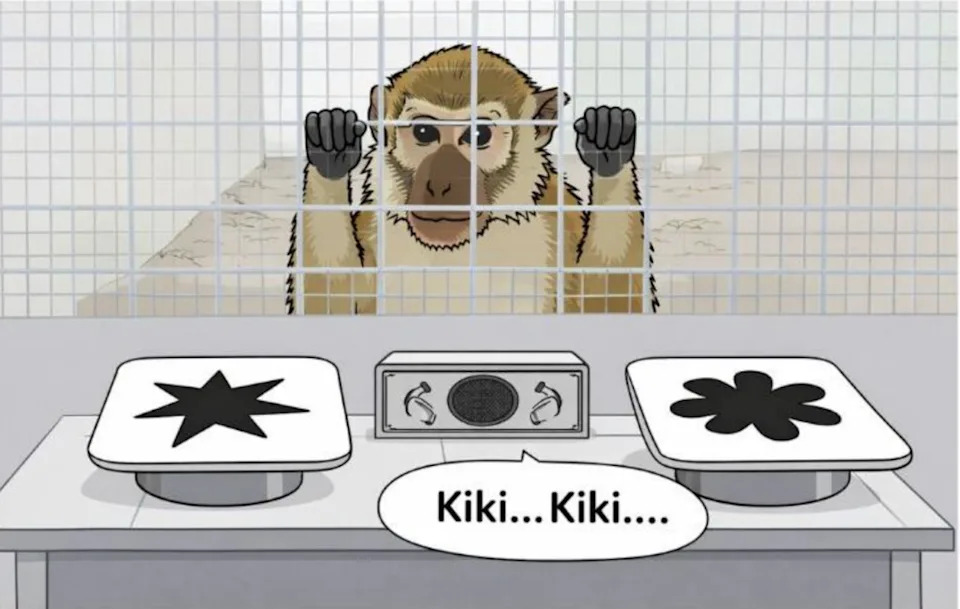
An illustration of the experimental setup. (Loconsole et al., bioRxiv, 2026)
Results
Despite never being trained to match a specific sound to a specific shape, most animals chose the round lid more often during 'Bouba' playback and the spiky lid more often during 'Kiki' playback. Statistical analysis indicated these preferences exceeded chance. As the authors report, the odds of choosing the round shape were nearly six times higher in Bouba trials than in Kiki trials (Loconsole et al., bioRxiv, 2026).
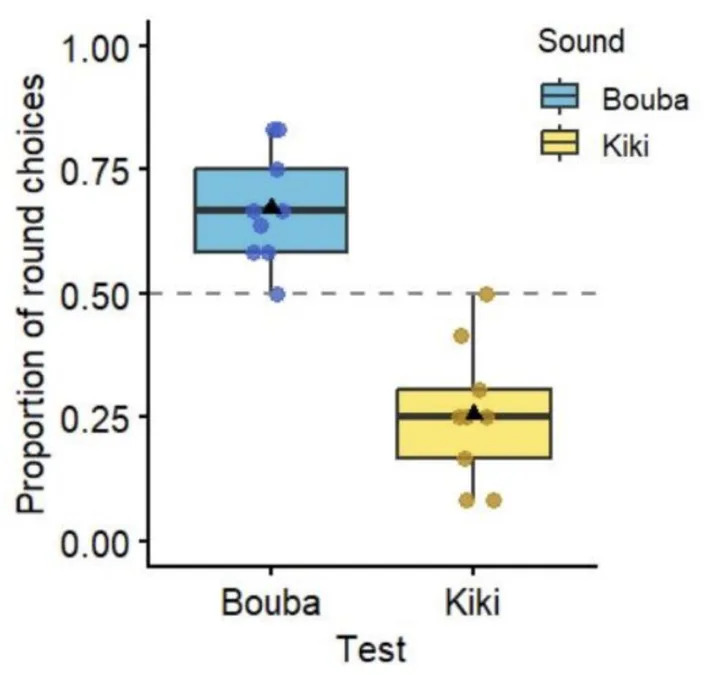
(Loconsole et al., bioRxiv, 2026)
These findings are consistent with the idea that at least some crossmodal correspondences may rest on ancient perceptual biases inherited from a distant common ancestor, rather than having evolved only within humans.
Limitations and Next Steps
This work is a preprint on bioRxiv and has not yet undergone peer review; the sample size was small (nine individuals) and included two species. Follow‑up studies with larger, more diverse samples and independent replication will be important to confirm how widespread this mapping is across primates and other vertebrates, and to rule out alternative explanations related to training, context, or experimental setup.

Subscribe to ScienceAlert's free fact-checked newsletter
Why It Matters
If replicated, the result suggests that some of the perceptual building blocks that underlie how humans map sounds to meanings may be shared with other primates. That would shift the evolutionary question from whether the bouba/kiki effect is uniquely human toward how broadly sensory correspondences are distributed across animals and what role they might have played in the evolution of communication.
Reference: Loconsole et al., bioRxiv (preprint), 2026. This study is preliminary and awaits peer review.
Help us improve.