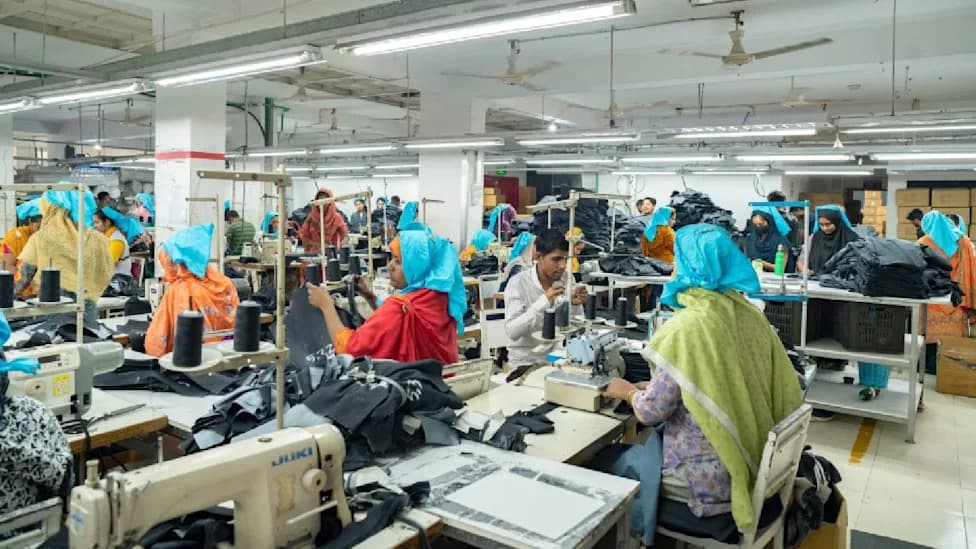
The Earth Action system-level study, supported by The Nature Conservancy and brands including Patagonia and Under Armour, finds textile production and laundering release more than 63,000 tons of microfibers annually. It is the first assessment to map manufacturing-stage emissions and argues the problem is systemic across fiber types. The paper calls for upstream design changes and improved wastewater and sludge management and estimates production interventions could reduce emissions by up to 95%. It also highlights scalable filtration technology (Regen) and an open-source measurement effort to better track microfiber concentrations.
New Study: Textile Manufacturing Emits 63,000+ Tons of Microfibers Annually — Industry Could Cut Production Emissions Up To 95%

Patagonia, Under Armour Work Alongside Environmental Organizations on New Microfiber Report
A new system-level study led by research consultancy Earth Action, supported by The Nature Conservancy and industry partners including Patagonia, Under Armour and Decathlon, finds that textile manufacturing and laundering together release more than 63,000 tons of microfibers into the environment each year. The report is the first to assess microfiber shedding across the manufacturing system — an upstream vantage point that reveals substantial emissions during production.
Key Findings
The study shows that shedding during production is driven by many manufacturing choices: fiber and yarn architecture, fabric construction, finishing treatments, mechanical processing history, chemical use, quality control practices, and how wastewater and sludge are managed. It emphasizes that synthetic, man-made and natural fibers can all contribute to environmental burdens depending on processing and treatment, meaning the problem is systemic rather than limited to a single material type.
Matt Dwyer, Vice President, Global Product Footprint at Patagonia, said the company has learned that tackling complex problems like microfiber pollution requires partnership and collective action. The report highlights the role of manufacturing in emissions and identifies near-term and longer-term opportunities to reduce or eliminate them.
Solutions and Industry Response
The paper advocates a systems-based response: embed low-shedding construction as an engineering parameter in product design, improve upstream material choices, and strengthen downstream wastewater treatment and sludge management. The authors estimate that coordinated manufacturing interventions could reduce production-phase microfiber emissions by up to 95%.
Kyle Blakely, Senior Vice President of Innovation, Design Studio, Development and Testing at Under Armour, said measurement alone is no longer enough. He urged that low-shedding construction be designed in from day one and called for coordinated action across the value chain to achieve meaningful reductions.
Technology And Measurement Efforts
The study also highlights the need for better, standardized measurement. Current research is limited by sparse data and inconsistent testing methodologies. To address this, researchers are developing an open-source methodology for measuring microfiber concentrations to improve comparability across studies and factory settings.
One industry partner, Matter, a U.K. clean-technology firm, contributed field data from R&D on microfiltration. Matter developed Regen, a self-cleaning filter designed specifically to capture microplastic fibers at the point of release. Regen is scalable from individual homes to industrial supply chains and, in collaboration with partners such as Paradise Textiles (Alpine Group), is positioned as a practical mitigation for production-stage emissions.
Matter aims to deploy solutions across textiles and laundry that would capture 16,000 tons of microfibers by 2030. The company is also working with NGOs and manufacturers to develop standardized measurement approaches so field data can better align with modeled estimates.
Scott Voisey, Principal Product Manager at Matter, noted that real-world measurements in wet processing and effluent treatment show variability not fully reflected in current industry averages. He said Matter plans to make its methodology widely accessible to help close the gap between models and factory-floor reality.
What This Means
The report reframes microfiber pollution as a solvable, system-wide issue if brands, manufacturers, technology providers and policymakers collaborate. Short-term gains come from improved filtration and better wastewater practices, while the greatest long-term opportunity lies in design and material choices that prioritize low-shedding construction from the start.
Limitations: The research recognizes current gaps in data and the absence of a universally accepted measurement standard, which the study’s open-source efforts seek to address.
Next Steps: Wider adoption of standardized measurement, investment in point-of-release filtration technologies like Regen, and industry-wide design and process changes are recommended to achieve the reductions the report outlines.
Help us improve.