This column explains why the author chose the title Born Free and Equal, tracing the phrase from the Declaration of Independence through founding‑era state constitutions, Corfield v. Coryell, Seneca Falls, Lincoln, and the Universal Declaration of Human Rights. It recounts how Social Darwinism and eugenics undermined the creed in the late 19th and early 20th centuries — culminating in Buck v. Bell — and how the post‑war human‑rights movement reaffirmed equality. The author argues the creed should shape constitutional interpretation, but only for rights deeply rooted in American history and subject to permissible public restraints.
Born Free and Equal: Why the Creed Matters for Constitutional Law
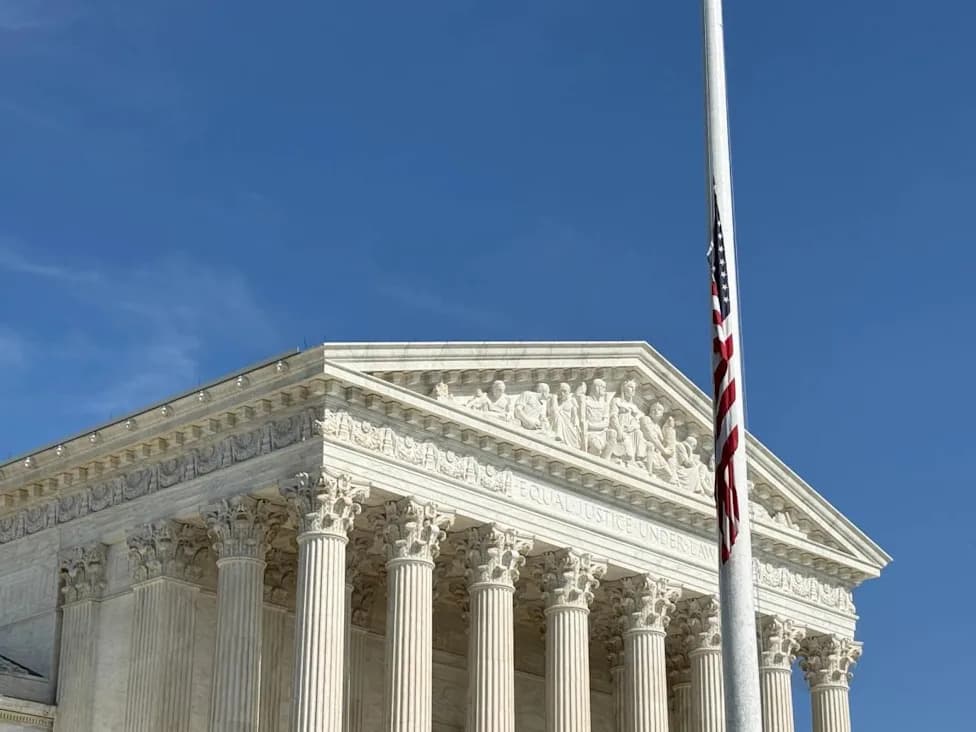
(Katie Barlow)
This is my first column for SCOTUSblog. I begin by explaining why I chose the header Born Free and Equal. The phrase traces directly to the Declaration of Independence — whose 250th anniversary we observe this year — and captures a foundational claim of the American constitutional creed:
"We hold these truths to be self-evident, that all men are created equal, that they are endowed by their Creator with certain unalienable Rights, that among these are Life, Liberty and the pursuit of Happiness — That to secure these rights, Governments are instituted among Men, deriving their just powers from the consent of the governed…"
Founding‑Era Echoes
The idea of equality and liberty at birth recurs across founding‑era texts. The Massachusetts Constitution (1780), drafted in part by John Adams, states in Article 1:
"All men are born free and equal, and have certain natural, essential, and unalienable rights; among which may be reckoned the right of enjoying and defending their lives and liberties…"
The Pennsylvania Constitution (1776) likewise declares:
"That all men are born equally free and independent, and have certain natural, inherent and inalienable rights…"
By 1791, six of the 14 states had comparable "born free and equal" provisions. New York borrowed language from the Declaration of Independence, while New Hampshire and Vermont echoed Pennsylvania. Notably, some colonies — Connecticut and Rhode Island — remained governed by their colonial charters rather than drafting new declarations of rights. Still, the most prominent founding states — Massachusetts, New York, Pennsylvania, and Virginia — embraced the born‑free‑and‑equal theme.
Contradictions At The Founding
Virginia’s 1776 declaration included striking language: "That all men are by nature equally free and independent…" Yet Virginia was a slaveholding state; the insertion of a "state of society" clause was widely understood as a device to preserve slavery while asserting a universal principle. These contradictions — lofty constitutional language coexisting with exclusionary institutions — have shaped American legal and political debates ever since.
Early Judicial Echoes
In 1823, Corfield v. Coryell used language that echoed the born‑free idea, though not the exact phrase "born equal." Justice Bushrod Washington described privileges and immunities as those "fundamental" rights "enjoyed by the citizens of the several states… from the time of their becoming free, independent, and sovereign" and then added that such rights are "subject nevertheless to such restraints as the government may justly prescribe for the general good of the whole."
That passage compresses and sanitizes founding‑era formulations and later informed discussions of the Fourteenth Amendment and the now‑familiar "deeply rooted in American history and tradition" test (see Washington v. Glucksberg and Dobbs v. Jackson Women's Health Organization). The Corfield language both affirms basic protections and recognizes permissible regulation for the public good.
The Creed In Social Movements And Rhetoric
The born‑free‑and‑equal idea reappears in the 1848 Seneca Falls Declaration of Sentiments — which adapted the Declaration of Independence to demand sex equality — and in Abraham Lincoln’s Gettysburg Address (1863), where he explicitly included Black Americans within the creed: "…conceived in liberty, and dedicated to the proposition that all men are created equal." Later, Dr. Martin Luther King Jr. invoked the same language in his 1963 "I Have a Dream" speech as the moral foundation for civil rights.
Eugenics, Buck v. Bell, And The Post‑War Recommitment
Between roughly 1880 and World War II, influential intellectuals and some political leaders embraced Social Darwinism and eugenics, rejecting the idea that all people are equally entitled to dignity and rights. Thirty or more states enacted compulsory sterilization statutes. In Buck v. Bell (1927), the Supreme Court (8–1) upheld one such law. Although Skinner v. Oklahoma (1942) distinguished Buck, Buck was never expressly overruled.
The global horrors of Nazi eugenics and the Holocaust prompted a post‑war moral reassessment. The United States, led in part by President Harry Truman’s administration and Eleanor Roosevelt at the United Nations, helped frame the 1948 Universal Declaration of Human Rights, whose Article 1 affirms: "All human beings are born free and equal in dignity and rights." That international document echoed — and helped revitalize — the American commitment to equality.
How The Creed Should Inform Constitutional Interpretation
My working thesis is that the born‑free‑and‑equal creed should inform constitutional law — but with two constraints. First, courts should recognize rights that are "deeply rooted in American history and tradition." Second, recognized rights remain "subject nevertheless to such restraints as the government may justly prescribe for the general good of the whole."
Accordingly, I criticize decisions that I view as untethered to historical practice — for example, Lochner v. New York (1905), which invoked a broad liberty‑of‑contract doctrine to strike down labor regulation, and Roe v. Wade (1973), which recognized an expansive constitutional right to abortion. At the same time, I support dissents or rulings that vindicated individual liberties against special‑interest regulation — for example, Justice Stephen J. Field’s dissent in The Slaughter‑House Cases, which opposed an exclusionary monopoly on butchering in New Orleans. I also question decisions like Williamson v. Lee Optical Co. (1955), where the Court upheld regulatory burdens that, in my view, reflected insufficient scrutiny of arbitrary restrictions.
This column will examine when and how the Supreme Court has honored the born‑free‑and‑equal creed and when it has fallen short — always attentive to history, tradition, and the legitimate power of government to regulate for the common good.
Note: The views expressed here are those of Professor Calabresi and do not reflect the positions of Northwestern University Pritzker School of Law, Yale Law School, or the Federalist Society.
Help us improve.