Homeowners associations (HOAs) govern large shares of new and existing U.S. homes and strongly influence neighborhood water use, wildlife habitat and rooftop energy. Research shows developer-written covenants often impede sustainability, but HOAs can increase native plant cover and reduce turfgrass when they adopt pro-environment rules. States are beginning to limit HOA bans on solar panels, drought-resistant landscaping and clotheslines, while model CCRs and technical support can help new communities make sustainability the default.
How HOAs Could Shift From Blocking To Enabling Sustainable Yards And Home Energy
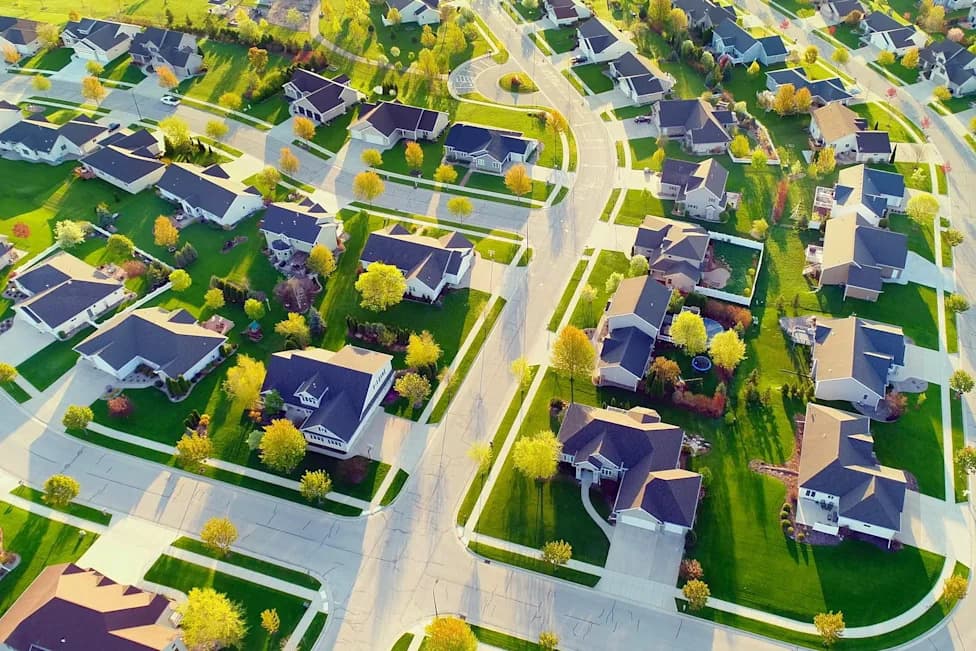
Many HOAs are designed with a uniform look, often featuring mandatory turfgrass lawns.JamesBrey/E+ via Getty Images
If you build a house in the United States today, there’s a good chance it will fall under a homeowners association (HOA). Roughly two out of every three new homes are in an HOA, and about one-third of existing homes are too. HOAs shape many everyday decisions that affect water use, wildlife habitat and rooftop energy generation.
Janet and Jeff Crouch learned that the hard way. After spending more than a decade converting their Maryland yard into native plant habitat for birds and pollinators, their HOA ordered them to replace it with turfgrass. Their costly legal fight largely preserved the yard and helped spur Maryland’s 2021 low-impact landscaping law, which deems turfgrass mandates and bans on pollinator gardens or xeriscaping "unreasonable limitations."
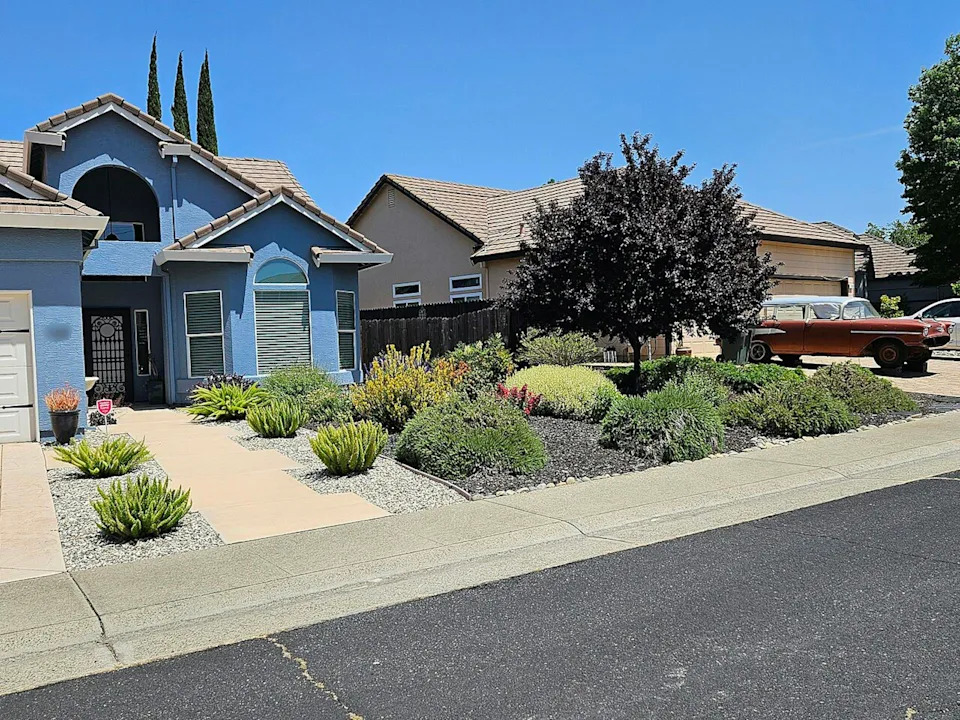
Xeriscaping with native plants and no turfgrass in these Roseville, Calif., yards reduces their water needs.SpiritedMichelle via Wikimedia Commons,CC BY
Why HOAs Matter
HOAs are private, quasi-governmental organizations that enforce covenants, conditions and restrictions (CCRs). Developers often write these CCRs and control the association initially; later a resident-elected board interprets and enforces them. Because amendments frequently require supermajorities, developer-written rules can persist for decades.
HOAs commonly regulate house size, exterior materials, driveways, yards, trees, outdoor lighting and energy installations. Their aesthetic emphasis on uniformity — often justified as protecting property values — gives HOAs substantial environmental influence over whole neighborhoods.
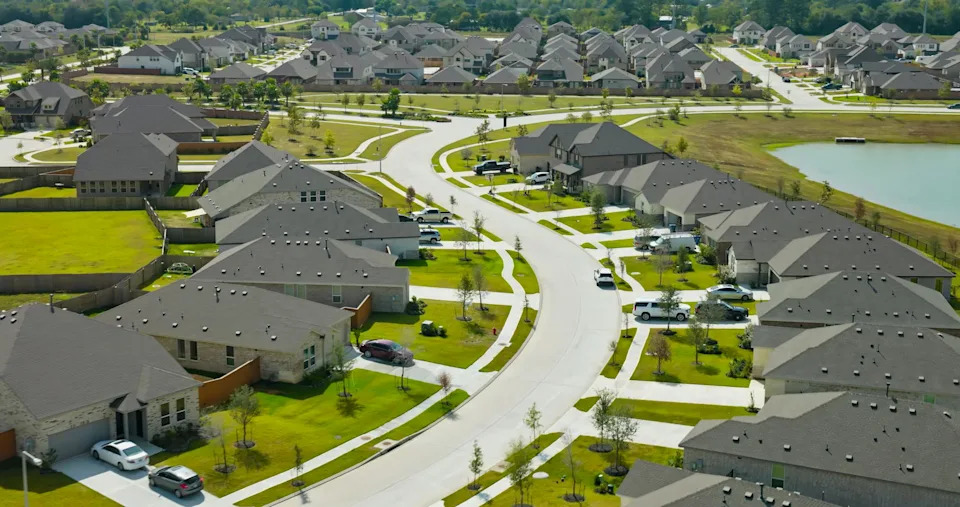
Uniformity that promotes lawns can keep native plants out, even in states like Texas with increasingly high heat and that are prone to droughts.Halbergman/E+ via Getty Images
Environmental Costs Of Conventional Rules
Turfgrass lawns require frequent mowing, fertilizing and watering, increasing greenhouse gas emissions and water demand while supporting far less biodiversity than native plantings. Rules that restrict solar panels, cap renewable energy or forbid low-water landscaping can prevent households from adopting sustainability measures that would benefit communities and ecosystems.
What The Research Shows
To assess HOA effects on sustainability, our team reviewed CCRs from 31 HOAs in Ingham County, Michigan (home to Lansing). We examined 18 provisions related to building, landscaping and energy. We found many provisions that impede sustainable choices: 71% and 81% of HOAs imposed minimum home sizes for single- and two-story houses respectively; nearly half required lawn maintenance and allowed impervious driveways; about one-third limited household energy production (such as solar); and roughly one-quarter prohibited clotheslines.
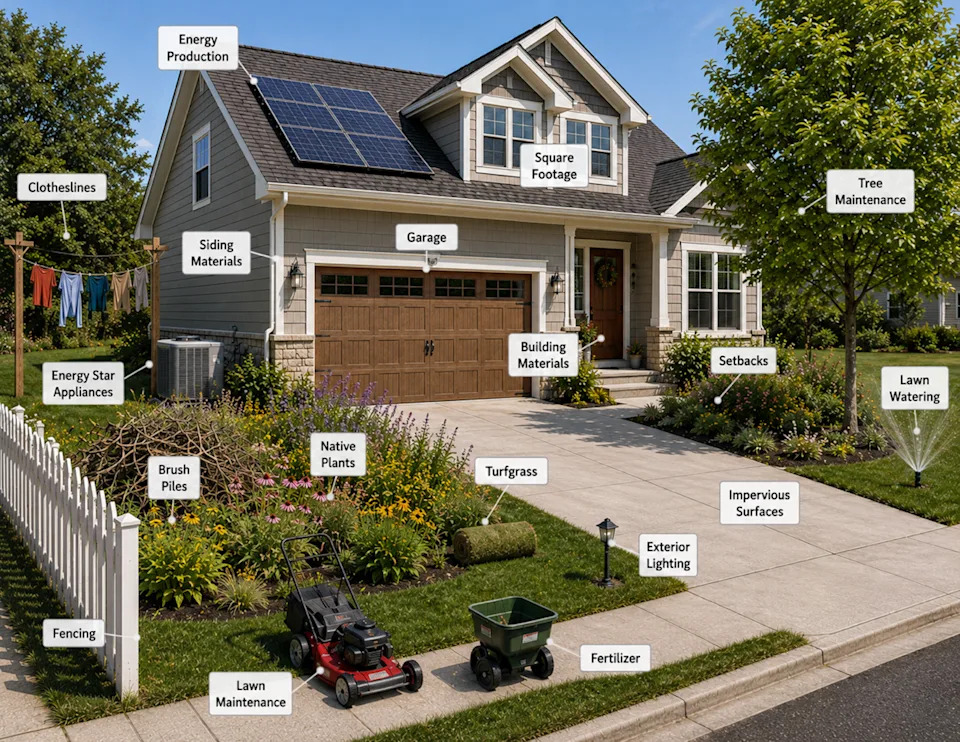
A photo illustration rendered with the help of AI shows 18 areas where HOA rules can affect a home's environmental sustainability. Daniel Kramer
Provisions that promoted sustainability were uncommon: 29% limited outdoor-light wattage, 19% required tree maintenance, 6% constrained fertilizer use and only 3% required native plantings. In short, obstructive rules far outnumbered supportive ones.
We then surveyed front yards in and around Madison, Wisconsin. In HOAs that required native plants, yards averaged 29.5% native-plant cover versus 6.9% where no such requirement existed. Where associations combined native-plant mandates with limits on turfgrass, native cover averaged about 42.1%, compared with 11.6% where only a native-plant requirement existed. These results show that HOA rules can meaningfully change neighborhood landscapes.
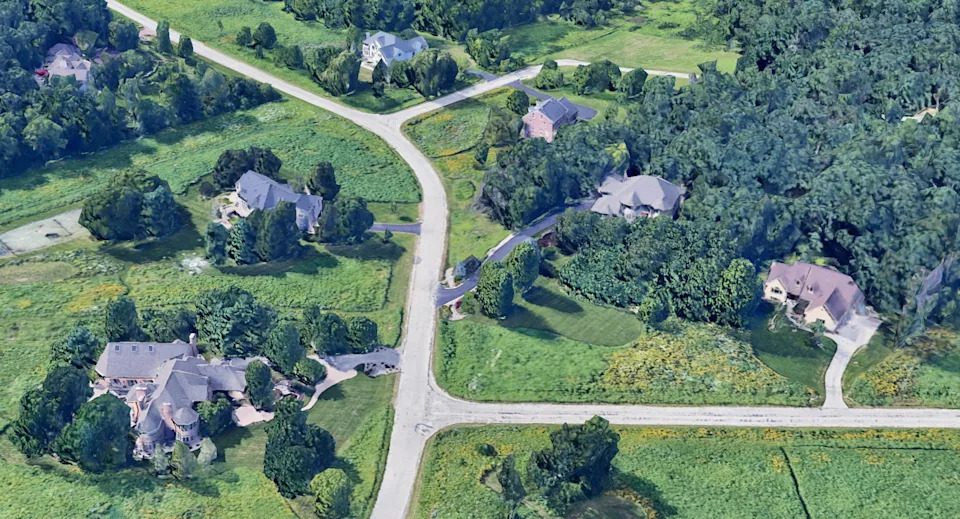
Large estates in Noll Valley, near Madison, Wis., have small, turfgrass yards and large areas of prairie between homes.Landsat/Copernicus/Google Earth,CC BY
How States Are Responding
Recognizing conflicts between private covenants and public environmental goals, states have begun to set policy guardrails. Examples include:
- Solar protections: Michigan, Minnesota, Arizona and Delaware prevent HOAs from banning solar-panel installations.
- Drought-tolerant landscaping: California, Colorado, Washington, Nevada and Utah require HOAs to accommodate waterwise landscaping.
- Native and low-impact landscaping: Maryland, Maine, Florida and Illinois bar HOAs from banning native or low-impact yards.
- Right to dry: Nineteen states now prohibit HOAs from banning outdoor clotheslines.
Practical Steps Forward
HOAs are uniquely positioned to lead on household-scale sustainability because they govern the settings where most environmental decisions are made. Policy and practice can steer them in a greener direction:
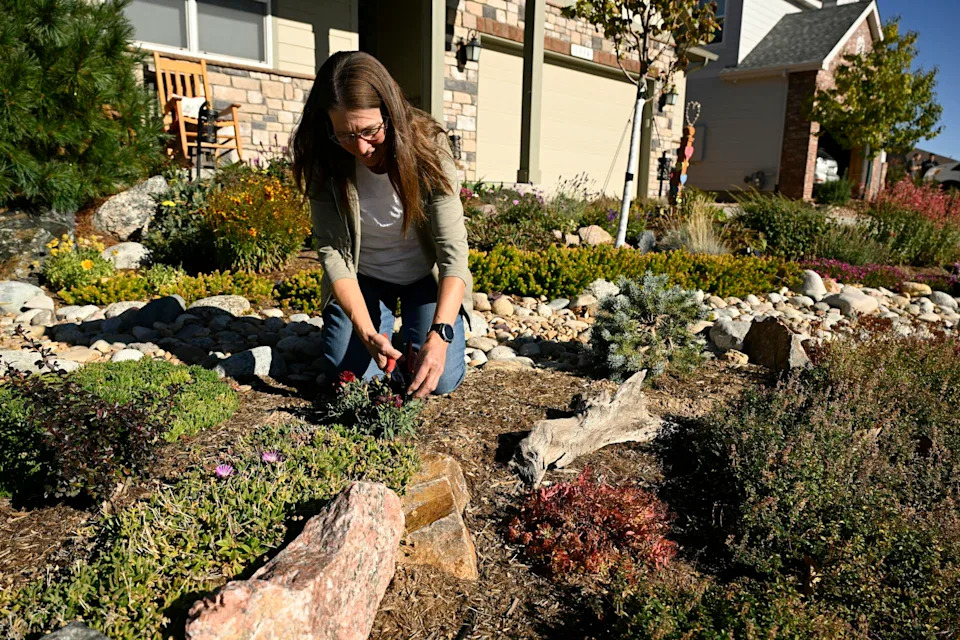
Native plants can reduce water and energy demand, particularly compared to turfgrass lawns. Castlerock, Colo., now limits water use for lawns in new developments.RJ Sangosti/MediaNews Group/The Denver Post via Getty Images
- State lawmakers can establish clear limits that protect renewable energy, drought-tolerant landscaping and wildlife-friendly yards from restrictive private rules.
- Developers, city planners and conservation groups can collaborate to create model CCRs that make sustainability the default for new neighborhoods.
- Technical assistance and outreach can help newly formed HOAs adopt and maintain native plantings, waterwise landscapes and renewable-energy accommodations.
Millions of Americans live under HOA rules today. That means HOAs will continue to shape residential sustainability. The central choice before homeowners, planners and policymakers is whether these organizations will keep enforcing outdated aesthetic norms at an environmental cost, or become partners in building more sustainable neighborhoods.
Republished from The Conversation. Written by Daniel Kramer and Madeline Carr, Michigan State University. The authors report no relevant conflicts of interest.
Help us improve.