LHAASO has identified Cygnus X-3 as the most powerful known particle accelerator, reaching at least 30 PeV. The ultra‑high‑energy gamma‑ray emission is pulsed with a 4.8‑hour period matching the binary orbit, making Cygnus X-3 the first variable source at these energies. Researchers constrain the acceleration region to roughly three times the Sun's radius, and the discovery challenges the long‑held ~1 PeV Galactic limit, opening new paths for studying compact‑object particle acceleration.
Cygnus X-3 Identified as the Most Powerful Particle Accelerator Known — Reaches ≥30 PeV
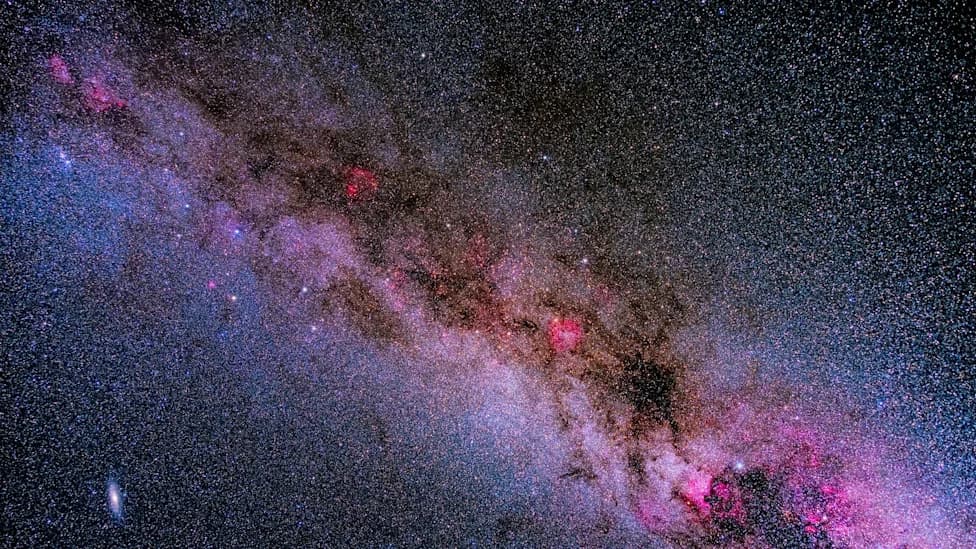
Cygnus X-3 confirmed as universe’s most powerful particle accelerator at 30 PeV: LHAASO
China's Large High Altitude Air Shower Observatory (LHAASO) has identified Cygnus X-3 — a microquasar roughly 7,200 light‑years away — as the most powerful particle accelerator yet observed in the universe. The LHAASO collaboration reports that the system accelerates particles to at least 30 peta‑electron volts (PeV), a result published in National Science Review.
Why This Matters
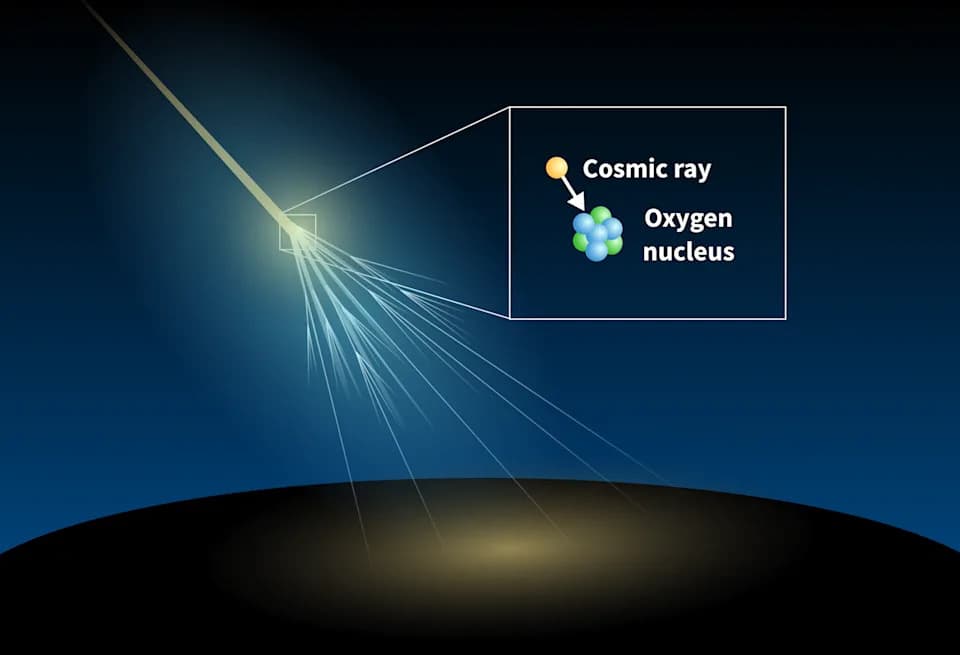
This finding overturns a long‑standing assumption about the maximum energies Galactic accelerators can reach. Conventional models placed an effective Galactic ceiling near ~1 PeV, associated with the so‑called “knee” in the cosmic‑ray energy spectrum. Cygnus X-3 exceeds that limit by roughly a factor of 30. For scale, the Large Hadron Collider (LHC) at CERN reaches collision energies of about 14 tera‑electron volts (TeV), or ~0.014 PeV per collision — roughly 2,000 times lower than the particle energies inferred at Cygnus X-3.
Source Type and Acceleration Mechanism
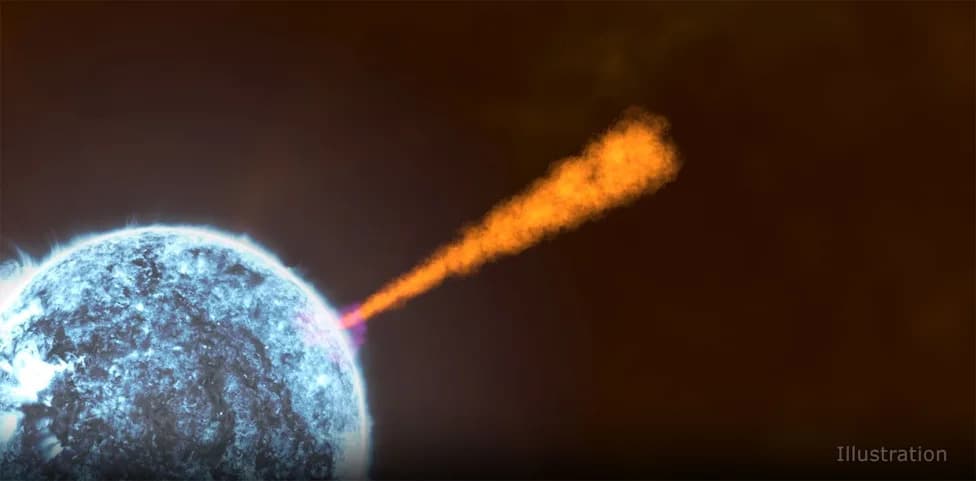
Cygnus X-3 is a microquasar: a compact object (either a black hole or a neutron star) in close orbit with a massive companion star. Material accreted from the companion's stellar wind powers relativistic jets. LHAASO's observations indicate those jets — or the region around the compact object — accelerate particles to ultra‑high energies.
Variable Ultra‑High‑Energy Emission
One of the most striking results is that the ultra‑high‑energy gamma‑ray signal is pulsed. LHAASO detected a clear 4.8‑hour periodicity in the emission, matching the known orbital period of the binary system. This makes Cygnus X-3 the first variable ultra‑high‑energy gamma‑ray source identified. The gamma‑ray flares also correlate with simultaneous observations by NASA's Fermi satellite, showing the same energetic events across widely different energy bands.
Localization and Scale
By analyzing the timing and properties of the flares, researchers constrained the acceleration region to a compact volume on the order of three times the radius of the Sun, located immediately around the compact object. That small region must channel enormous energy into individual particles to reach the measured 30 PeV.
Implications and Context
These results open a new avenue for studying particle acceleration near black holes and neutron stars, and they expand the known population of Galactic "PeVatrons" — sources capable of accelerating particles beyond 1 PeV. LHAASO has previously reported PeV‑range detections (for example, the Crab Nebula and several other sources near 1–2 PeV), but the 30 PeV measurement from Cygnus X-3 is the largest single jump in observed source energy to date. The discovery motivates follow‑up observations across the electromagnetic spectrum and with neutrino and cosmic‑ray detectors to better understand the underlying physics.
About LHAASO
LHAASO is located at roughly 14,468 feet (4,410 meters) elevation in Sichuan Province, southwest China. The observatory spans about 1.36 square kilometers and is operated by the Institute of High Energy Physics under the Chinese Academy of Sciences. Since entering full operations, LHAASO has produced a series of landmark cosmic‑ray and gamma‑ray discoveries; the Cygnus X-3 detection is its highest‑energy confirmed result to date.
Note: The LHAASO collaboration led by Zhen Cao (principal investigator and CAS academician) reports these results in National Science Review. Ongoing and future multi‑wavelength and multi‑messenger observations will help confirm details of the acceleration site and mechanisms.
Help us improve.