Scientists used the LHC to reproduce the earliest moments of cosmic‑ray particle showers by colliding oxygen nuclei with protons on July 1, 2025. ATLAS recorded high‑precision images and measured secondary particles with accuracy more than ten times better than the spread among existing simulation models. Published in Physical Review Letters, the data will refine cosmic‑ray composition estimates and improve connections between particle physics and astrophysics.
CERN Recreates Cosmic Rainstorms: LHC’s First Oxygen–Proton Collisions Illuminate Particle Showers
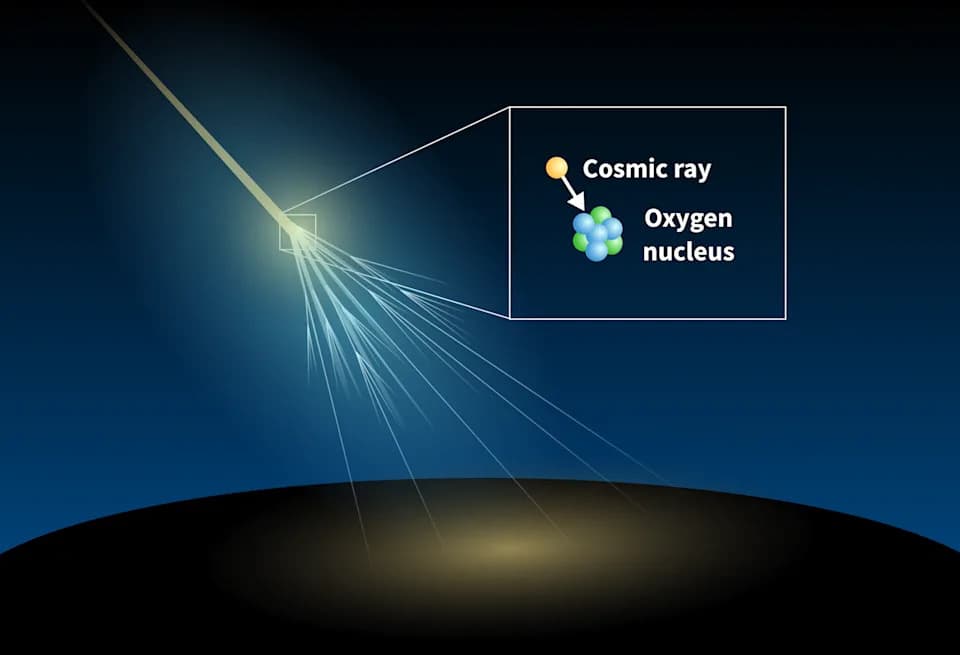
When a cosmic ray strikes a nucleus in Earth's atmosphere, it creates a rainstorm of particles. Jesse Liu,CC BY
Every second, torrents of energetic particles produced by cosmic rays pass through your body at nearly the speed of light. These showers begin high in the atmosphere when fast-moving nuclei slam into air molecules and fragment into cascades of secondary particles that reach the ground.
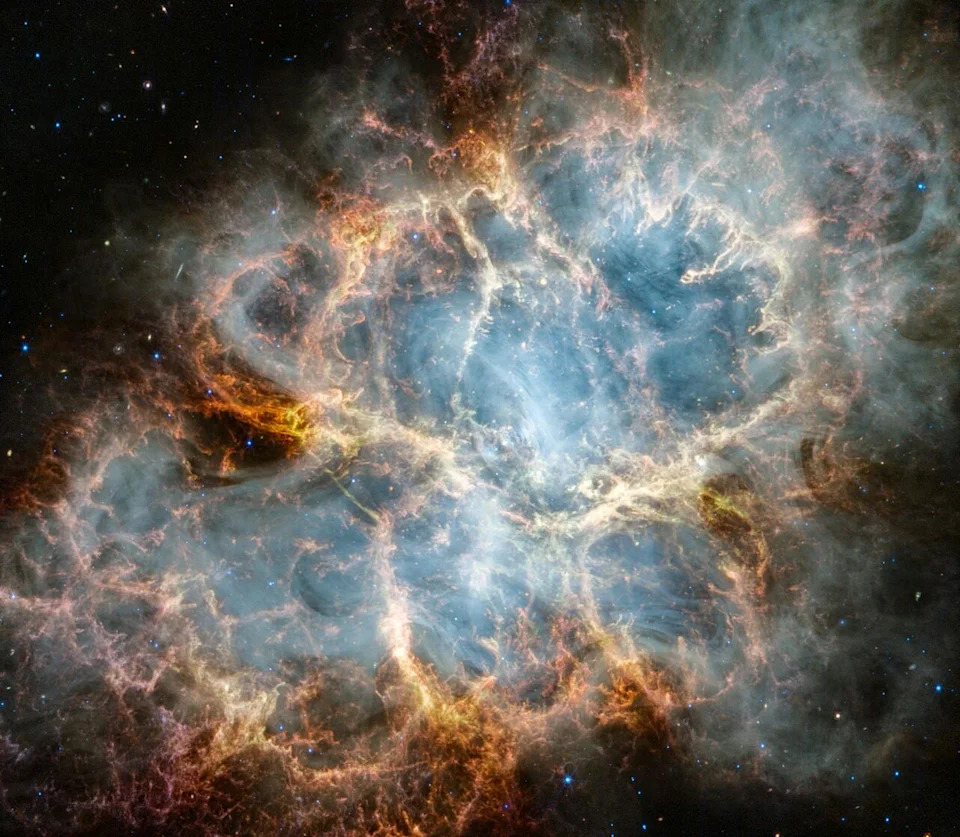
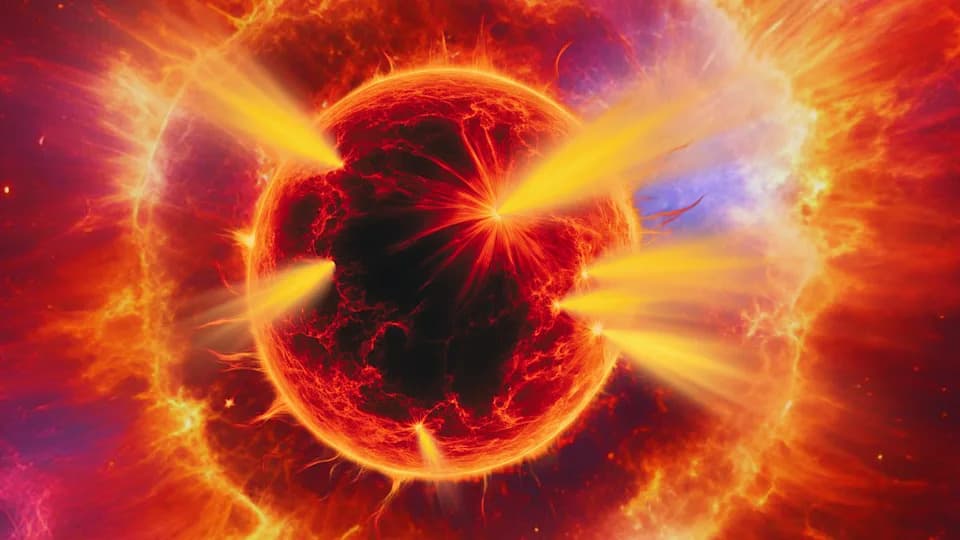
The Crab Nebula is the remnant of an exploding star where cosmic rays may originate.NASA, ESA, CSA, STScI, T. Temim (Princeton University),CC BY
For decades scientists have recorded these cosmic "rainstorms," but the earliest instants of shower formation remained imprecisely understood. Rather than waiting for rare sky events, researchers have now reproduced the crucial first moments in the laboratory using CERN’s Large Hadron Collider (LHC).
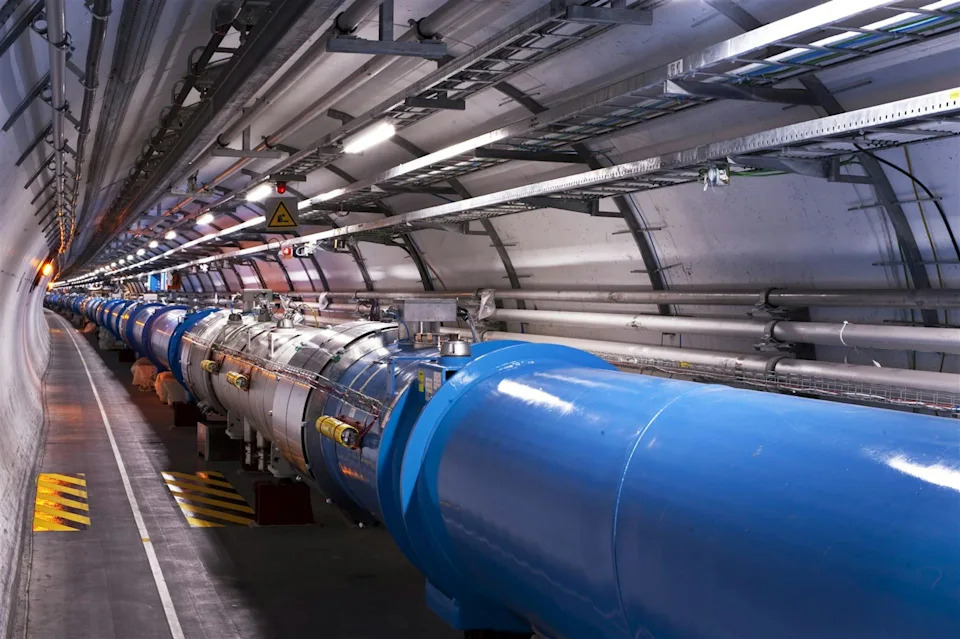
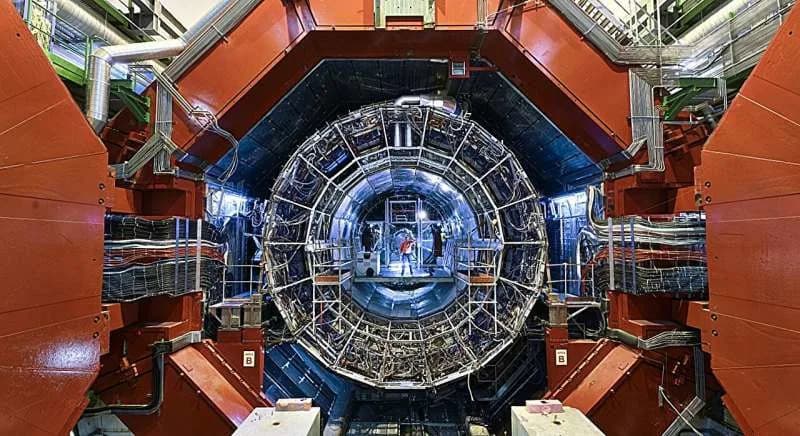
The Large Hadron Collider introduced oxygen beams for the first time in 2025, accelerated to nearly the speed of light.Maximilien Brice/CERN,CC BY
Recreating Showers in the Lab
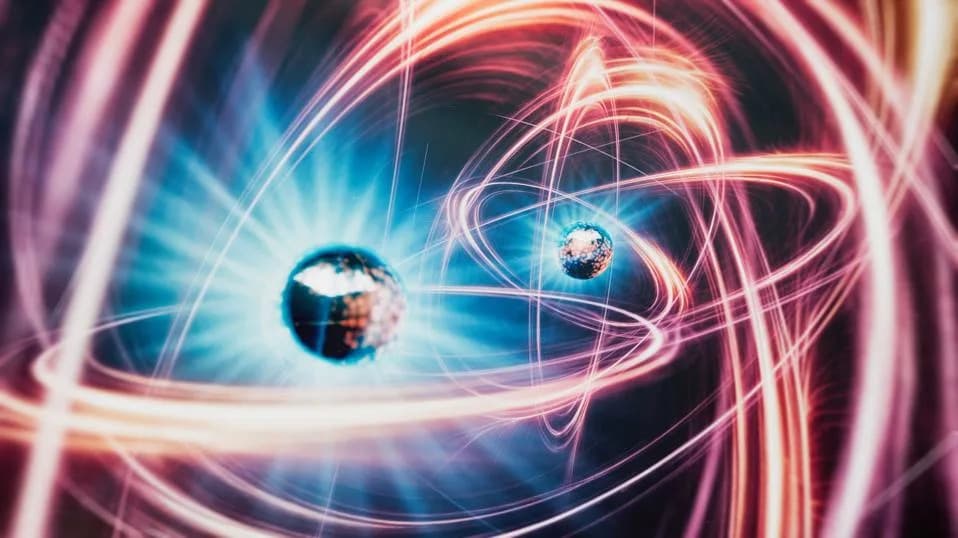
On July 1, 2025, the LHC performed the world’s first controlled collisions between oxygen nuclei and protons. In this configuration, the proton beam served as a proxy for an incoming cosmic ray while the accelerated oxygen nuclei represented atmospheric atoms. The collisions converted kinetic energy into sprays of secondary particles, effectively recreating the shower’s birth in a controlled environment.
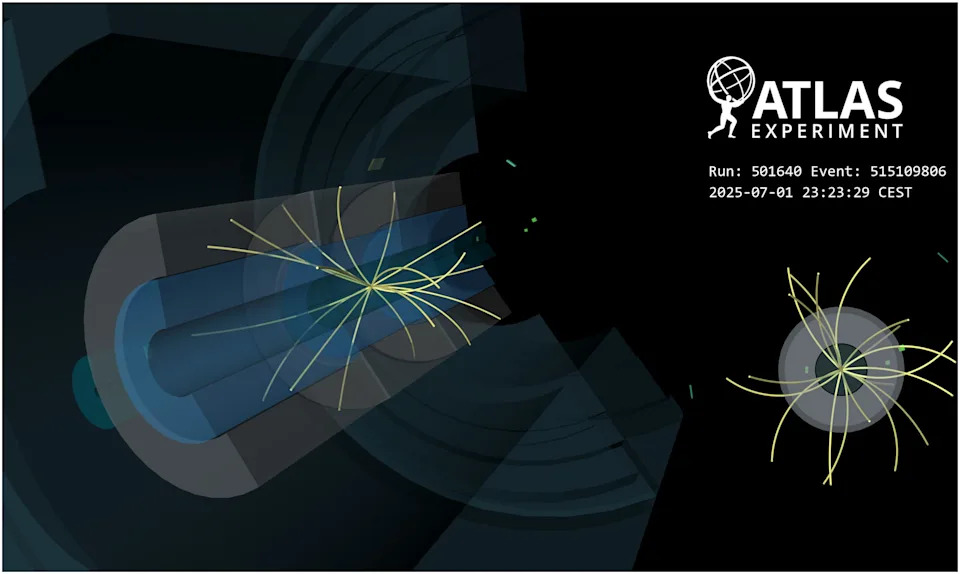
Image captured by the ATLAS experiment of a collision between a proton and oxygen nucleus that recreates a cosmic rainstorm of particles in the lab shown as the yellow lines.CERN/ATLAS Collaboration,CC BY
Precision Measurements With ATLAS
Scientists analyzed collision images from the ATLAS detector — a campus-sized instrument that records more than 200 million images per day using silicon-based sensors. A focused analysis team measured the number, types and energies of particles produced. These measurements achieved precision better than the spread among existing simulation models — more than ten times improvement in some cases — providing much tighter constraints for air‑shower modeling.
Why This Matters
Accurate models are essential to interpret ground-based cosmic-ray observatories, such as the Telescope Array, and to infer the composition and origins of high-energy cosmic rays. The new LHC data will sharpen estimates of how many cosmic rays are hydrogen nuclei versus heavier atoms — a key clue to their astrophysical sources, from supernova remnants to environments near supermassive black holes.
Practical Benefits: Improved air-shower models also enhance applications that use cosmic particles for imaging, including volcano monitoring and archaeological prospection.
The results, led by a collaboration that includes Jesse Liu and Lydia Beresford and reviewed within ATLAS, were published in Physical Review Letters. They renew an important dialogue between particle physics and high‑energy astrophysics, linking microscopic collision physics to the largest particle accelerators in the universe.
This article is adapted from work published in The Conversation and the team’s paper in Physical Review Letters. Jesse Liu is affiliated with New York University.
Help us improve.