The Aug. 4 Democratic primary in a St. Louis-area district pits Rep. Wesley Bell against former Rep. Cori Bush in a bitter rematch that spotlights divides over Israel, outside spending and party direction. Limited polling shows a statistical tie, and endorsements and ground game could decide the outcome. Ethics allegations and competing narratives about political judgment have made the race both personal and nationally significant.
Missouri Rematch Turns Personal: Bell vs. Bush Reignite Democratic Divisions Ahead Of Aug. 4 Primary
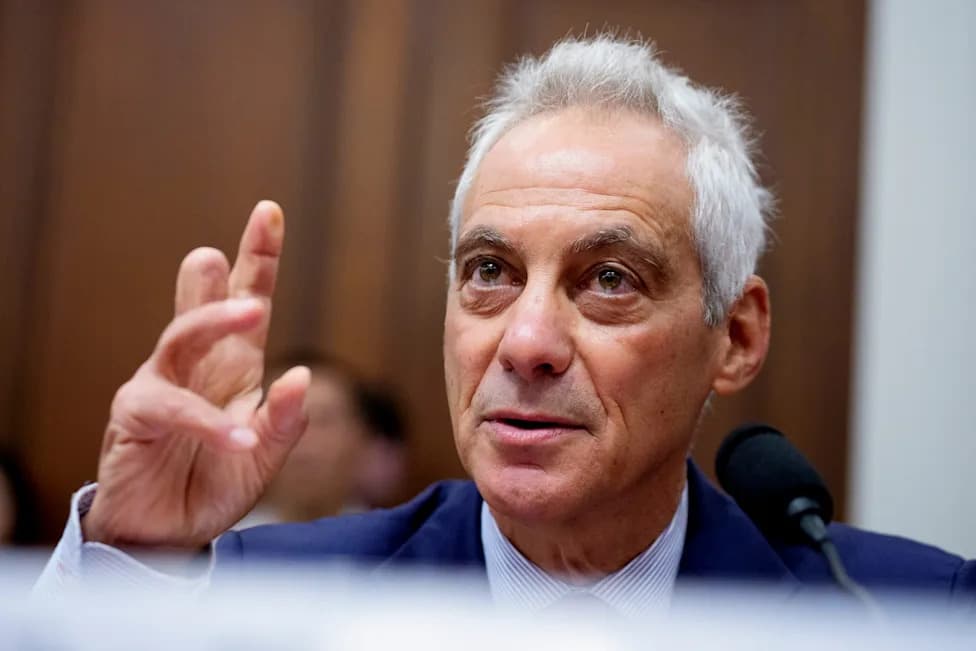
Former U.S. Ambassador to Japan and Chicago Mayor Rahm Emanuel(Andrew Harnik/Getty Images)
The Democratic primary rematch between Rep. Wesley Bell and former Rep. Cori Bush has become one of the most personal and closely watched contests of the 2026 cycle in a deep-blue St. Louis-area district. What began as overlapping protest-era prominence in Ferguson has transformed into a duel that highlights fault lines inside the party — from foreign policy to establishment-versus-progressive politics and questions of political judgment and ethics.
From Ferguson To A High-Stakes Rematch
Both Bell and Bush rose to national attention during the Black Lives Matter protests after the 2014 police killing of Michael Brown. Each previously defeated entrenched incumbents: Bell unseated St. Louis County Prosecutor Bob McCulloch in 2018, and Bush ousted Rep. Lacy Clay in 2020. The two now meet again in the Aug. 4 primary for a seat that covers St. Louis and its northern suburbs.
Israel, Outside Money And A Polarized Electorate
The candidates are sharply divided — or perceived to be — on the Israel-Gaza war, a defining issue that has reshaped parts of the Democratic electorate. Bush criticized Israel's military response to the Oct. 7, 2023, Hamas attacks and described it in stark terms that drew condemnation from many Democrats and pro-Israel groups. That criticism helped prompt a targeted campaign against her by pro-Israel organizations.
Groups aligned with pro-Israel interests have spent heavily: AIPAC’s United Democracy Project spent about $1.2 million opposing Bush, and centrist-aligned groups such as the New Democrat Majority contributed roughly $1 million in outside spending. Bush has denounced such spending as efforts to "buy a congressman," and has said she would vote to cut military aid to Israel if re-elected.
Polling, Ground Game And Endorsements
Limited polling shows the race is effectively tied. Political scientists note that local organization, turnout and endorsements will be decisive: Bell has establishment backing from figures like former House Speaker Nancy Pelosi and the Congressional Black Caucus, while Bush draws support from progressive figures and organizations, including Sen. Bernie Sanders and the Democratic Socialists of America.
Policy Overlap — And Political Divergence
On many domestic issues the two align: both oppose a war with Iran, support abolishing U.S. Immigration and Customs Enforcement (ICE), and back Medicare for All. Yet the coalitions that back them differ, and their contrasting foreign-policy stances — especially on Israel — have amplified national attention on this local race.
Ethics, Litigation And Campaign Attacks
The campaign has been marked by aggressive attacks on character and conduct. Bush’s allies have highlighted allegations that Bell’s security detail assaulted pro-Palestinian protesters at a 2025 town hall and a $500,000 settlement related to an alleged gender-discrimination claim against Bell’s office. Bell’s campaign has pushed back, focusing on a 2024 Justice Department inquiry into whether Bush used campaign funds to pay her husband for security work, fundraising tied to tornado relief that was transferred to a PAC, and her husband’s federal charges tied to alleged pandemic-era relief fraud (a case that later ended in a mistrial).
"We've never been friends," Bell told USA TODAY in a recent interview, underscoring the personal animus that has marked the rematch.
Human Toll And Contested Numbers
The human costs cited in the debate are stark and contested. Hamas's Oct. 7 attack killed about 1,200 Israelis and resulted in roughly 250 hostages; Gaza health authorities report tens of thousands of Palestinian deaths during Israel’s subsequent military offensive. International bodies and human-rights groups have criticized the scale and conduct of the conflict, while U.S. and Israeli officials strongly dispute characterizations such as "genocide." The differing views on these facts shape how voters prioritize the issue.
What To Watch
- Voter turnout and local organizing in St. Louis and the northern suburbs.
- How outside spending from AIPAC and centrist groups affects perceptions of both candidates.
- Whether progressive energy around the Israel-Gaza war translates into sufficient primary votes for Bush.
The Aug. 4 primary will test whether local dynamics and endorsements or national trends and outside spending carry the day in a district that remains electorally Democratic but deeply divided over the party’s direction.
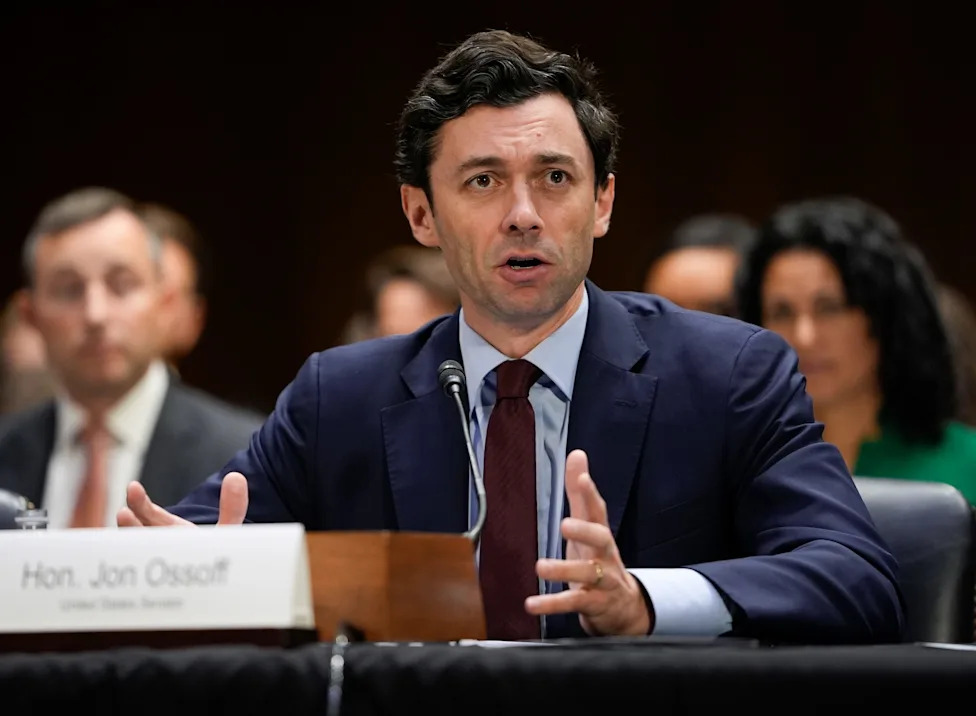
Georgia Sen. Jon Ossoff(Jack Gruber, USA TODAY)
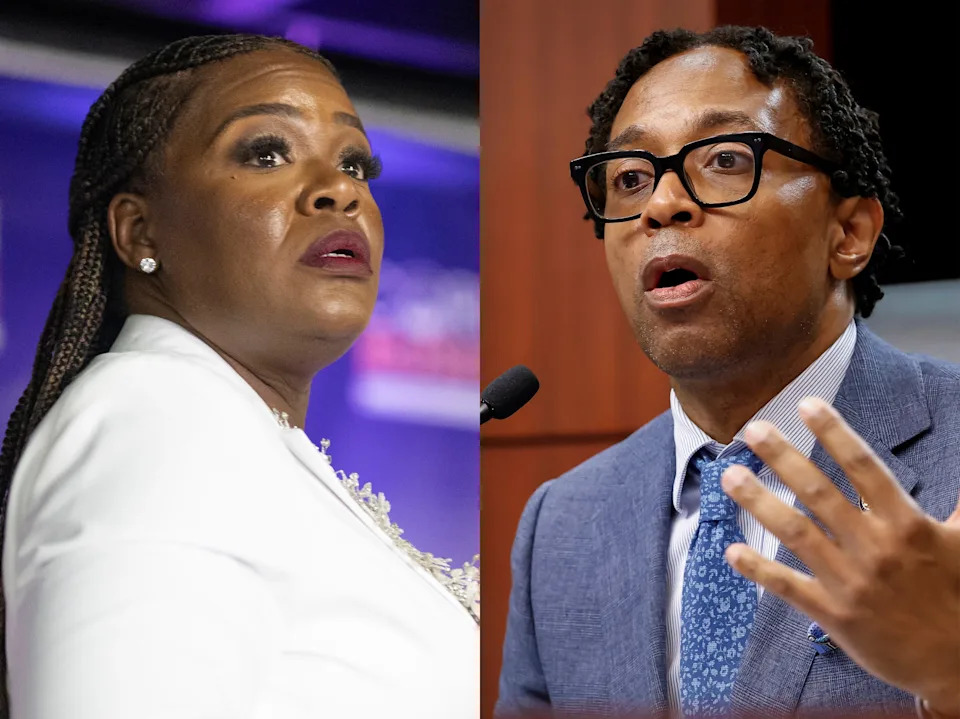
Composite image of Cori Bush, left and Rep. Wesley Bell (D-MO).
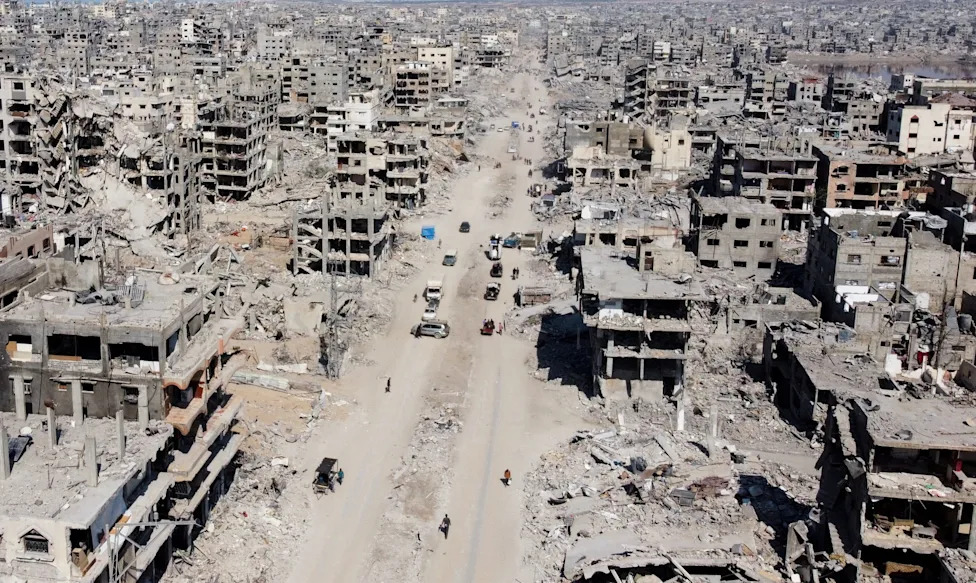
A drone view shows the destruction in a residential neighborhood, following the withdrawal of the Israeli forces from the area, amid a ceasefire between Israel and Hamas in Gaza, in Gaza City on Oct.16, 2025.(Dawoud Abu Alkas, REUTERS)
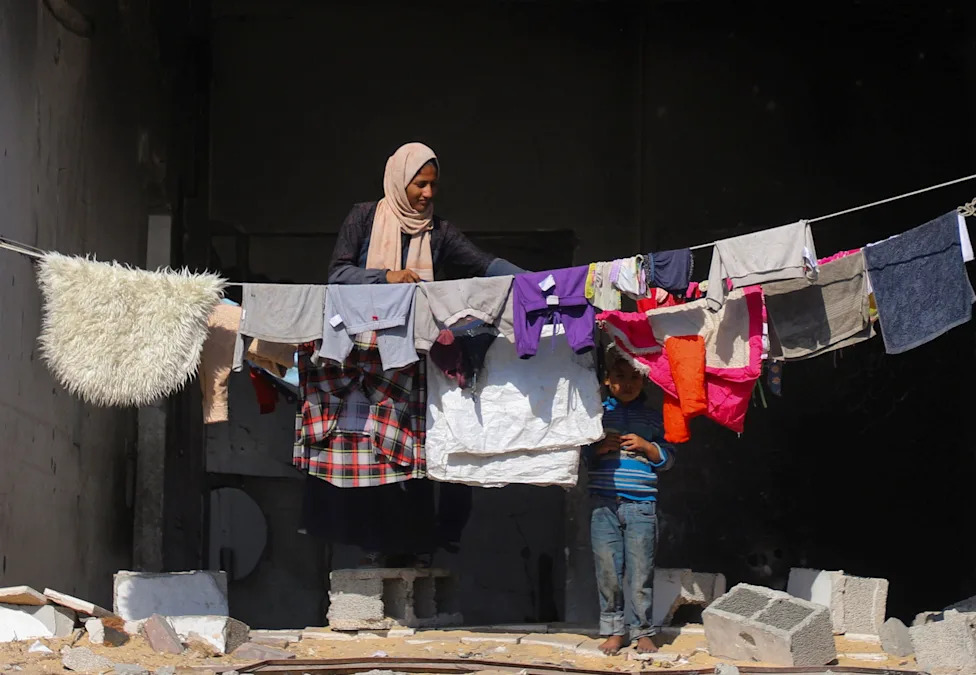
Palestinians shelter in a building of the Islamic University, amid a ceasefire between Israel and Hamas, in Gaza City on Oct. 16, 2025.(EBRAHIM HAJJAJ, REUTERS)
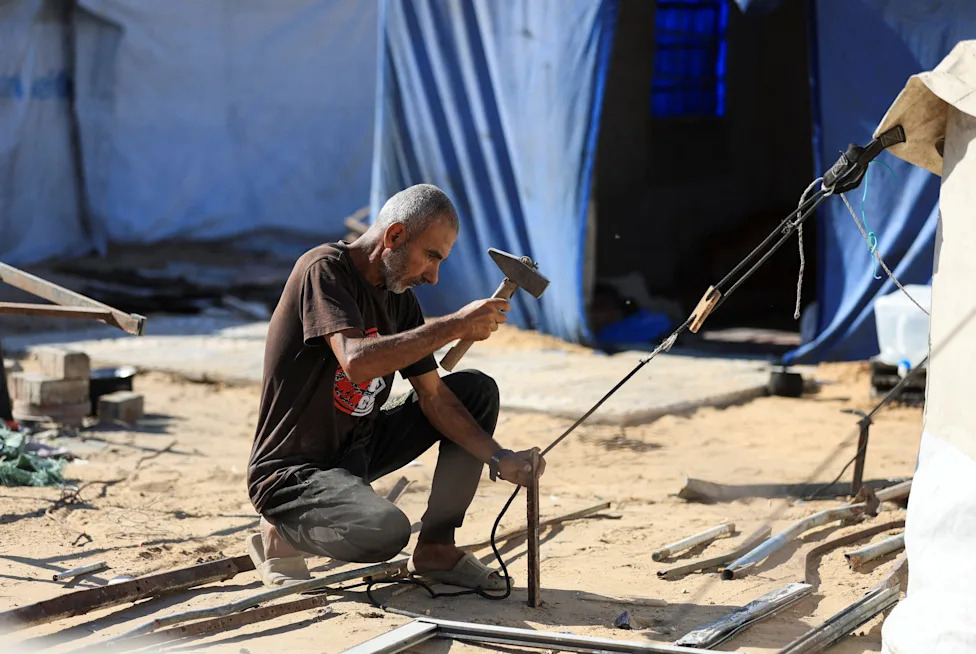
A Palestinian man works to sets up a tent, amid a ceasefire between Israel and Hamas, in Gaza City on Oct. 15, 2025.(Dawoud Abu Alkas, REUTERS)
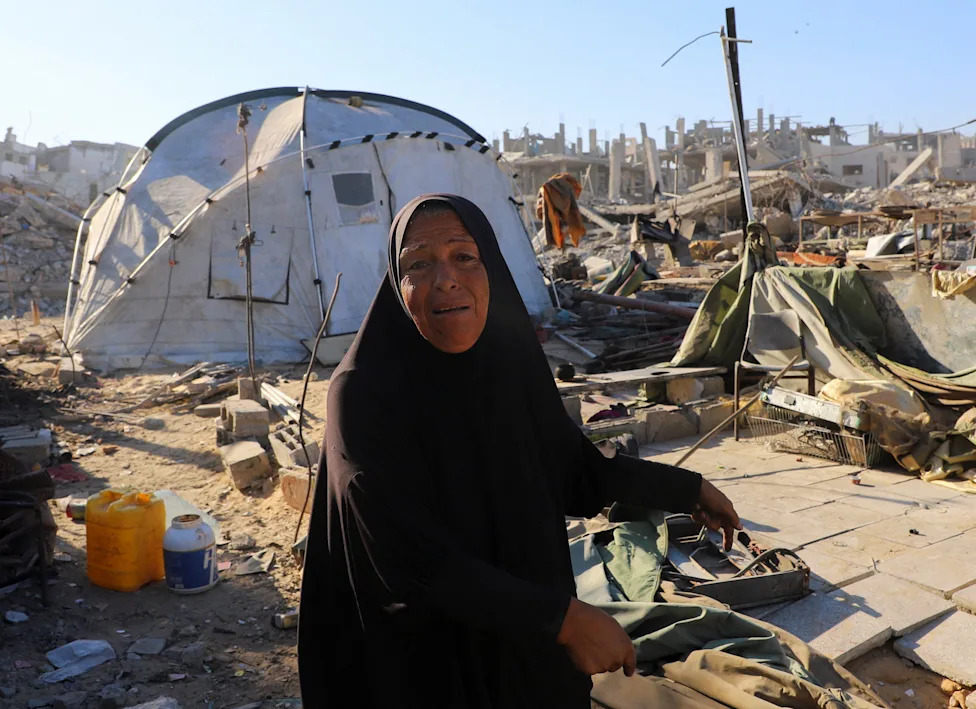
A Palestinian woman, Hayam Meqdad, 49, walks on the rubble of her destroyed home, as she now lives in a tent after getting displaced during the war, after a ceasefire between Israel and Hamas in Gaza went into effect, in Gaza City on Oct. 15, 2025.(EBRAHIM HAJJAJ, REUTERS)
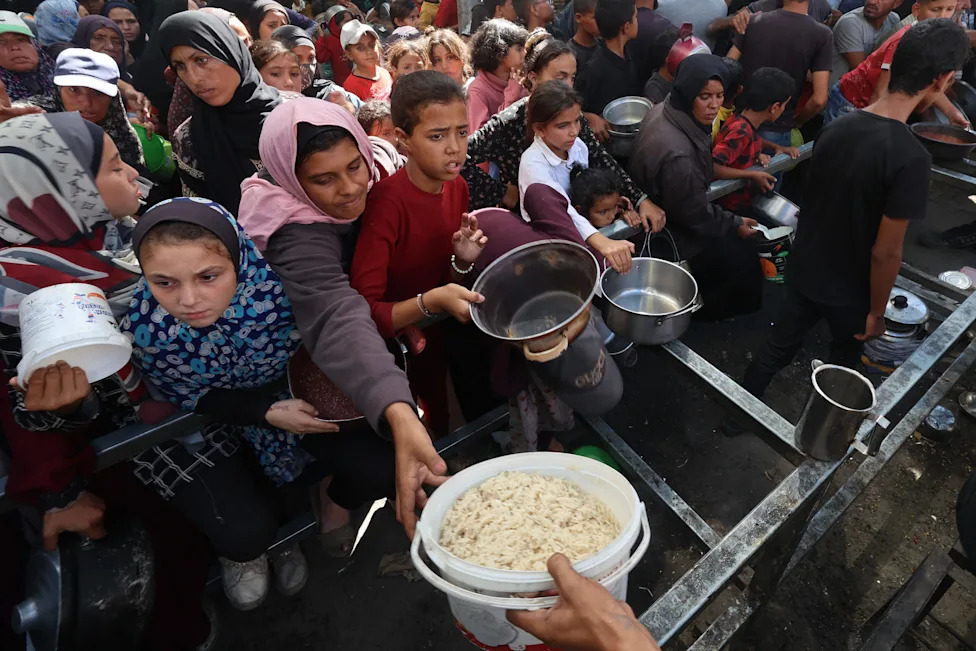
Palestinians gather to receive food portions from a charity kitchen in the Nuseirat refugee camp, located in the central Gaza Strip, on Oct.15, 2025, two days after a ceasefire came into effect. Israel was expected to allow Gaza's sole border crossing to the outside world to reopen on Oct. 15 to allow aid into the devastated territory as part of a US-backed ceasefire deal.(EYAD BABA, AFP via Getty Images)
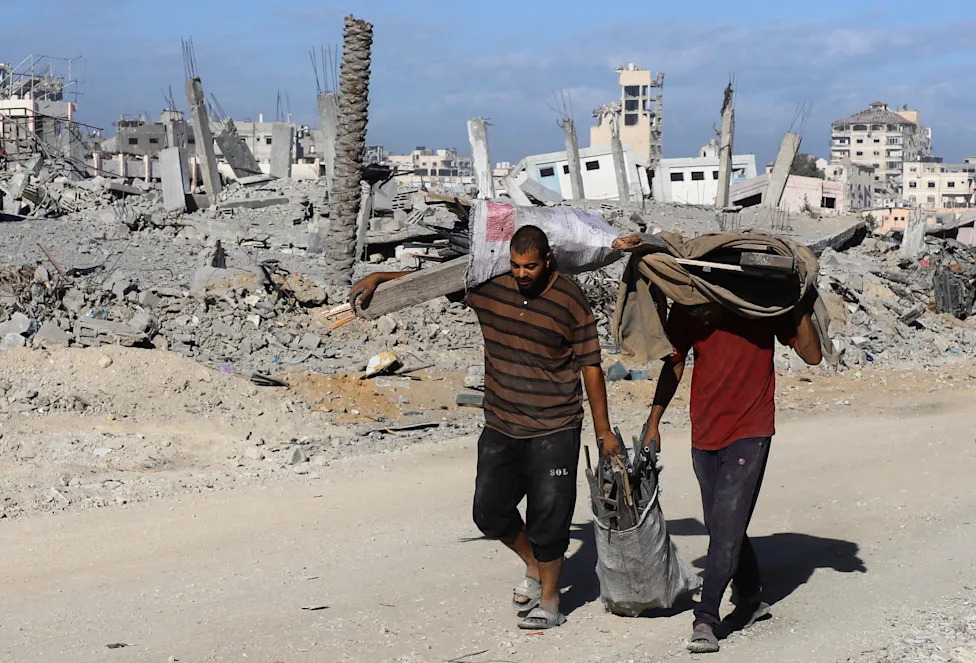
Palestinians walk past the rubble of destroyed buildings, amid a ceasefire between Israel and Hamas, in Gaza City on Oct. 15, 2025.(Ebrahim Hajjaj, REUTERS)
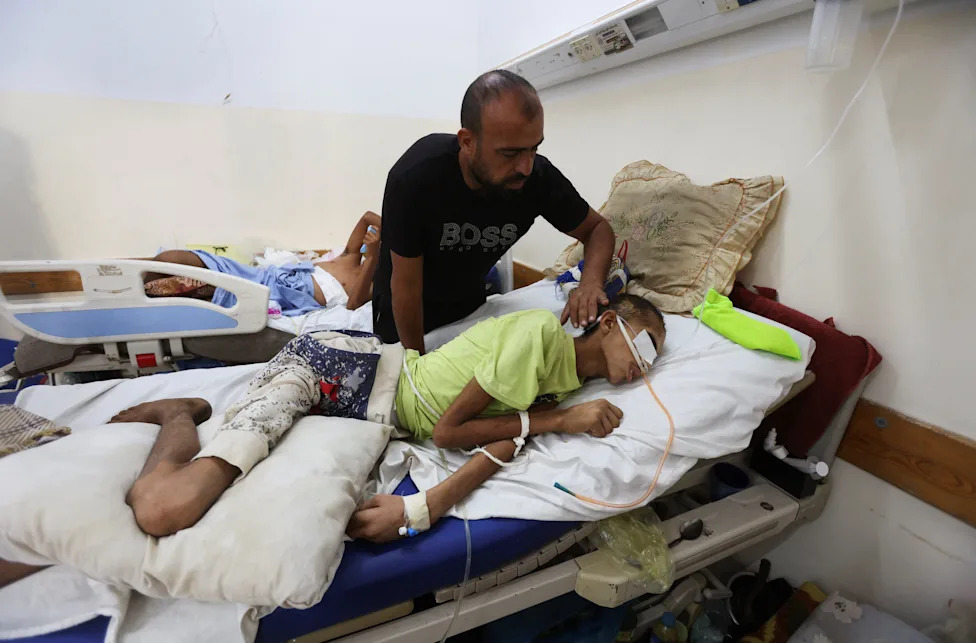
Injured Palestinian Hassan Qlob, 18, who his father says was shot in the head more than two months ago while out seeking food, lies on a bed as he waits for the Rafah crossing to reopen so he can receive treatment abroad, as his father Ibrahim tends to him, after a ceasefire between Israel and Hamas in Gaza went into effect, at Nasser Hospital in Khan Younis, southern Gaza Strip on Oct. 15, 2025.(RAMDAN ABED, REUTERS)
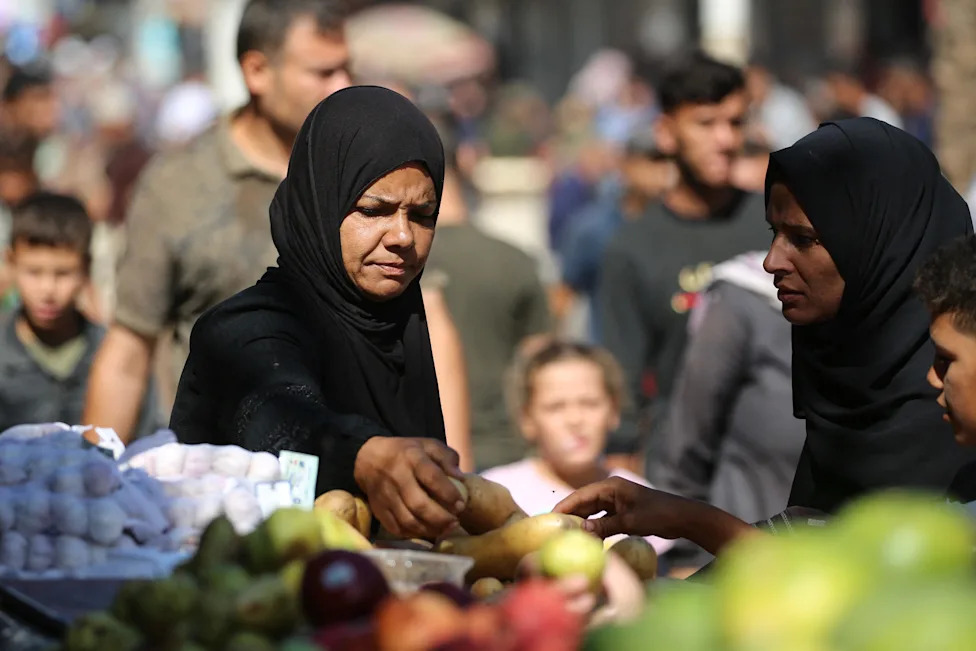
Palestinians shop for fruits and vegetables at a makeshift market in the Nuseirat refugee camp, located in the central Gaza Strip, on Oct. 15, 2025, two days after a ceasefire came into effect. Israel was expected to allow Gaza's sole border crossing to the outside world to reopen on October 15 to allow humanitarian aid into the devastated territory as part of a US-backed ceasefire deal.(EYAD BABA, AFP via Getty Images)
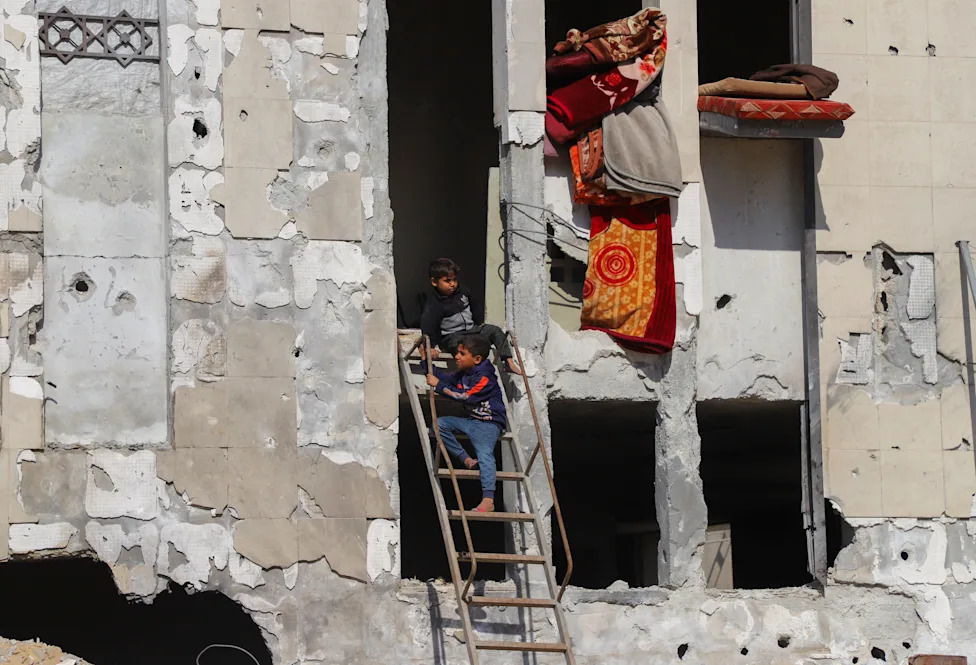
Palestinians shelter in a building of the Islamic University, amid a ceasefire between Israel and Hamas, in Gaza City on October 16, 2025.(EBRAHIM HAJJAJ, REUTERS)
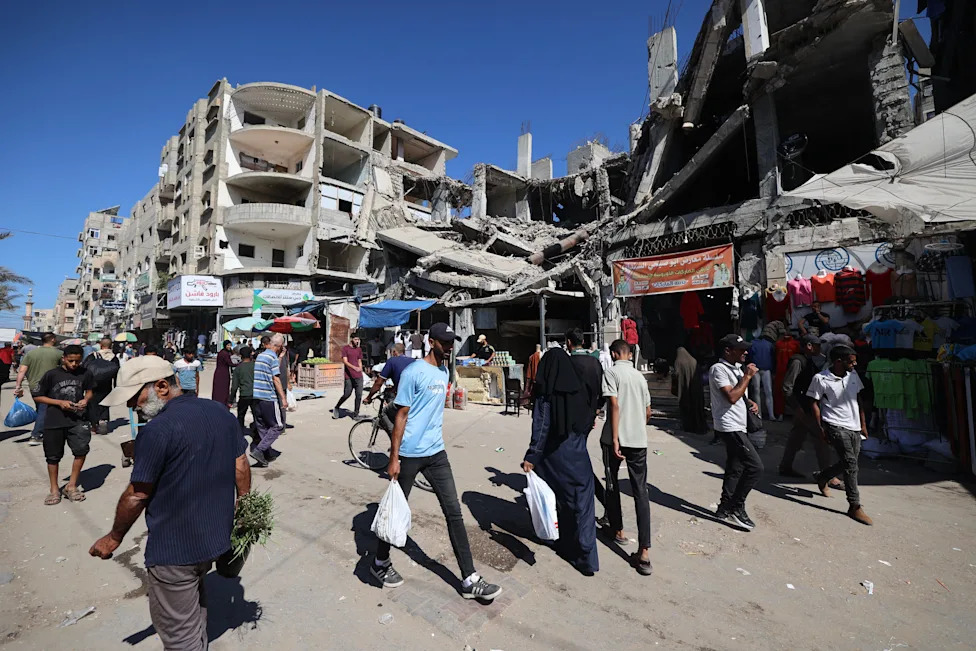
Palestinians walk past a destroyed building at a makeshift market in the Nuseirat refugee camp, located in the central Gaza Strip, on Oct.15, 2025, two days after a ceasefire came into effect. Israel was expected to allow Gaza's sole border crossing to the outside world to reopen on October 15 to allow humanitarian aid into the devastated territory as part of a US-backed ceasefire deal.(EYAD BABA, AFP via Getty Images)
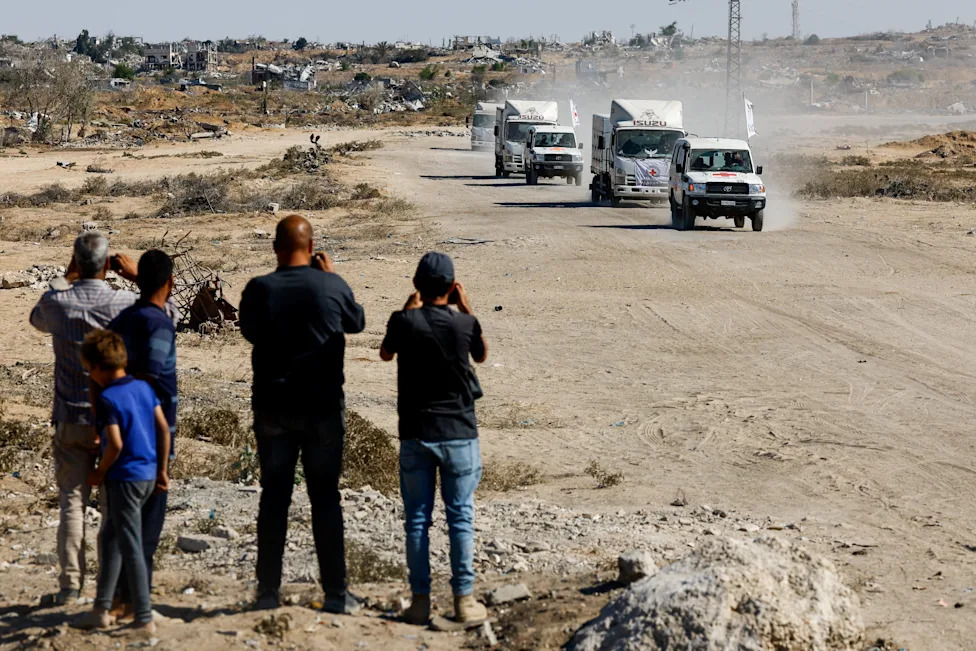
People look at Red Cross vehicles as they escort trucks transporting the bodies of deceased Palestinians held by Israel during the war, after their release, amid a ceasefire between Israel and Hamas, in Khan Younis, southern Gaza Strip on Oct. 15, 2025.(Mahmoud Issa, REUTERS)
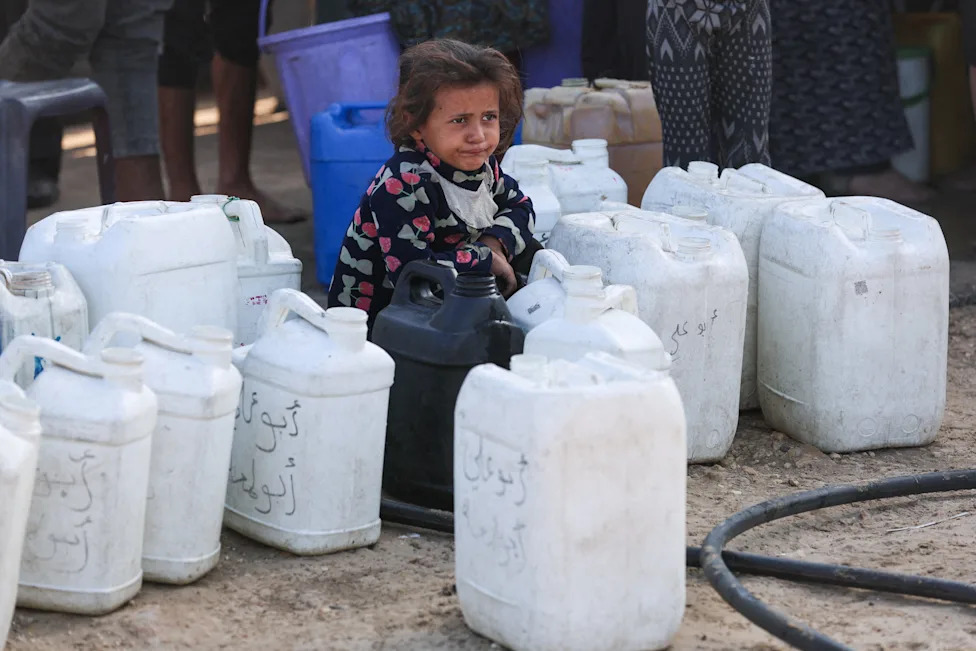
A Palestinian child among water containers, amid a ceasefire between Israel and Hamas, in Khan Younis, southern Gaza Strip on Oct. 16, 2025.(Ramadan Abed, REUTERS)
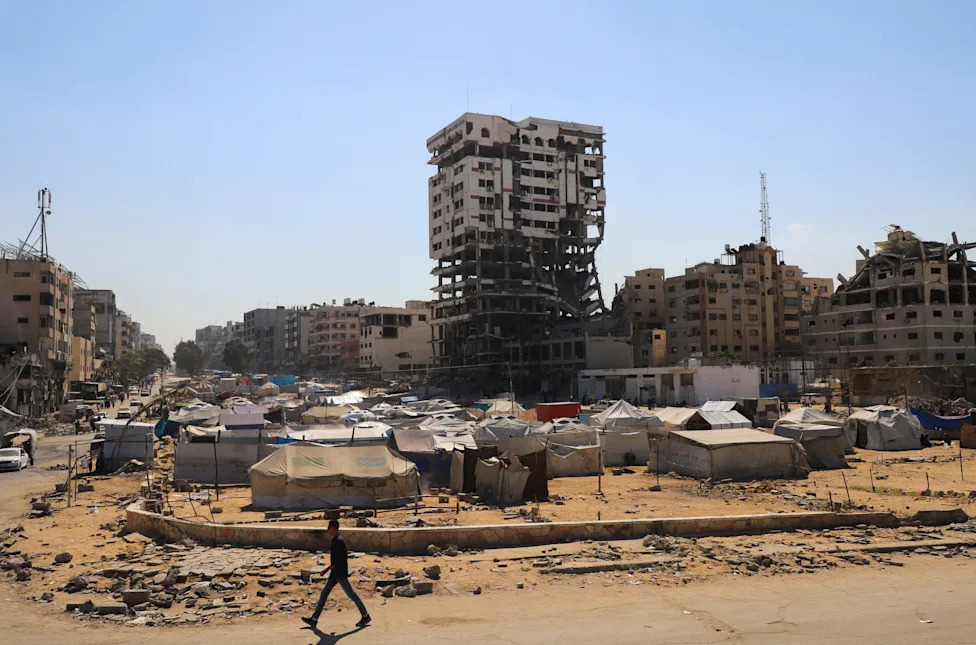
A Palestinian walks past a shelter encampment set next to a damaged building, amid a ceasefire between Israel and Hamas, in Gaza City on Oct. 16, 2025.(EBRAHIM HAJJAJ, REUTERS)
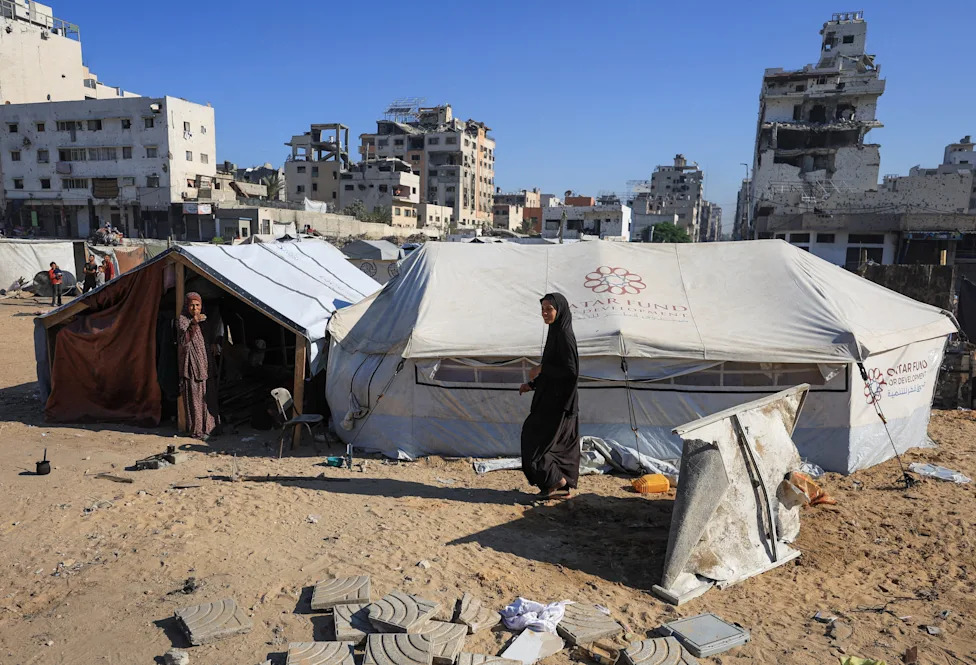
Palestinian women react beside tents, amid a ceasefire between Israel and Hamas, in Gaza City on Oct. 15, 2025.(Dawoud Abu Alkas, REUTERS)
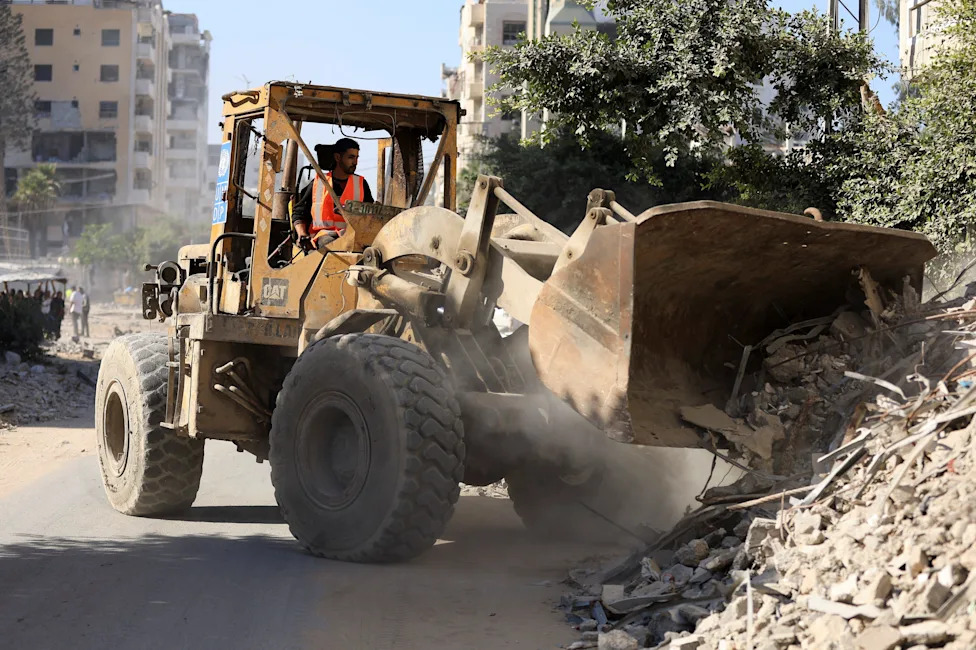
A wheel loader of the United Nations Development Programme (UNDP) operates as members of UNDP delegation inspect the destruction and rubble, amid ongoing efforts to assess damage and plan reconstruction in Gaza following the war, in Gaza City on Oct. 16, 2025.(Dawoud Abu Alkas, REUTERS)
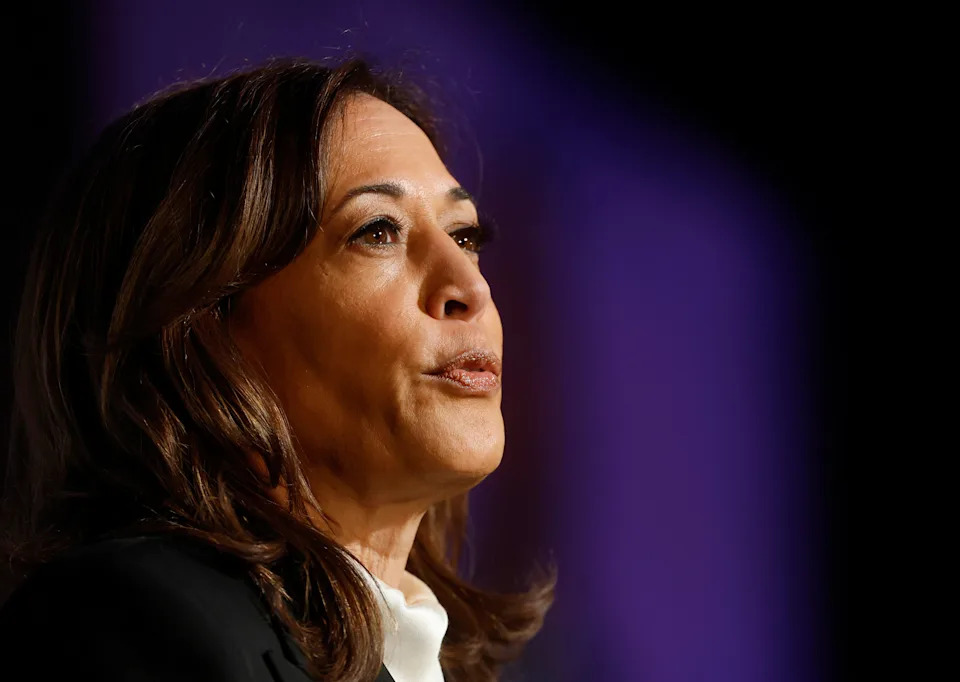
Kamala Harris delivers a keynote address during the Emerge 20th Anniversary Gala at the Palace Hotel on April 30, 2025 in San Francisco.
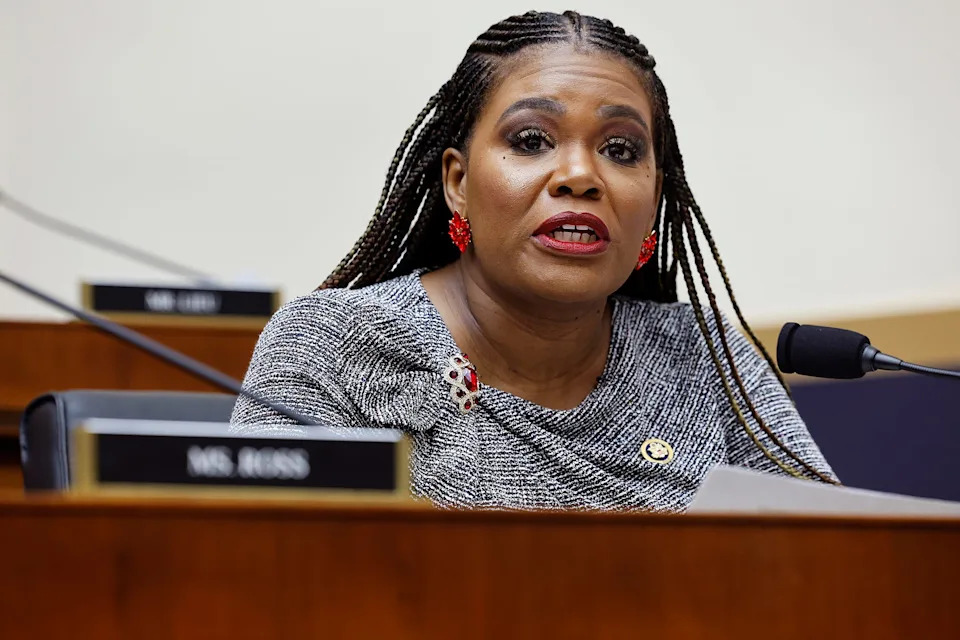
Now former Rep. Cori Bush, D-Missouri, questions former Special Counsel Robert Hur testifies during a 2024 hearing in Washington, DC. Bush ran as a democratic socialist and is running in the 2026 midterm elections for the seat she lost in 2024.
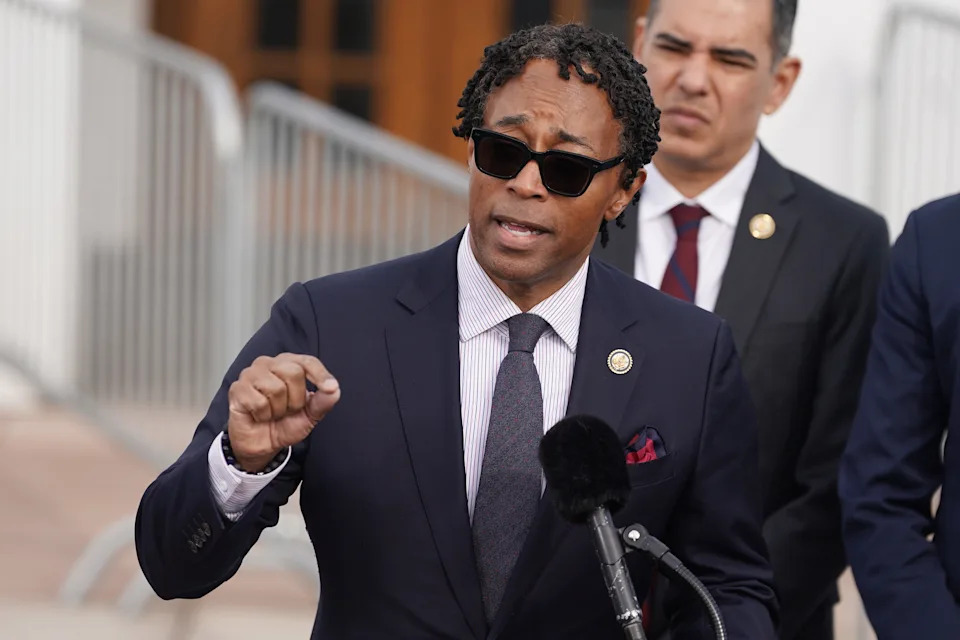
Rep. Wesley Bell (D-MO) speaks to the press as former Secretary of State Hillary Clinton testifies in a closed-door deposition with House Oversight Committee Republicans at the Chappaqua Performing Arts Center on Feb. 26, 2026 in Chappaqua, New York.
Help us improve.