University of Georgia researchers found that pot marigold (Calendula officinalis) petals contain about 9.71% crude protein and that 92.17% of that protein can be recovered. The extract yields four fractions—albumin (65.5%), globulin, glutelin and prolamin—of which albumin and glutelin showed strong water/oil holding, emulsifying capacity and unusually high heat stability (albumin denatures at 105.28°C). Proteomics identified ~622 proteins and 13 amino acids, suggesting flavor and antioxidant benefits; however, safety testing, flavor work and large‑scale processing validation are still required before commercial use.
From Waste To Food: Marigold Flowers Yield Heat‑Stable Proteins With Food Applications
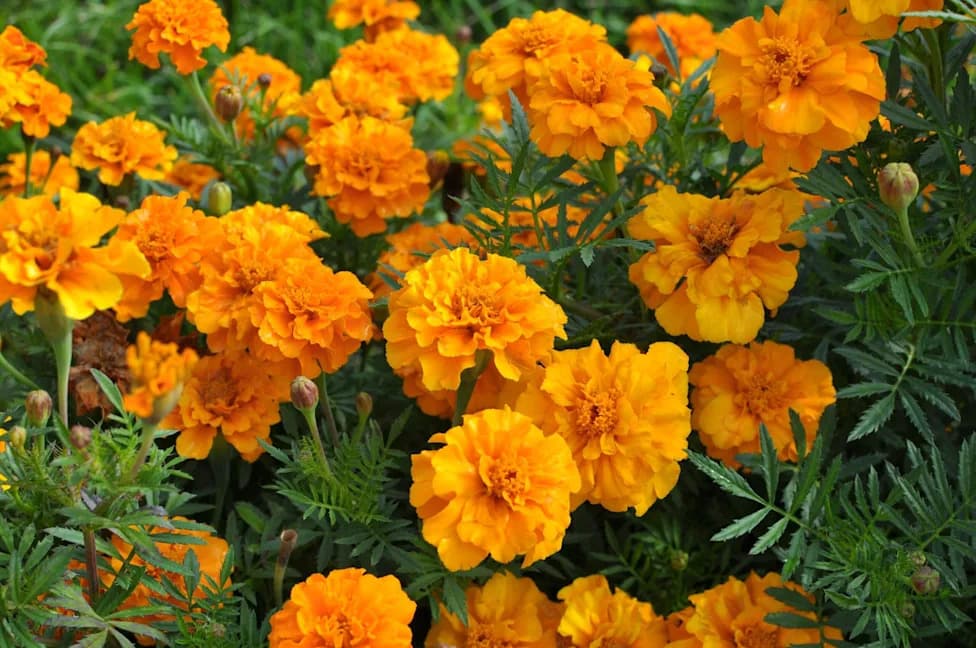
Researchers found marigold proteins can withstand heat, bind oil and water, and support more sustainable food production. (CREDIT: Shutterstock)
University of Georgia researchers report that common pot marigold (Calendula officinalis) petals contain significant, heat‑stable proteins whose functional properties make them promising candidates as sustainable food ingredients.
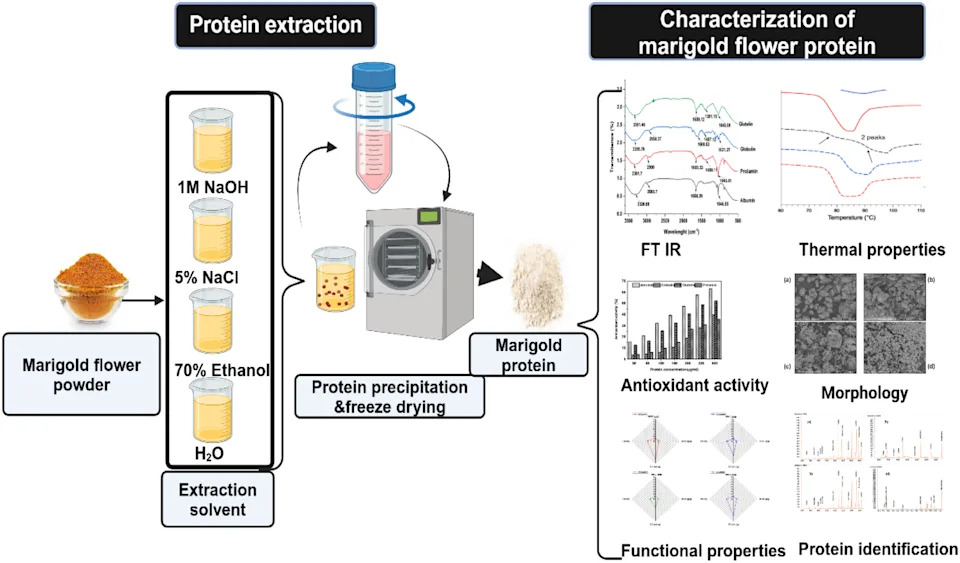
Diagrammatic representation of the process flow and experimental method. (CREDIT: ACS Food Science & Technology)
Key Findings
The study found dried marigold flowers contain 9.71% crude protein and that researchers could recover 92.17% of that protein during extraction—suggesting a large share of the flower’s protein can be separated for food uses. Proteins were fractionated into albumin (65.47%), globulin (22.46%), glutelin (10.94%) and prolamin (1.12%), each with distinct functional properties.
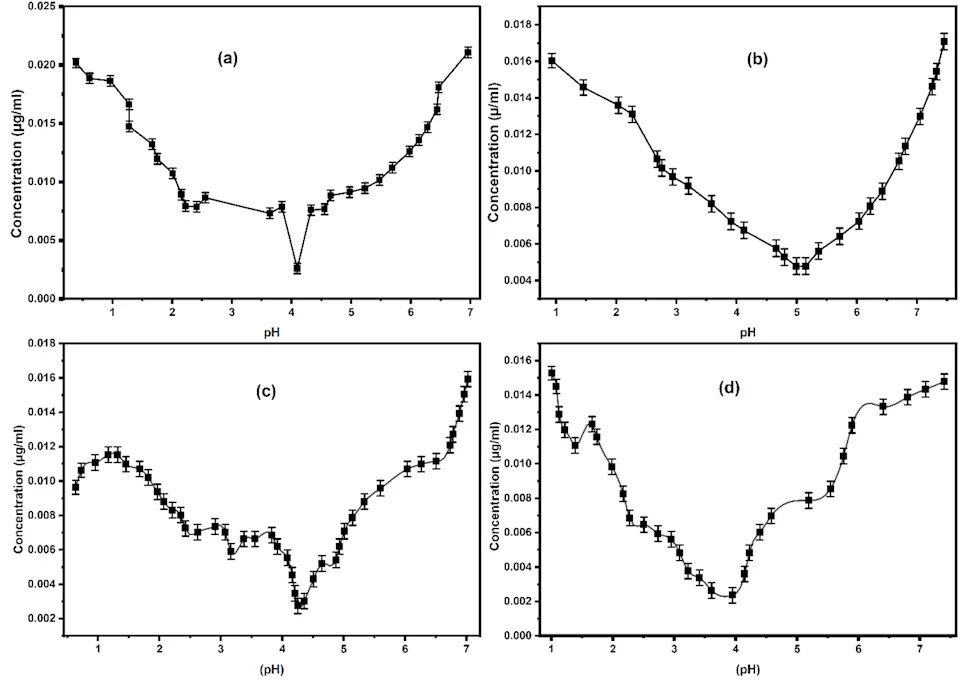
Isoelectric point of marigold flower protein fractions. The isoelectric point of different protein fractions (a) albumin, (b) globulin, (c) prolamin, and (d) glutelin. (CREDIT: ACS Food Science & Technology)
Functional Properties
Albumin stood out for functionality: it held 2.37 g water/g protein, bound 2.49 g oil/g protein, and showed the highest emulsifying capacity at 65.22 mL/g. Glutelin also showed strong water‑ and oil‑holding and emulsification. Prolamin performed weakest because its compact structure limited interactions with water and oil.
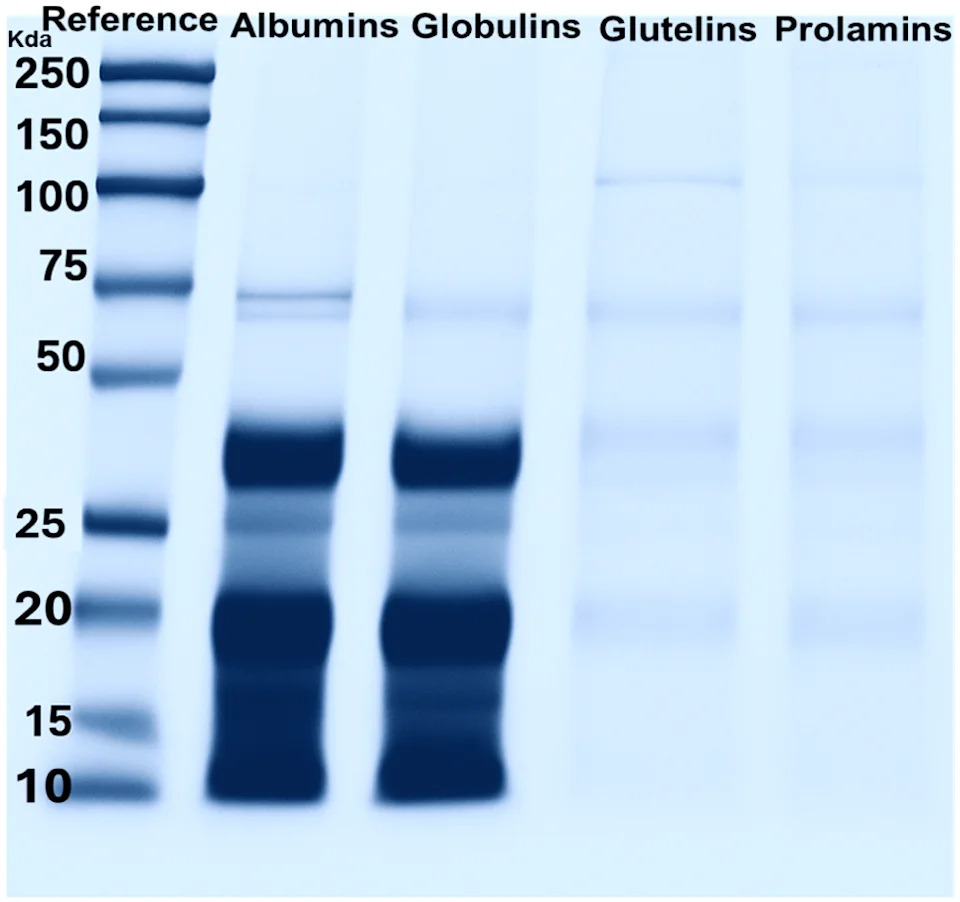
Sodium dodecyl sulfate-polyacrylamide gel electrophoresis (SDS-PAGE) of marigold flower protein extract. (CREDIT: ACS Food Science & Technology)
Heat Stability and Structure
Heat resistance is important for baking and extrusion. Measured denaturation (peak) temperatures were: albumin 105.28°C, prolamin 97.6°C, glutelin 91.8°C and globulin 88.4°C—values that exceed many plant proteins and suggest marigold fractions may retain functionality under high heat. Microscopy and FTIR analyses linked performance to structure: albumin’s porous surface favored hydration and emulsification, glutelin’s sheet‑like structure supported heat stability, and prolamin’s dense crystalline form limited hydration.
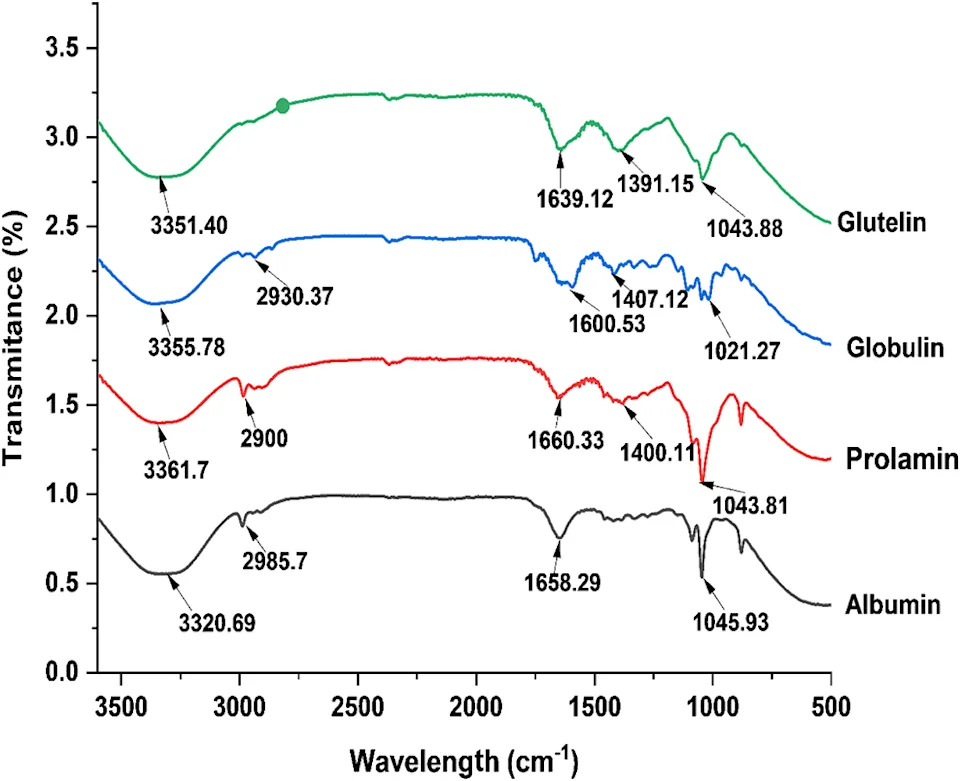
Fourier Transform Infrared (FTIR) spectroscopy of marigold flower protein fractions. (CREDIT: ACS Food Science & Technology)
Nutritional and Flavor Potential
Proteomic analysis identified roughly 622 distinct proteins and detected 13 amino acids across fractions. Glutamic and aspartic acids—known to contribute savory or umami notes—were notable in albumin and glutelin, suggesting marigold extracts might enhance flavor in soups, sauces or meat alternatives. Sulfur‑containing amino acids such as cysteine may also confer antioxidant activity; albumin and glutelin produced the strongest antioxidant effects in lab tests.
Applications, Benefits and Cautions
Potential applications include baked goods, dressings, soups, sauces, dairy alternatives and meat substitutes, where moisture retention, emulsification, foaming or heat stability are needed. Using discarded flowers could reduce floral waste and add value without planting a new protein crop. However, the authors stress important caveats: the work used Calendula officinalis extracts in laboratory conditions—not whole‑flower consumption—and additional safety testing, flavor and shelf‑life work, regulatory review and large‑scale processing validation are required before commercial use. Not all plants called "marigold" are edible; some varieties can be bitter or cause stomach upset.
“Billions of dollars of flowers are thrown away each year,” said Anand Mohan, the study’s corresponding author. “Can you imagine if we were able to take those flowers and use them for food instead?”
The findings appear online in ACS Food Science & Technology. Study co‑authors include Nancy Alila, Kentaro Kawata, Christopher Kucha and Anupam Roy (IIT‑Delhi). The research highlights a promising, though early‑stage, route to turn floral waste into functional food ingredients.
Help us improve.