Swedish researchers found broccoli grown under semi-transparent magenta solar panels used sunlight about 4.5 times more efficiently, while reaching comparable final size but taking 25 days longer to mature. Two 20×20 m prototype magenta arrays were tested against an open-sun control across the 2024 season, with microclimate, yield, nutrient and photosynthesis measurements. Lead author Silvia Ma Lu cautions the results are specific to experimental conditions and calls for larger, multi-season trials and crop-specific agrivoltaic design.
Magenta Solar Panels Boost Broccoli's Light-Use Efficiency 4.5-Fold, Study Finds

Magenta solar panels give broccoli 4.5-fold boost in sunlight efficiency, study finds
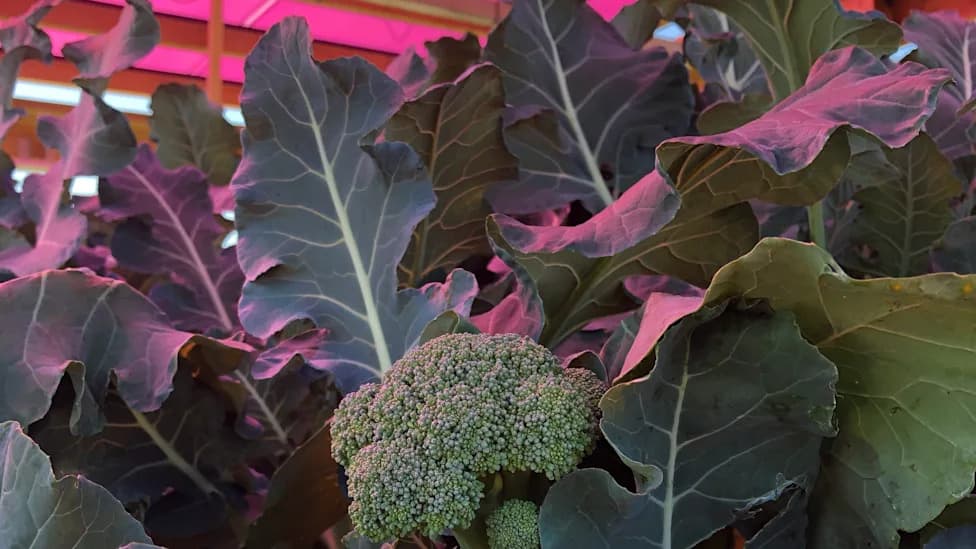
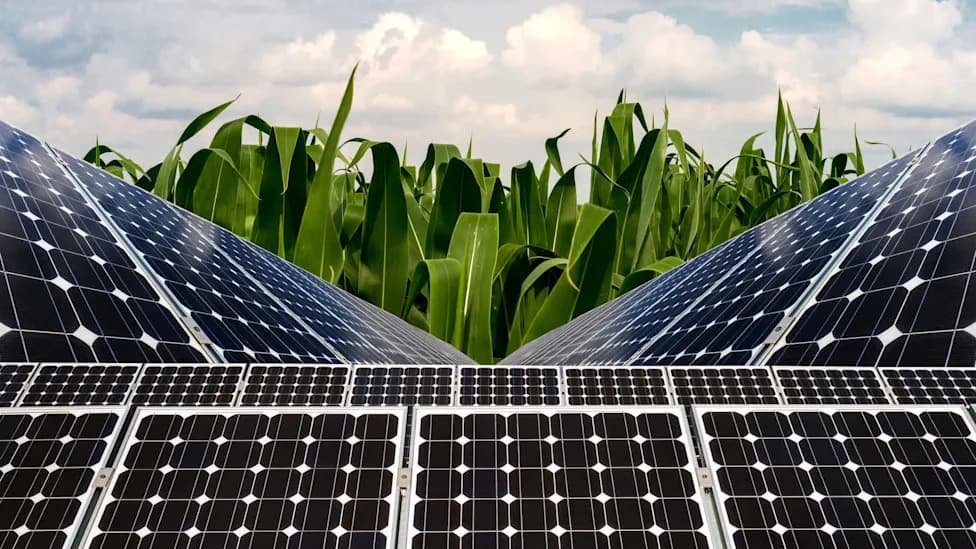
Broccoli grown beneath semi-transparent magenta solar panels used incoming sunlight roughly 4.5 times more efficiently than plants grown in open fields, according to a Swedish research team. The coloured photovoltaic arrays generated electricity while enriching the blue and red wavelengths that reached the crop canopy, improving the plants' light-use efficiency.
The experiment was carried out across the 2024 growing season at a test farm in Sweden. Researchers built two prototype magenta-panel systems, each about 20 by 20 metres (66 by 66 feet), with different transparency levels, and compared them with a control plot exposed to ambient sunlight. Throughout the season they tracked air temperature, relative humidity, soil moisture, crop yield, nutrient composition and photosynthetic performance.
Although broccoli grown under the panels reached a similar final size to conventionally grown plants, it took about 25 days longer to mature. Lead author Silvia Ma Lu of Mälardalen University explained that the panels convert portions of the solar spectrum into electricity while allowing other wavelengths—particularly red and blue light beneficial for photosynthesis—to pass through.
Key findings and caveats:
- Light-Use Efficiency: Researchers measured a 4.5-fold increase in the crop's light-use efficiency under the magenta panels compared with open-sun controls.
- Maturation Delay: Plants required roughly 25 additional days to reach maturity, despite similar final biomass.
- Prototype Scale: The systems used are research prototypes; the authors stress that results reflect the specific experimental conditions and must be validated across multiple seasons, locations and system designs.
Ma Lu emphasised that agrivoltaic design is not one-size-fits-all. "There is no single agrivoltaic design that will work optimally everywhere," she said, urging further research on how different crops and climates respond to varied spectral filtering and panel configurations. She also noted that panels with a higher density of photovoltaic cells can produce more electricity but may transmit less light to crops.
The potential applications are practical: if scaled and optimised, on-site electricity could power irrigation pumps, processing equipment, cooling and storage, or be exported to the grid—lowering operating costs and creating new revenue streams for farmers. The team is also running controlled laboratory trials of magenta, red and blue panels to isolate the effects of filtered spectra on plant physiology.
The study was published Oct. 2 in the Cell Press journal Cell Reports Physical Science. The authors recommend larger-scale, multi-season tests before commercial deployment and tailored agrivoltaic designs matched to specific crops and climates.
Help us improve.