Researchers at Imperial College London and Kyomei Ltd. engineered lettuce and tobacco to produce myoglobin inside chloroplasts, achieving ~2.7% of total soluble protein in tobacco and ~1.5% in lettuce. The chloroplast method yielded at least three times more myoglobin than conventional nuclear techniques. Plant-produced myoglobin showed lower heme loading (~35% vs ~80% in bacterial systems), and scientists are working to boost heme incorporation and test the protein in food formulations. If refined and scaled, the approach could help plant-based foods better match meat's color, flavor and iron nutrition.
Meat Protein Grown in Lettuce Could Bring Animal-Free Burgers Closer
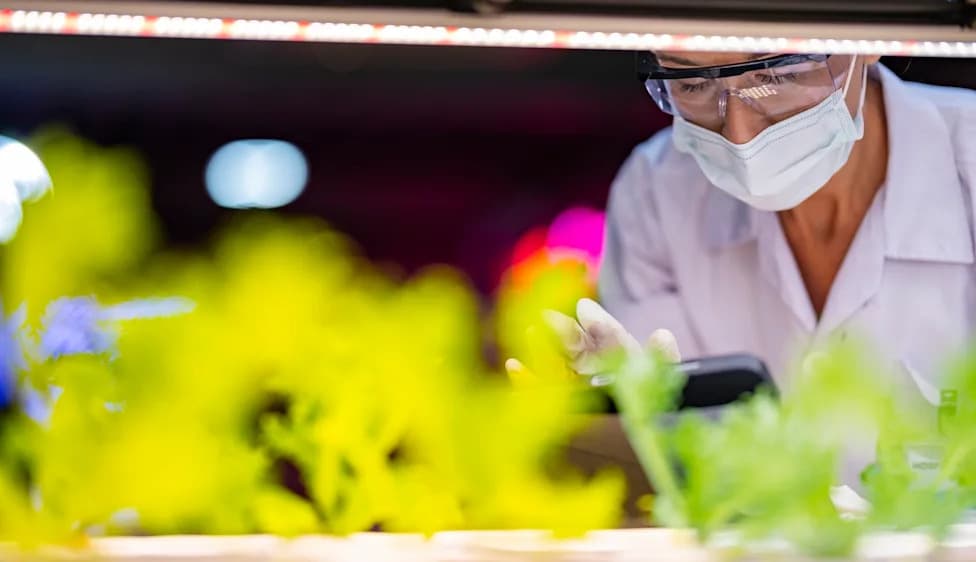
Photo Credit: iStock
Researchers have permanently engineered edible crops to produce myoglobin — the iron-rich protein that gives meat its red color, savory aroma and readily absorbable iron — a development that could help plant-based foods more closely mimic burgers without relying on animals.
What the Study Did
Teams at Imperial College London and biotech company Kyomei Ltd. inserted a myoglobin gene into plant chloroplasts (the organelles that conduct photosynthesis) in tobacco and lettuce. Because each cell contains many chloroplasts, this approach substantially boosted protein production compared with conventional nuclear-gene methods.
Key Results
- Engineered tobacco accumulated myoglobin to about 2.7% of total soluble protein, while edible lettuce reached roughly 1.5%.
- Across 37 plants made by conventional nuclear engineering, myoglobin levels were at least threefold lower than with the chloroplast method.
- However, plant-produced myoglobin did not fully bind heme: only about 35% of purified myoglobin from tobacco contained heme compared with ~80% for myoglobin produced in bacterial systems.
Why It Matters
Producing functional meat-like proteins inside edible crops could reduce the need for separate fermentation tanks and downstream purification, potentially lowering production complexity and costs. If heme loading and yields can be improved and reproduced in more food crops, this route could help plant-based products match meat more closely in color, flavor and iron nutrition.
Next Steps and Challenges
The researchers plan to increase heme availability within plants, screen additional crop lines and test how the plant-made protein performs in real food formulations. Key challenges remain: boosting heme incorporation, scaling production, meeting food-safety and regulatory requirements, and ensuring consistent sensory performance in processed foods.
Broader Context
Related heme-containing proteins are already used commercially; for example, Impossible Foods uses heme-related molecules to give its burgers a meaty aroma and taste. Growing such proteins directly in edible crops represents a more direct production route that could reduce some environmental pressures linked to livestock — including land and water use and greenhouse-gas emissions — if the approach can be scaled responsibly.
Bottom line: This is an early but promising step toward integrating meat-like proteins into food crops. More work is needed to improve heme loading and to validate the approach across additional edible plants before it can influence supermarket products.
Help us improve.