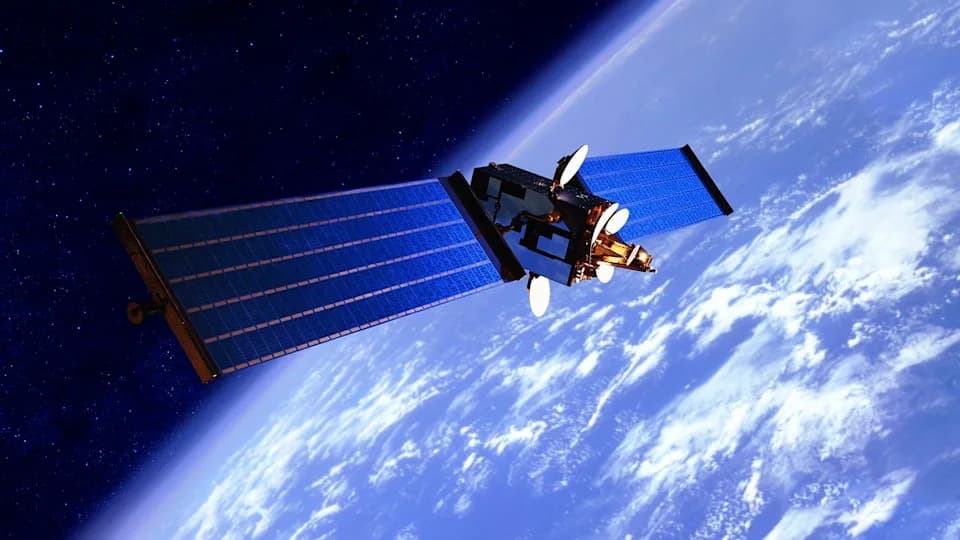
Russia says it has developed Volna Kupol Garant, an electronic‑warfare complex intended to disrupt Starlink uplinks by directing narrow, phased‑array radio beams at satellites. Officials claim it can jam eight 62.5 MHz Starlink bands and create a disruption zone up to 20 km² without physically damaging spacecraft, though affected satellites may take minutes to recover. The system's capabilities and any operational use remain unverified.
Russia Unveils 'Volna Kupol Garant' — An EW System That Targets Starlink Satellites
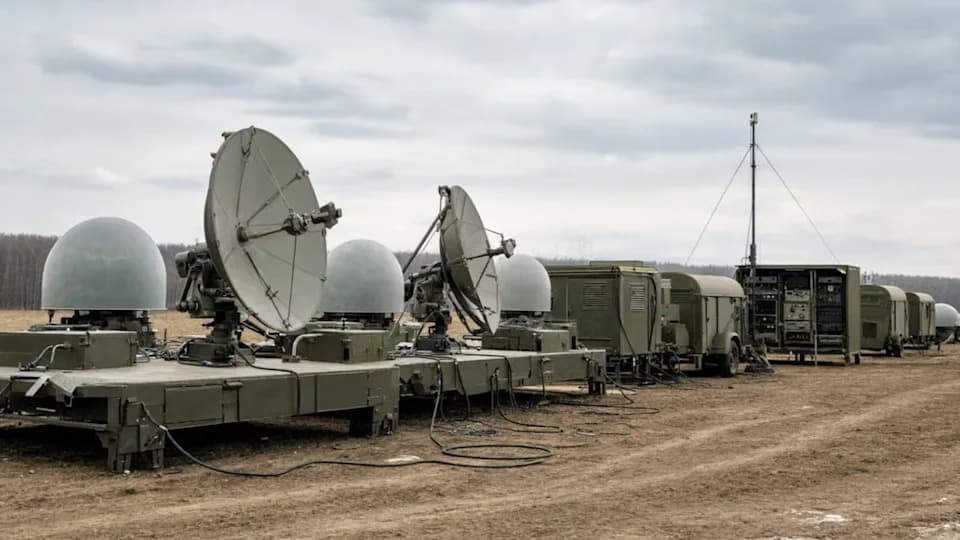
Credit: 1.ru
Russia has announced a new electronic-warfare (EW) complex called Volna Kupol Garant, which it says is designed to interfere directly with Starlink satellites rather than jamming user terminals on the ground. Russian statements describe the system as directing narrow, high-frequency radio beams at satellites to overwhelm their receivers and temporarily block uplinks from terminals within an affected area.
How It Works — According To Russian Officials
Officials claim Volna Kupol Garant uses a directional phased-array antenna system to produce concentrated emissions across eight Starlink transmission bands, each reportedly 62.5 MHz wide. The phased-array, they say, creates a narrow “illumination” beam aimed at satellites in low Earth orbit (roughly 500 km altitude) to overload or desensitize onboard receiving antennas so they cannot detect uplink signals from ground terminals.
“Volna does not physically destroy the spacecraft, but for the duration of the 'illumination,' it blocks the ability of a specific satellite to serve ground terminals,” said Dmitry Kuzyakin, general designer at the Center for Integrated Unmanned Solutions.
Capabilities And Deployment
The system is described as modular: a complete complex reportedly includes six trailer-mounted modules, each carrying two steerable antennas housed beneath radio‑transparent radomes. Modules can operate while trailer-mounted or be redeployed to separate ground installations for greater flexibility. Russian reports claim a single complex could create a Starlink disruption zone up to 20 km² using narrow‑beam interference techniques.

Google logo on a black background next to text reading 'Click to follow TechRadar'
Russian sources also assert the system can, in some modes, disrupt or potentially disable certain spacecraft functions, and that affected satellites may require several minutes to fully restore normal communications after the interference ends.
Limitations, Risks, And Verification
Independent verification of Volna Kupol Garant’s capabilities and operational use is not available. The system’s relatively large physical footprint — multiple exposed antennas operating concurrently — could make it more visible to signals‑intelligence and electronic‑intelligence sensors. Experts caution that claims of targeted satellite receiver overloads and temporary disabling are technically plausible in some scenarios but depend heavily on power, beam control, satellite antenna sensitivity, and relative geometry.
The announcement underscores growing attention to counter‑space and EW measures as satellites play an increasing role in communications, navigation, intelligence, and unmanned systems. As of publication, there are no confirmed reports that Volna Kupol Garant has been used in combat.
Source: Russian statements and reporting via 1.ru. Claims have not been independently verified.
Help us improve.