Researchers at Capital Medical University detected microplastics in all 17 human artery samples tested, with coronary and carotid arteries that contained fatty plaques showing about twice the particle levels of plaque-free aortic tissue. Polyethylene terephthalate (PET) made up 73.7% of detected plastics. A separate NEJM study of 257 patients found measurable polyethylene in arterial plaques and linked higher levels to greater risk of strokes and heart attacks, though causation is not proven. Larger, longitudinal studies are needed to identify sources, routes, and health impacts.
Microplastics Found in All 17 Human Artery Samples — PET Predominant, Plaques Contain More

(Alistair Berg/DigitalVision/Getty Images)
New research reports microplastics in every one of 17 human arterial tissue samples collected during surgery, raising fresh concerns about how pervasive these particles are in the body and what they may mean for cardiovascular health.
Study Details
A team led by investigators at Capital Medical University (Liu et al.) published their findings in the Journal of Hazardous Materials (2024). They examined three artery types — coronary, carotid and aortic tissue — and detected microplastics in all 17 specimens. The tissue concentrations reported were relatively higher than many previous measurements of microplastics in blood.
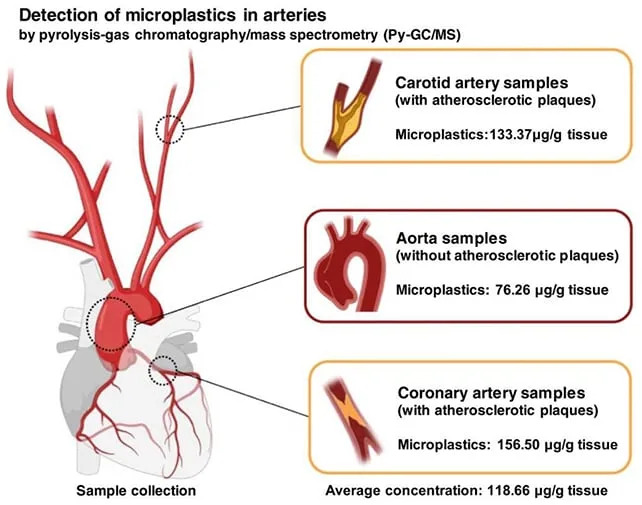
The researchers found microplastics in three different types of artery tissue. (Liu et al.,J. Hazard. Mater., 2024)
Key Findings
- Microplastics were present in every arterial sample analyzed.
- Arteries with atherosclerotic plaques (coronary and carotid samples) showed roughly double the microplastic levels compared with plaque-free aortic tissue.
- Polyethylene terephthalate (PET) accounted for 73.7% of detected particles — a polymer common in water bottles, food packaging and clothing.
Potential Health Implications
The presence of microplastics in arterial walls is concerning because animal studies have linked microplastic exposure to processes relevant to atherosclerosis. Proposed mechanisms from preclinical work include oxidative stress, cellular injury, disruption of energy and lipid metabolism, and immune-inflammatory responses. However, direct causation in humans has not been established.
"We found that three types of arterial samples including coronary, carotid, and aortic arteries contained microplastics," the authors write, noting the need for further investigation into sources and health effects.
Complementary Evidence
A separate longitudinal 2024 study in The New England Journal of Medicine followed 257 patients for 34 months and found measurable polyethylene in arterial plaques of nearly 60% of participants. That study reported an association between higher microplastic levels in plaques and a greater incidence of strokes and heart attacks, but confounding factors limit causal interpretation.
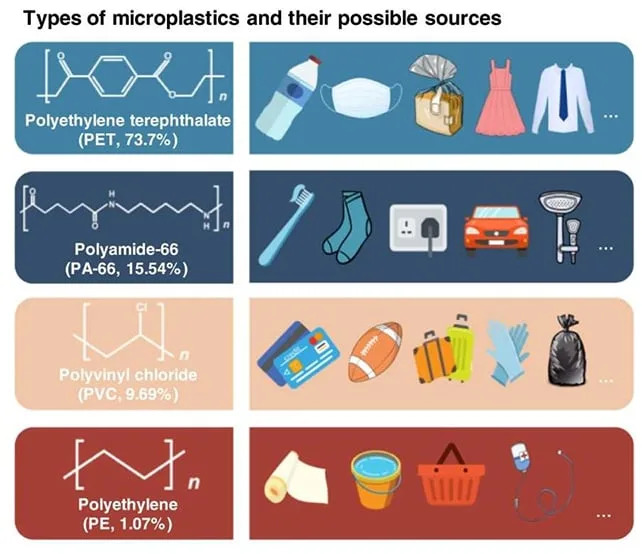
The different plastics that were discovered have multiple potential sources. (Liu et al.,J. Hazard. Mater., 2024)
How Microplastics Might Reach Arteries
Most researchers consider multiple exposure routes likely: ingestion (food and drink), inhalation (airborne particles), and possibly translocation from tissues into the bloodstream. From the circulation, particles may deposit in arterial tissue either between or inside cells.
Limitations And Next Steps
Important limitations include the small sample size, potential differences among artery types, and the observational design. The authors and other experts call for larger, controlled and longitudinal human studies to:

Subscribe to ScienceAlert's free fact-checked newsletter
- Identify primary exposure sources and routes
- Map distribution patterns of microplastics in vascular tissues
- Clarify mechanisms and clinical consequences for arterial disease
Until larger and more definitive studies are available, findings should be interpreted cautiously. The new data add to growing evidence that microplastics are widespread in the human body and justify urgent research into their health effects.
Publication: Liu et al., Journal of Hazardous Materials, 2024. Related longitudinal findings reported in The New England Journal of Medicine, 2024.
Help us improve.