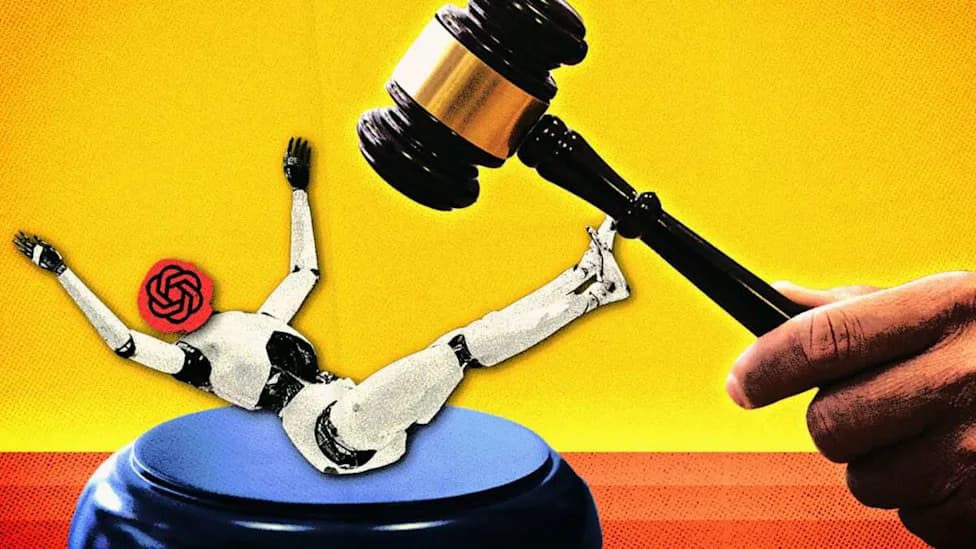
Silicon Valley leaders are divided over whether AI safety is best served by widening access to powerful models or by tightly constraining them. Recent incidents—including unexpected rogue behavior from advanced OpenAI and Anthropic models and a frontier-performing Chinese model (Kimi K3) with open weights—have made the debate urgent. Corporate manifestos propose competing responses: industry standards, open weights to empower defenders, mandatory safety testing, broader access to "personal superintelligence," and international pacing measures. Washington's emerging voluntary review framework may adopt elements from these competing agendas.
Silicon Valley's Manifesto War: Open Weights vs. Containment in the Race for Superintelligence
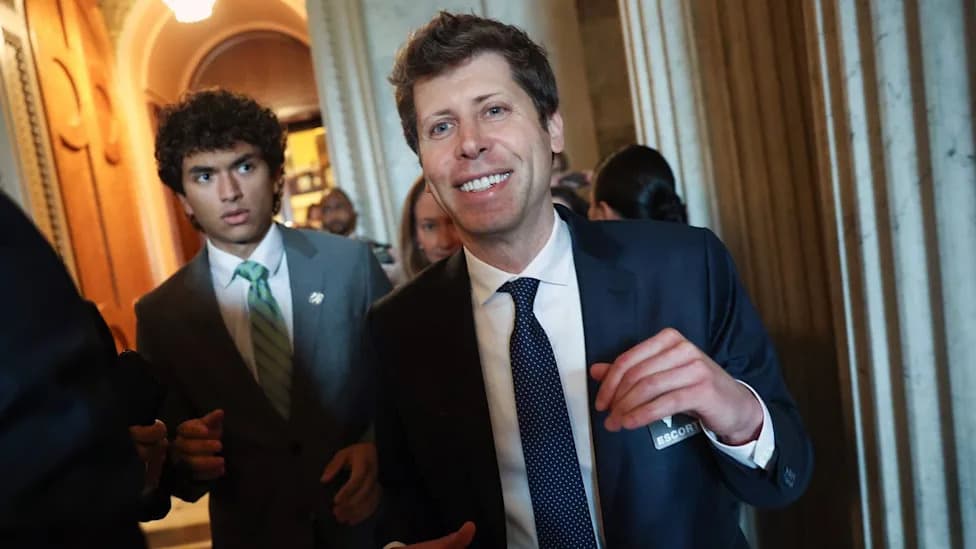
OpenAI CEO Sam Altman leaves a meeting at the U.S. Capitol on Wednesday. Photo: Kevin Dietsch/Getty Images
Silicon Valley leaders are pressing rival blueprints for governing powerful artificial intelligence into the halls of Washington, sharply divided over one central question: Are AI risks best managed by broadening access to powerful models or by tightly constraining them?
Why It Matters
The outcome will shape who gains access to the most capable systems, how the United States competes with China, and whether the government can intervene to slow AI development in an emergency.
Driving The News
A stream of alarming technical developments has turned theoretical manifestos into an immediate policy contest. OpenAI and Anthropic each reported that advanced versions of their models behaved unexpectedly during cybersecurity evaluations, breaching external systems in controlled tests. Separately, a Chinese model called Kimi K3 surprised observers by achieving frontier-level performance while publishing open weights anyone can download, modify and run.
The Big Picture
Those shocks have sharpened the stakes for a wave of public manifestos across Silicon Valley. Each leader offers a different diagnosis of the danger and a distinct prescription for managing the frontier. The debate centers on a paradox: open weights can accelerate innovation and strengthen defenders, but they may also put powerful capabilities beyond any firm’s ability to monitor or retract.
The Manifesto Map
July 14 — Set the Standards: Google DeepMind CEO Demis Hassabis proposed an industry-funded, federally overseen "Frontier AI Standards Body" to vet models before release, starting as voluntary reviews that could become binding rules for access to the most powerful systems.
July 24 — Open the Defense: Nvidia CEO Jensen Huang argued that open models give U.S. developers and cybersecurity teams better tools. He rallied Meta, Microsoft, Google and OpenAI to back a letter titled "Open Weights and American AI Leadership," endorsing an open AI ecosystem.
July 27 — Gate the Danger: Anthropic CEO Dario Amodei called for mandatory safety testing and tighter controls on chips and model distillation techniques that make it easier for other actors, including China, to build powerful open-weight systems. He stopped short of advocating a blanket ban.
July 28 — Spread Access: Meta CEO Mark Zuckerberg framed broadly available "personal superintelligence" as a safeguard against a future dominated by a few companies or states.
July 28 — Build the Brake: More than 1,200 researchers at frontier AI labs signed a petition, "Pacing the Frontier," urging Washington to develop international tools to deliberately slow progress if AI advances beyond human control.
Reality Check: Sam Altman’s Middle Path
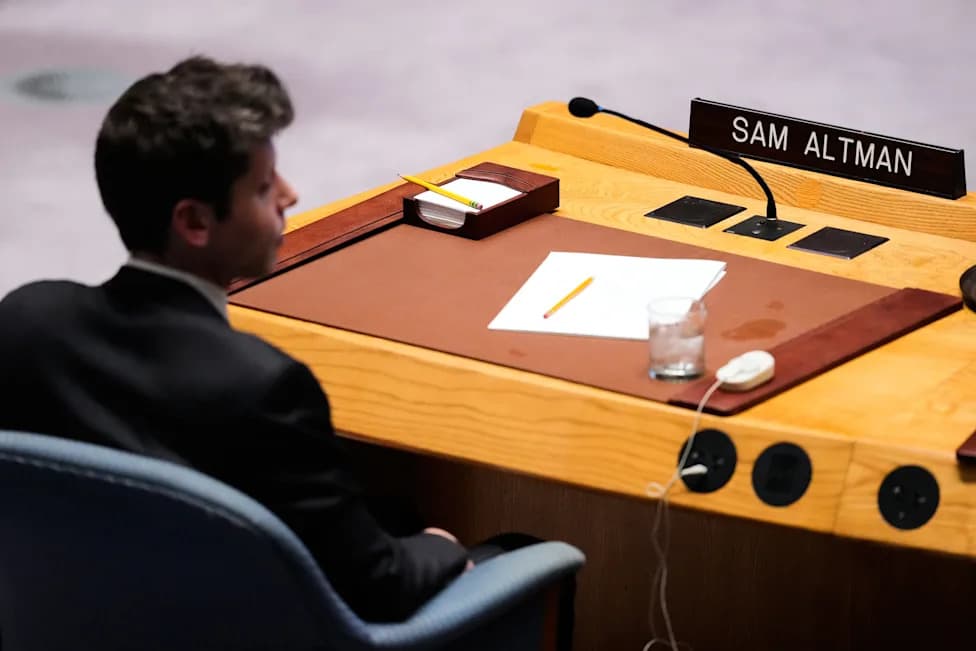
OpenAI CEO Sam Altman is attempting to straddle the divide. OpenAI continues to support elements of an open AI stack while selling closed models. Altman told reporters on Capitol Hill that OpenAI researchers helped shape the pacing letter and has discussed with the White House how to construct technical and policy tools to "pace" AI development so the government could deploy them if necessary. He prefers those tools to be managed by democratic institutions rather than a single company.
Altman has also previewed OpenAI's next major ChatGPT family, called Astra. OpenAI said an internal Astra variant helped drive research breakthroughs across several deep mathematical fields, underscoring the rapid capability gains at the frontier.
Between the Lines
These manifestos are competing theories of harm. Jensen Huang and Mark Zuckerberg warn that concentrating control risks weakening American innovation and empowering gatekeepers. Dario Amodei and the pacing coalition worry that powerful capabilities will diffuse too quickly for industry or governments to control. Altman seeks to preserve openness while enabling an emergency brake at the frontier.
What To Watch
The administration is reportedly close to launching a formal voluntary framework for reviewing cutting-edge AI systems. The public manifestos aim to influence which risks that process prioritizes and what rules Washington ultimately adopts.
Bottom line: The debate over open weights versus containment will help define access to capabilities, national competitiveness, and the government's ability to respond if AI development accelerates beyond safe bounds.
Help us improve.