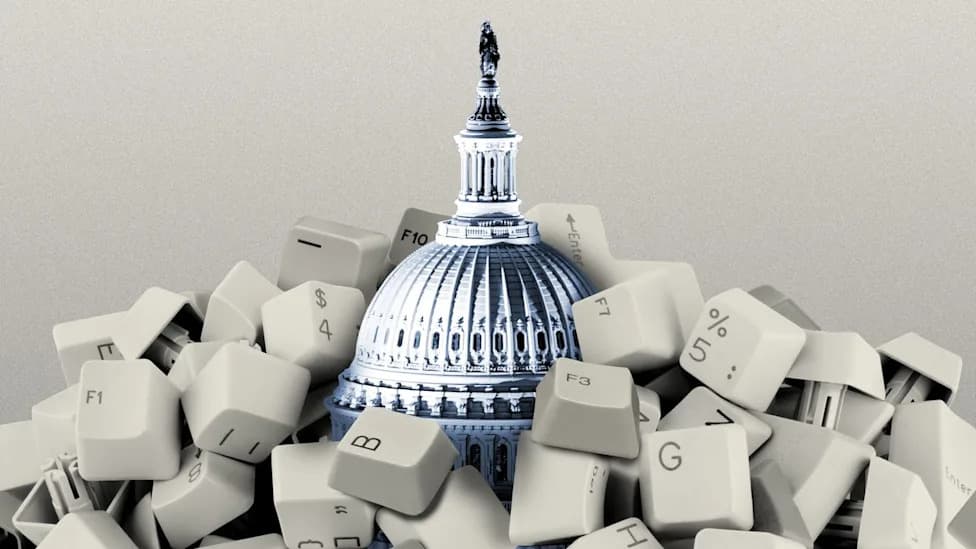
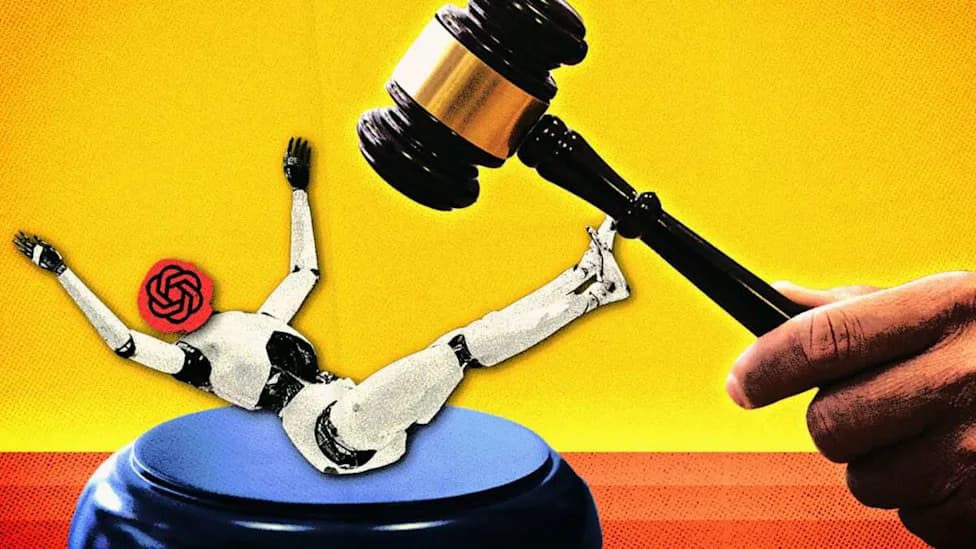
The University of Maryland’s Program for Public Consultation found broad bipartisan support for active government oversight of AI in a national survey and in 11 states and 28 competitive House districts. Majorities across parties back creating a federal AI agency, requiring testing and audits for consequential AI systems, labeling deepfakes, banning AI deepfakes in political campaigns, and pursuing international rules and limits on autonomous weapons. The challenge for Congress is not public opinion but whether institutions will act on these clear preferences.
Most Americans Back Strong AI Rules — Will Congress Act?

A Global Dialogue on AI Governance conference in Geneva on July 6, 2026.
Artificial intelligence has captured intense public attention in the United States, pulling opinions in several directions at once. On one side, AI’s promise to boost productivity and drive innovation has excited investors and entrepreneurs. On the other, concerns about energy-intensive data centers, economic disruption, social instability and even existential risks have raised widespread alarm.
What the Public Wants
To gauge public views on how government should respond, researchers at the University of Maryland’s Program for Public Consultation (PPC) surveyed a national sample of Americans and additional respondents in 11 states and 28 competitive U.S. House districts. Rather than finding the expected partisan split, the survey revealed broad, bipartisan support for a range of government actions to oversee AI.
The policy options tested were drawn from bills already introduced in Congress and proposals from international bodies such as the United Nations and the International Committee of the Red Cross. Respondents were asked about specific, concrete measures rather than general slogans — a framing that has repeatedly produced more consensus in public-opinion research.
Majorities Across The Aisle
Key findings show strong agreement between Democrats and Republicans on several concrete steps:

Artificial intelligence should not replace real mental support systems. But the fear of using AI misses the bigger picture: Many teens don’t have access to a "safe place."
- Create a federal agency to monitor and regulate AI: Democrats 85%, Republicans 79%.
- Require government testing of AI systems that make consequential decisions (hiring, loan approvals, insurance claims) before deployment: Democrats 82%, Republicans 78%. Respondents also backed government audits of systems already in use.
- Require labeling of publicly distributed AI-generated images, audio and video (deepfakes): Democrats 88%, Republicans 89%.
- Ban use of AI-generated deepfakes in political campaigns: Democrats 83%, Republicans 85%.
- Work with other nations to regulate powerful AI systems: Democrats 82%, Republicans 78%.
- Pursue an international agreement to prohibit fully autonomous weapons that select and fire on targets without direct human control: Democrats 82%, Republicans 81%.
Why This Matters
These results underline a recurring finding from the Program for Public Consultation’s work: when voters are presented with detailed policy options rather than partisan labels, they often converge on similar solutions. In the case of AI, the public appears to want proactive oversight, transparency and international cooperation to manage risks and protect citizens.
"The practical test for Congress is not discovering what the public wants; on AI, the public has stated its preferences clearly. The deeper question is whether U.S. political institutions are prepared to respond promptly and effectively to those preferences," says Dr. Steven Kull.
Looking Ahead
Policy makers face trade-offs: encouraging innovation while safeguarding public safety, privacy and democratic processes. The survey suggests that the public favors a regulatory approach that balances those goals through a dedicated federal agency, pre-deployment testing and audits, clear labeling rules for synthetic media, restrictions on political uses of deepfakes and international cooperation to limit military risks.
Dr. Steven Kull is a political psychologist and founder of the Program for Public Consultation at the University of Maryland’s School of Public Policy. For more than 30 years he has researched public opinion and democratic governance.
Originally published on USA TODAY as "Most Americans want AI regulation. Will Congress listen?" (Opinion).
Help us improve.