The Gerbera drone, introduced in July 2024 as a low‑cost decoy for Geran‑2 strike packages, has been upgraded into a multi‑role platform performing reconnaissance, communications relay, signals collection and limited strikes. Key hardware changes include a 12‑element Kometa‑M antenna, mesh networking radios and seeker packages; some Gerberas have acted as FPV "motherships" or carried external fuel tanks for extended SIGINT sorties. July 2026 reporting documents Gerbera strikes in Chernihiv Oblast and tactical support near Donetsk, underscoring how simple drone designs are being rapidly adapted for diverse battlefield roles.
How Russia’s Gerbera Drone Evolved From Cheap Decoy to Multi‑Role Battlefield Asset
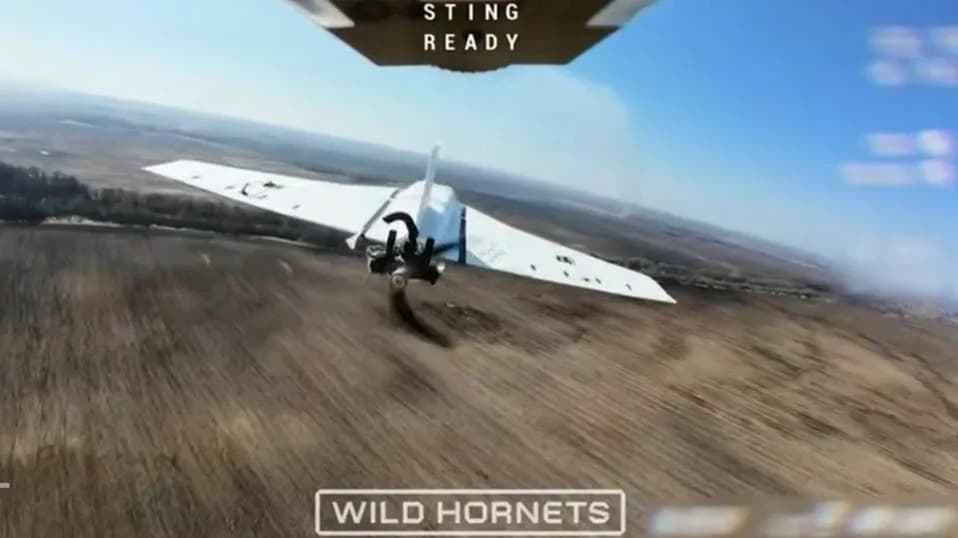
Image captured from a video posted on social media on April 19, 2026 by Wild Hornets. The video shows the feed from a Ukrainian interceptor drone as it targets a Russian Gerbera Drone.Social Media Capture
The Gerbera began life as a low-cost decoy but has been rapidly adapted into a flexible multi-role unmanned platform used for reconnaissance, communications relay, signals collection and even limited strike missions. Since its introduction in July 2024 the platform has undergone hardware and operational upgrades that have extended its battlefield utility and complicated air-defence and electronic-warfare calculations on both sides of the Russia‑Ukraine front.
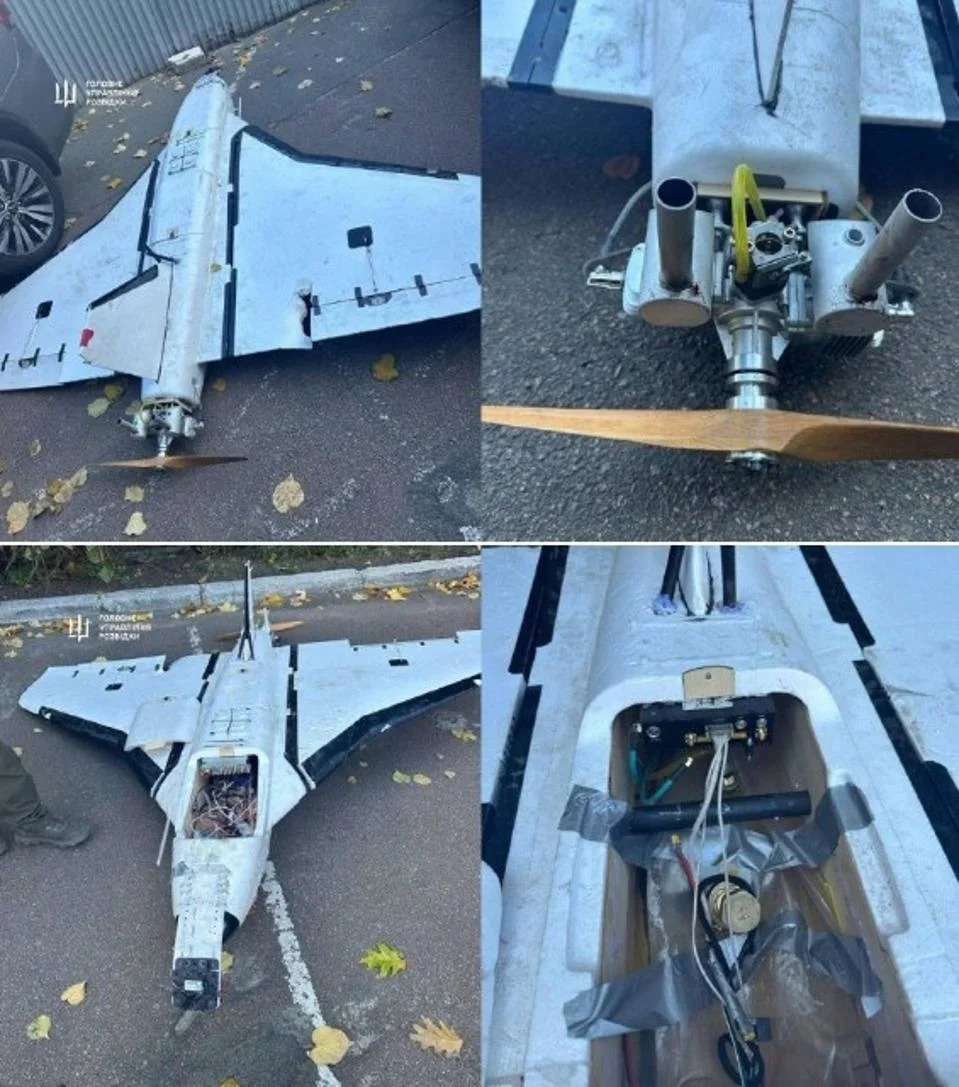
Images of the Gerbera drone released on Telegram by the Main Directorate of Intelligence of the Ministry of Defence of Ukraine on November 18, 2024.
Design and Basic Specifications
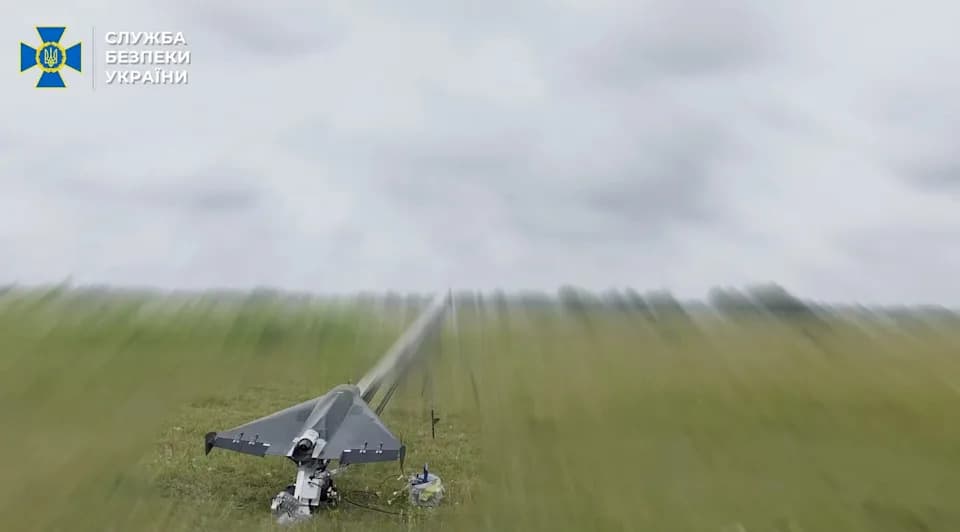
Introduced as a low-cost companion to the Geran‑2 loitering munition, the Gerbera is a fixed‑wing drone roughly 2 m long with a 2.5 m wingspan. It has a maximum takeoff weight of about 18 kg and a payload capacity near 5 kg. A small two‑stroke piston engine gives it a top speed of roughly 160 km/h and reported ranges of up to 600 km. The airframe uses plywood, foam plastics and commercial off‑the‑shelf components and is launched from elastic or pneumatic catapults, eliminating runway requirements. Analysts estimate unit cost at roughly $10,000.
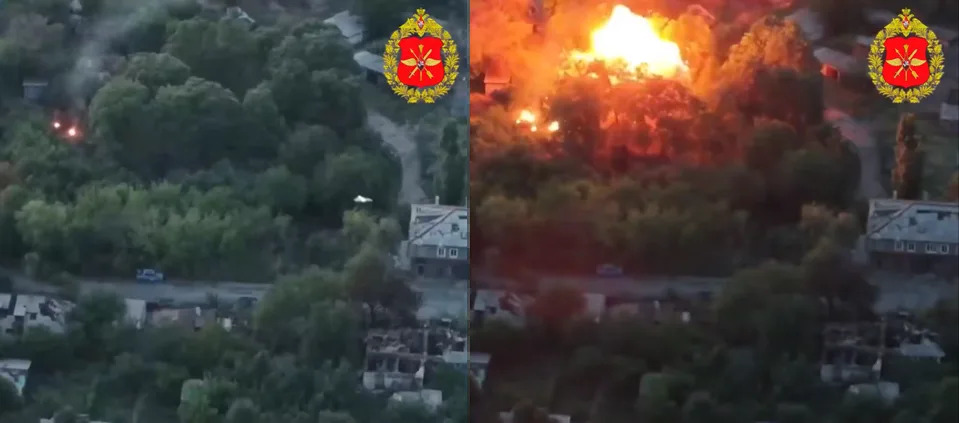
Image captured from a video posted on Telegram by the Russian Ministry of Defense on July 10, 2026 showing a strike in Dobropillia by a Gerbera drone.
From Decoy To Multifunctional Platform
Because the Gerbera’s external shape and radar/thermal signature closely resemble the Geran‑2, Russian forces initially used it en masse to complicate Ukrainian air‑defence responses: forced to detect, track and possibly engage many low‑value Gerberas, defenders faced higher risk that genuine Geran‑2 strike munitions would penetrate the network. However, the Gerbera’s simple flight controls and navigation make it vulnerable to electronic warfare; jamming and spoofing have reportedly sent units off course and led to incursions into neighbouring countries including Lithuania, Moldova and Poland.
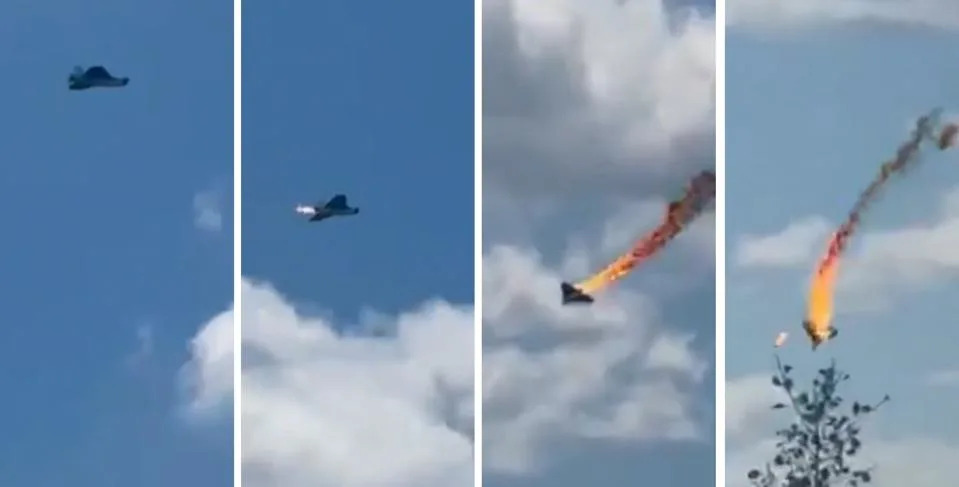
Images captured from a video posted on Telegram showing a Ukrainian AIr Defense unit shooting down a Russian Gerbera drone in Chernihiv Oblast. The video was posted on June 24, 2026.
Key Upgrades
- Kometa‑M Antenna: Integration of a 12‑element controlled reception pattern antenna has substantially improved resistance to GPS jamming and spoofing compared with earlier navigation suites.
- Mesh Networking Radios: Some airframes now carry mesh radios to relay encrypted traffic and extend command and control in contested electromagnetic environments.
- Seeker Packages: Optical/seeker systems fitted to certain Gerberas enable target lock and limited precision strikes.
- Modular Mounting Options: Mounts and brackets have enabled roles such as airborne motherships for FPV drones and carriage of external fuel tanks for extended-range or SIGINT missions.
Notable Operational Uses
Operational reporting and open‑source footage over 2025–2026 indicate a broadening set of missions:
- FPV "Mothership" Role: In February 2026 a downed Gerbera revealed mounting brackets for first‑person‑view attack drones, and footage later showed Gerberas launching FPV drones in flight. This extends the reach of short‑range FPV attackers deep behind enemy lines.
- SIGINT and Extended Patrols: Ukrainian analysts reported in July 2026 that Gerberas carrying external fuel tanks briefly entered Ukrainian airspace, manoeuvred and returned to Russia. Observers assessed these sorties were likely collecting electronic emissions and mapping active radio nets.
- Direct Strikes: Seeker integrations enabled limited precision attacks. In July 2026 Ukrainian sources reported Gerbera strikes on civilian and industrial infrastructure in Chernihiv Oblast (gas stations, grain elevators, energy facilities and residential buildings), and Russian Ministry of Defence footage showed strikes such as one in Dobropillia.
- Tactical Support Near The Front: During the July 22 mechanised assault in Donetsk Oblast, reports said Gerberas operated alongside Molniya attack drones, providing reconnaissance and acting as communications relays in a mesh network to sustain control of attack drones during initial drone waves.
Why Use Gerbera Instead Of Geran‑2?
Although many of the Gerbera’s new missions could be handled by the larger, more capable Geran‑2 (which offers heavier payloads, more advanced navigation and higher production volumes), several factors help explain the shift:
- Supply‑Chain And Demand Pressure: Russia’s surge in long‑range strike operations — often involving hundreds of Geran‑class drones — plus competing regional demand for Shahed‑136 derivatives may create component bottlenecks. Reserving Geran‑2s for priority long‑range strikes while assigning lower‑priority tasks to cheaper Gerberas conserves scarce resources.
- Simpler, Modular Architecture: The Gerbera’s reliance on off‑the‑shelf parts and a straightforward internal layout makes it easier and faster to modify in the field, enabling frontline units to add capabilities without a complete redesign.
- Cost‑Benefit Tradeoffs: As the Gerbera’s capabilities have grown, the cost of upgraded variants has risen — in some cases approaching Geran‑2 levels — raising operational and industrial tradeoffs for planners.
Implications
The Gerbera’s evolution illustrates a broader trend in modern conflict: rapid repurposing and incremental upgrading of existing platforms can deliver new battlefield capabilities quickly and cheaply. Even platforms designed as expendable decoys can be adapted into multifunctional assets that complicate defence, enable novel attack concepts (like airborne FPV deployment) and perform intelligence, reconnaissance and electronic‑warfare support roles. For defenders, the proliferation and modularity of such systems increases the difficulty of attribution, targeting prioritisation and electronic‑warfare planning.
Bottom line: The Gerbera is no longer just a cheap decoy. Through modest hardware upgrades and creative operational use, it has become a versatile, if still constrained, asset in Russia’s unmanned arsenal — a case study in how simple designs can be quickly weaponised and repurposed on the battlefield.
Originally published on Forbes.com. Open‑source images and videos cited in this piece include social media posts by Wild Hornets, the Russian Ministry of Defence and the Ukrainian Main Directorate of Intelligence; reporting dates cited span 2024–July 2026.
Help us improve.