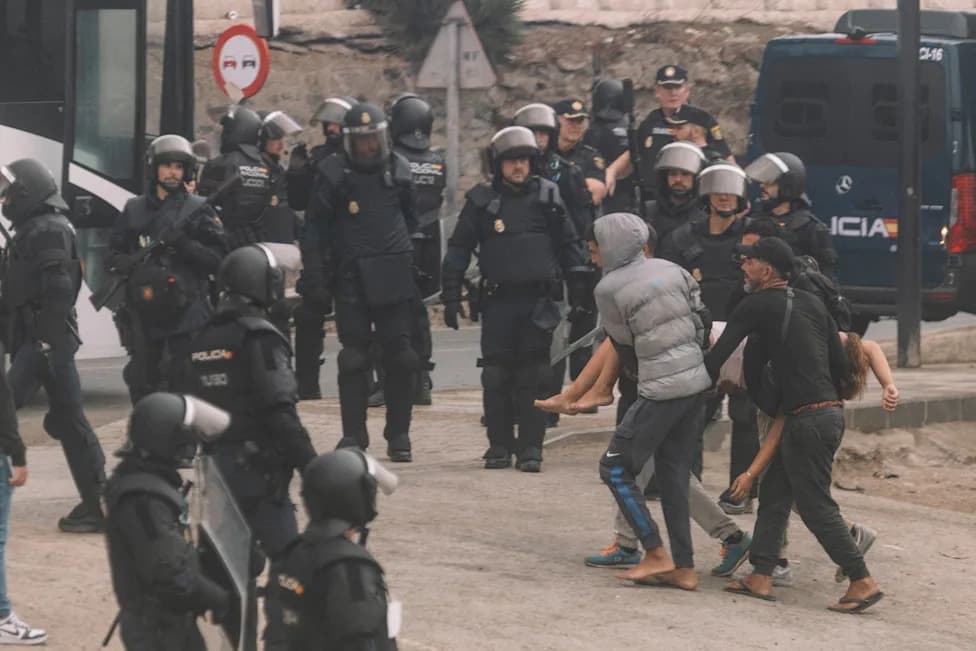
Spanish authorities say more than 50,000 migrants briefly crossed into Ceuta and most have since returned, but at least 67 people died attempting to reach the enclave. Officials blame trafficking networks and point to a July court ruling as a factor, while some analysts suspect Moroccan tolerance or orchestration. Provocative comments by Israeli officials have added diplomatic friction, though there is no verified evidence of Israeli involvement. The episode has deepened existing tensions among Spain, Morocco and Israel.
Ceuta Crisis: 50,000+ Migrants and 67 Dead — How the Surge Deepened Spain‑Israel Strains
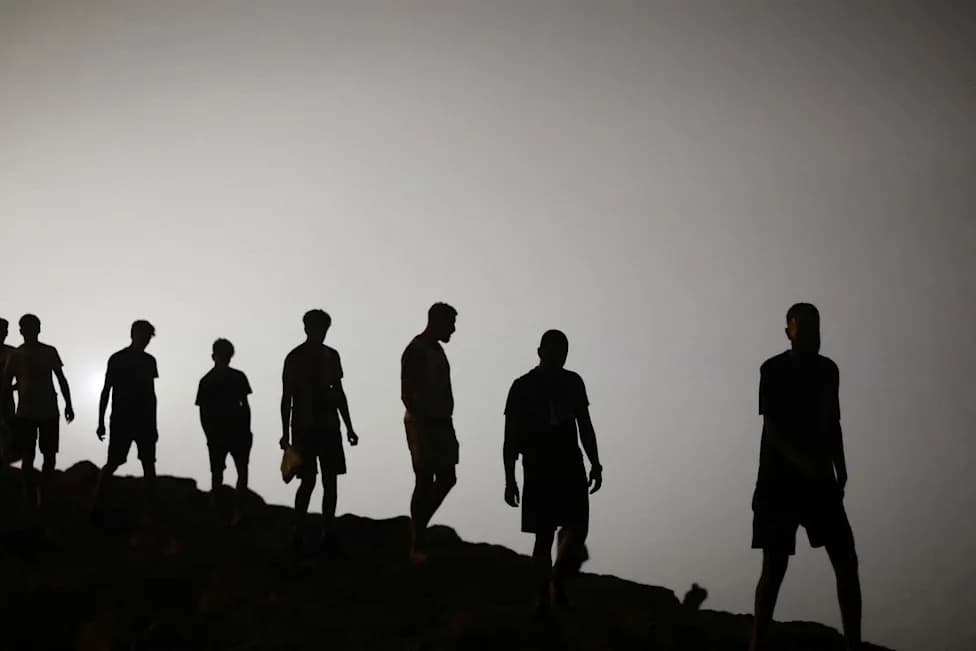
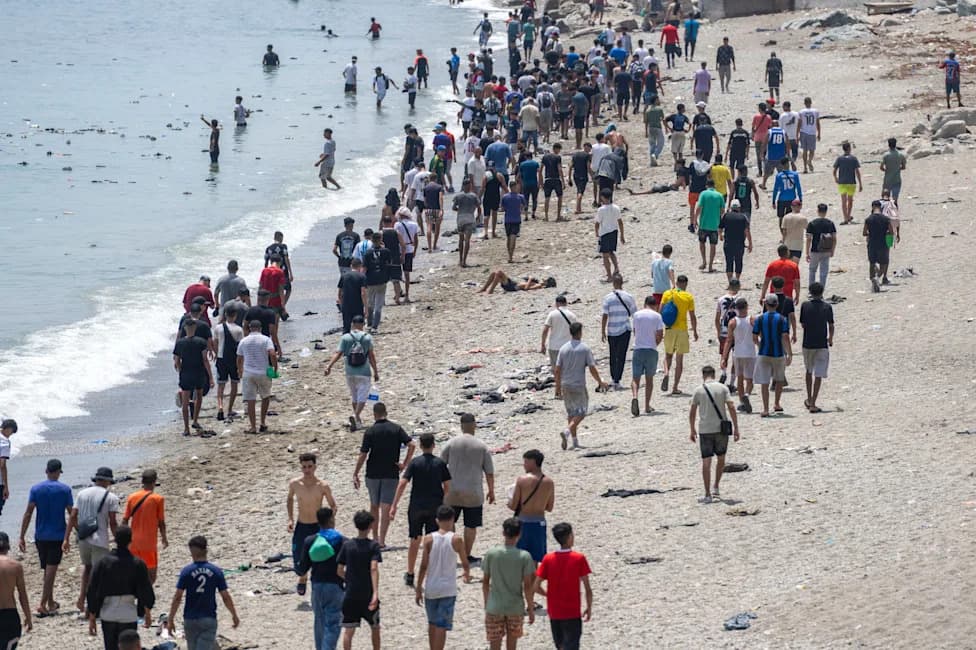
Migrants walk towards the Fnideq region in northern Morocco after leaving Spain's North African enclave of Ceuta following an attempted border crossing [AFP]
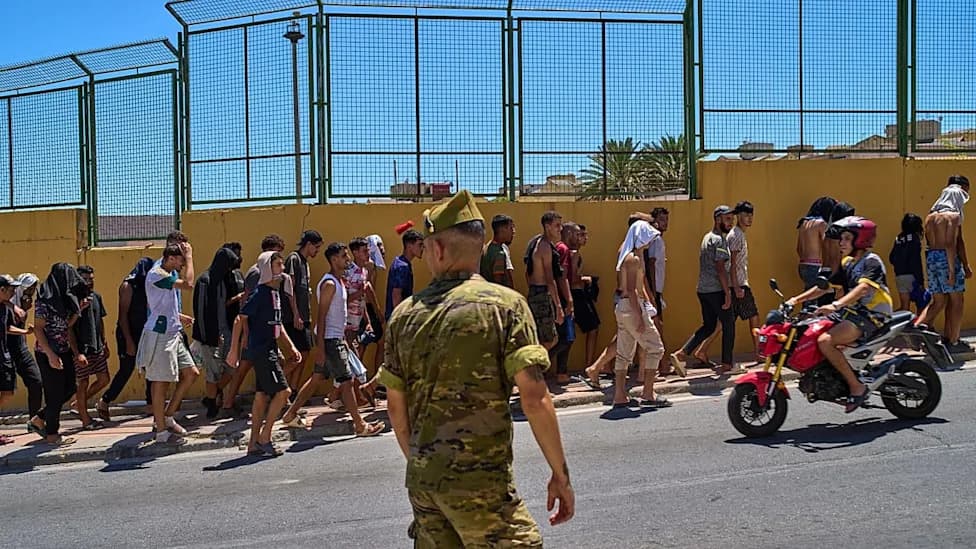
Spanish authorities say the situation in the North African enclave of Ceuta is largely under control after more than 50,000 migrants crossed into the city over a short period, with most reportedly choosing to return voluntarily to Morocco. At least 67 people died attempting the crossing, and tens of thousands arrived by sea, swimming or in small boats to bypass the border fence.
What Happened
The influx began on a single day and continued into the following night. Guards at several crossings were overwhelmed as large groups pushed through, while others tried to climb the breakwater that protects the barrier. Spanish officials linked the surge in part to a July Supreme Court ruling that prevents the immediate return of migrants who arrive by sea, though experts say few migrants would likely have known about the decision in detail.
"Without a doubt, the July 8 ruling has played a role… but that doesn't explain the level of mobilisation," said Ignacio Cembrero, a journalist specialising in North African migration.
Prime Minister Pedro Sanchez accused human trafficking networks of exploiting the court ruling, exaggerating its effects to organise a mass movement. Some analysts and commentators suspect Moroccan authorities may have tolerated or facilitated the breach as political pressure, though no verified proof has emerged.
Historical And Political Context
Ceuta and Melilla are Spain's two autonomous cities on the African mainland and are the only land borders between the EU and Africa. Ceuta was seized by Portugal in 1415 and came under Spanish sovereignty in 1580; it remained Spanish after Portugal regained independence. The enclaves have long been flashpoints in Spain‑Morocco relations.
Relations between Madrid and Rabat have repeatedly frayed: in 2021 Morocco reacted angrily after Spain allowed Polisario Front leader Brahim Ghali to receive medical treatment in Spain; Rabat later relaxed border controls, allowing thousands into Ceuta. In 2022 Spain shifted policy by endorsing Moroccan claims over Western Sahara, restoring full ties with Rabat after decades of supporting Sahrawi self‑determination. Tensions rose again after Prime Minister Sanchez visited Algeria, a backer of the Polisario Front.
Israel, Morocco And Diplomatic Friction
Observers note that Morocco has warmed ties with Israel since normalisation under the Abraham Accords, and Rabat has received diplomatic backing from the US in matters related to Western Sahara. Recent incidents — including Spain refusing port access to a US‑flagged ship reportedly carrying weapons for Israel while Morocco accepted vessels — have added to the narrative of diverging policies.
Provocative remarks from some Israeli figures also heightened diplomatic sensitivity. Israel's UN ambassador posted an X message questioning why Spain maintains its African enclaves while lecturing Israel on human rights. Spanish ministers publicly suggested such remarks deepened suspicion, though there is no verified evidence that Israel was involved in orchestrating the migrant surge.
Consequences And Takeaway
Whatever the precise causes of the mass crossing, the episode underscored how migration, colonial history and regional rivalries can be leveraged as political pressure. The event has clearly worsened already chilly relations between Spain's left‑wing government under Pedro Sanchez and Israel's right‑wing administration led by Benjamin Netanyahu, and renewed scrutiny of Spain‑Morocco ties and policies on migration is likely to follow.
Help us improve.