FIRE's 20th Spotlight on Speech Codes finds a notable reversal: many U.S. colleges are rolling back restrictive speech policies, with only 13.2% of 493 evaluated institutions now rated "red light." Institutional neutrality and Chicago Statement–style protections are spreading as legal, political and financial pressures rise. However, about 70% of colleges remain at FIRE's "yellow light," and written-policy changes may not translate quickly into campus culture.
Why Colleges Are Rolling Back Speech Restrictions — And What It Means
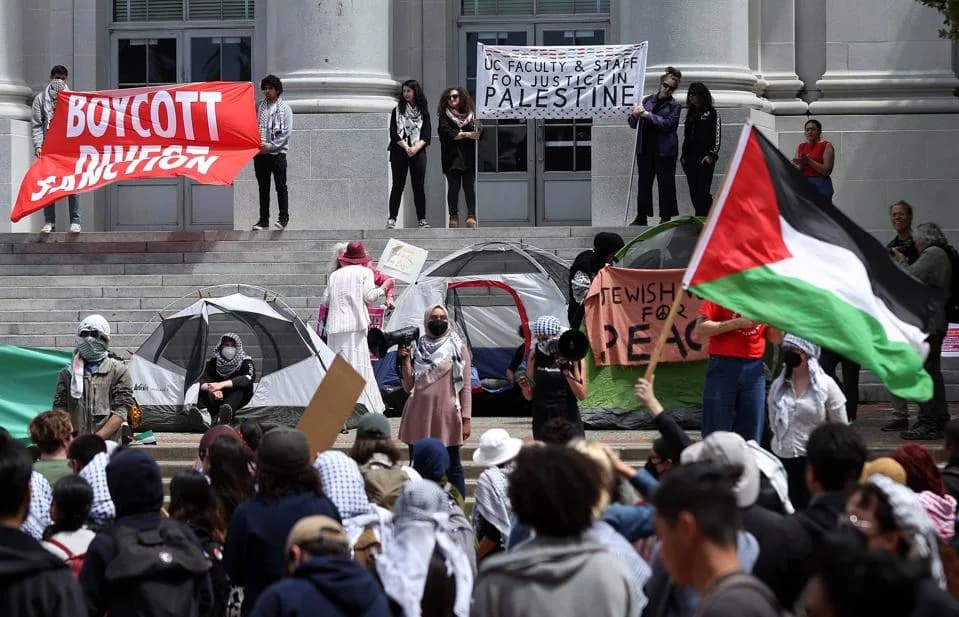
BERKELEY, CALIFORNIA - APRIL 22: Pro-Palestinian protesters set up a tent encampment during a demonstration in front of Sproul Hall on the UC Berkeley campus on April 22, 2024 in Berkeley, California. Hundreds of pro-Palestinian protesters staged a demonstration in front of Sproul Hall on the UC Berkeley campus where they set up a tent encampment in solidarity with protesters at Columbia University who are demanding a permanent cease fire in war between Israel and Gaza. (Photo by Justin Sullivan/Getty Images)Getty Images
For much of the past decade, many colleges appeared to be tightening rules around campus speech: bias response teams proliferated, Diversity, Equity, and Inclusion offices expanded, and administrators increasingly issued public positions on hot-button issues. That trajectory suggested speech rules would keep getting stricter.
But a surprising reversal is underway. In its 20th Spotlight on Speech Codes, the Foundation for Individual Rights and Expression (FIRE) finds that many institutions are quietly dismantling some of the most restrictive speech policies that once defined campus debate.
Key Findings
FIRE evaluated 493 colleges and universities and reports that only 13.2% now receive its most restrictive "red light" rating—the smallest share in the group's 20-year history. For the second consecutive year, more institutions earned FIRE's top "green light" rating than the lowest one. The group also documents notable policy adoptions: 47 institutions have formally embraced institutional neutrality modeled on the University of Chicago's Kalven Report, and 120 have adopted versions of the Chicago Statement affirming freedom of expression.
Why Policies Are Shifting
Universities are complex organizations that respond to incentives. For years, restrictive speech policies carried minimal visible costs: few high-profile legal challenges, limited legislative pushback, and little sustained donor protest. Administrators frequently found it easier to prohibit potentially controversial speech than to defend it after the fact.
That balance has changed. A string of crises—COVID-19, racial-justice protests after George Floyd's murder, campus encampments, the Israel-Hamas war following October 7, partisan polarization, congressional hearings, federal probes, state legislation, and donor backlash—created legal, political, financial, and reputational risks for ad hoc or activist approaches to speech. Institutional neutrality and clearer, consistently applied rules have become easier to defend than case-by-case interventions.
"When an organization claims the authority to decide which speech is acceptable, it also assumes responsibility for every future controversy."
Limits And Caveats
The shift in written policy does not mean the campus free-speech debate is resolved. Roughly 70% of colleges still receive FIRE's "yellow light" rating, indicating policies that could be applied in ways that chill protected expression. Only about 15% of institutions earn the highest "green light" grade. Importantly, FIRE's ratings assess written policies—not campus climate. They do not measure whether students and faculty actually feel free to speak, whether controversial speakers are welcomed, or whether social pressures deter dissent.
What This Means Going Forward
Institutions appear to be trading ad hoc crisis management for more predictable governance: clearer rules and declarations of neutrality give administrators a defensible path through political controversies. Whether this amounts to a lasting recommitment to free expression or a pragmatic adjustment to new incentives remains uncertain. What is already clear is that America's colleges are not just talking differently about free speech—they are managing it differently.
Originally published on Forbes.com. Updated and edited for clarity and structure.
Help us improve.