Reclaiming Liberal Education in America collects 40 RealClearPolitics columns (2014–2025) documenting the decline of liberal education at U.S. colleges and universities and proposing reforms to restore its civic purpose. The essays examine curtailed due process, threats to free speech, discriminatory practices, curricular politicization, and a surge in campus antisemitism following October 2023. Berkowitz defines the key terms—education, liberal, and America—to clarify what a robust liberal education should accomplish and outlines practical measures to revive it.
Reclaiming Liberal Education in America: A Preface and Call to Restore Higher Education
AP
This preface introduces my forthcoming book, Reclaiming Liberal Education in America, to be published by RealClear Publishing on Sept. 29. The volume collects 40 columns I wrote for RealClearPolitics between 2014 and 2025. Taken together, these essays trace a brief history of liberal education's decline in the United States and offer a concise case for reforms necessary to reclaim it.
About the Book
The pieces clarify liberal education's aims, structure, content, and spirit by reporting on events and evaluating the ideas that have shaped recent campus life. They explain what is at stake for freedom and democratic self-government and place contemporary disputes—especially at the nation’s most selective colleges and universities—within a broader intellectual and political frame. The essays also recommend reforms intended to restore higher education’s public-minded mission: preparing young people to exercise the rights and responsibilities of free citizens.
What the Essays Document
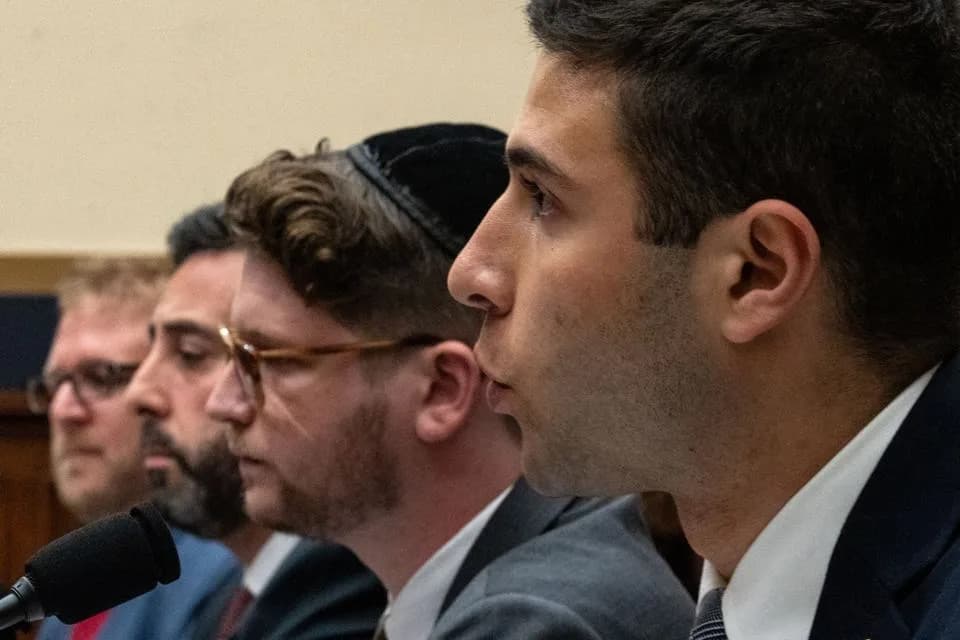
American campuses today display a variety of dysfunctions. Several essays examine how colleges and universities have curtailed due process for those accused of sexual misconduct. Others document assaults on free speech and what I describe as unlawful or injurious allocations of benefits based on race, ethnicity, sex, sexual orientation, and gender. Additional chapters consider the politicization and hollowing of curricula. Many of the most recent pieces respond to the surge of antisemitism on campus after Iran-backed Hamas’ October 2023 massacre in southern Israel and the ensuing public reckoning over higher education’s condition. Some essays also analyze the Trump administration’s disputes with Columbia, Harvard, and other universities over antisemitism, diversity, equity, and inclusion programs, and questions of free speech and intellectual diversity.
Key Terms: Education, Liberal, America
Education. The English term derives from two Latin roots: educare (to train or mold) and educere (to lead out, to draw forth). A well-wrought education does both: it forms habits of mind and character, cultivates curiosity, transmits essential knowledge, enlivens the imagination, and promotes disciplined study, reasoned inquiry, and lively debate. It invites engagement with claims that both support and challenge our beliefs and strengthens the capacity to think for oneself—a capacity inseparable from exchanging views with people of diverse perspectives.
Liberal. In this context, "liberal" denotes an education that cultivates the virtues of freedom and equips students to prosper in and sustain free societies. The term recalls the classical curriculum—later formalized as the quadrivium (arithmetic, geometry, music, astronomy) and the trivium (grammar, logic, rhetoric)—and, in modern form, presupposes that human beings are free and equal by nature. Liberal education organizes scholarship, teaching, and learning around toleration, civility, due process, and free speech—not just to speak, but to listen. It studies political and economic freedom while honestly assessing other systems of government and cultivates appreciation for human fallibility alongside the mind’s capacity to correct error.
America. This identifies the people and polity for whom the liberal education addressed here is primarily intended. In the United States, liberal education begins with study of the nation's founding principles, constitutional traditions, economic arrangements, cultural currents, and its multireligious, multiracial, and multiethnic population. Learning proceeds sensibly from the particular to the general: understanding America requires engagement with Western civilization, alternatives to it, and the variety of ways human beings live and govern themselves.
Admissions, International Students, and Limits
Liberal education in America should prepare citizens to flourish in a free society, and it offers much to international students, who bring valuable perspectives and who benefit from learning about America’s experiment in ordered liberty. At the same time, colleges and universities have strong reasons to deny admission to those who reject basic principles of individual freedom and equality under law, who aim to foment discord or to undermine democratic institutions, or who act as spies or collaborators in intellectual-property theft.
Public Purpose and Reform
Liberal education ought to serve the public interest by preparing individuals for self-government—both in mastering their passions and managing private affairs, and in contributing to the responsibilities of citizenship. It should insist on accuracy in gathering facts and rigor in evaluating them, cultivate communities of inquiry that teach and govern consistent with individual freedom and equality under law, and reorient curricula and campus governance toward these ends.
Editorial Notes and Acknowledgements
As with my prior book, Explaining Israel: The Jewish State, the Middle East, and America (2025), I have lightly edited these columns for clarity and replaced many original links with footnotes or citation notes. Where readers can readily locate quoted writings online using information provided in the text, I have mostly omitted formal footnotes.
I am grateful to the people and institutions who made this book possible. RealClearPolitics Executive Editor Carl Cannon gave me latitude to explore this subject, and RCP editors Tom Kavanagh, Cathi Warren, and Anne Welty helped refine the pieces. The Hoover Institution at Stanford University has been my professional home for nearly two decades; Tad and Dianne Taube have generously supported my research. I also thank Emily "Sleevs" Messner for her careful attention to every essay, Jacob Leon, Eliana Aiken, Meredith Kottom, and Linda Berkowitz for proofreading, and my friend Stanley Kurtz for sharpening my understanding of the pathologies afflicting higher education and the reforms that might arrest them. This book was made possible in part by a generous grant from The Paul E. Singer Foundation.
Readers may note that in 2000 I filed a breach-of-contract lawsuit in Massachusetts state court against Harvard University. A brief account, a timeline (June 1996–October 1999), and related documents are available online for readers who wish to examine them.
Author. Peter Berkowitz is the Tad and Dianne Taube Senior Fellow at the Hoover Institution, Stanford University, and the James R. Schlesinger Distinguished Professor at the University of Virginia’s Miller Center. He served as director of the Policy Planning Staff at the U.S. State Department from 2019 to 2021. His writings appear at PeterBerkowitz.com and he is on X @BerkowitzPeter. His recent books include Reclaiming Liberal Education in America and Explaining Israel: The Jewish State, the Middle East, and America.
Help us improve.