Will Lawrence, a DSA-backed candidate for Michigan's 7th District, called for a federal moratorium on new AI data centers to allow a national debate on responsible AI development. He warned current projects favor wealthy tech and finance interests and can strain local resources. Lawrence also supports overturning Citizens United by amendment and establishing public campaign financing. He is competing in the Aug. 4 Democratic primary to challenge Rep. Tom Barrett in November.
DSA-Backed Michigan Candidate Urges Federal Moratorium on AI Data Centers Ahead of Aug. 4 Primary
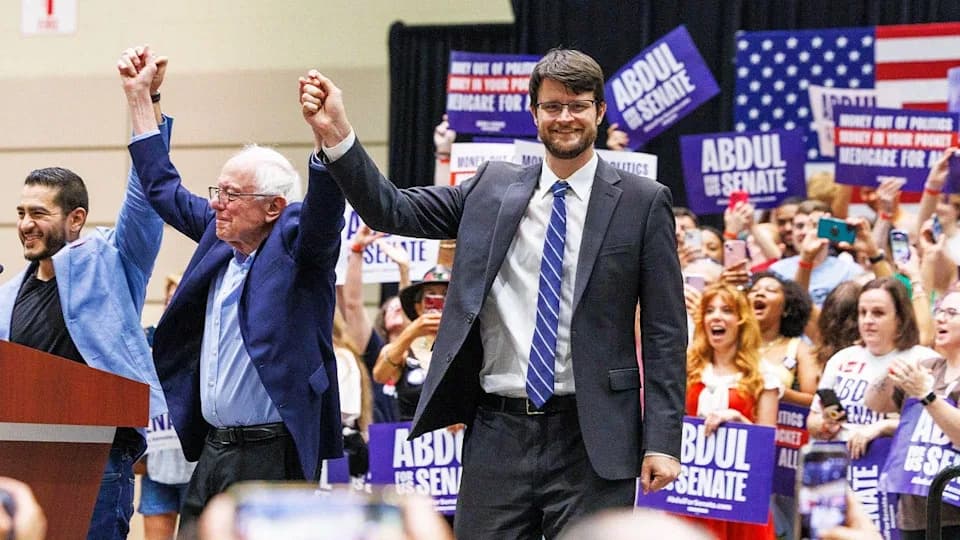
U.S. Senate candidate Abdul El-Sayed, left, U.S. Sen. Bernie Sanders, center, and U.S. House candidate William Lawrence, right, at a rally in Lansing, Mich., on July 19, 2026.
Will Lawrence, a Democratic Socialists of America member and candidate for Michigan's 7th Congressional District, called for a nationwide pause on new artificial intelligence data center construction during a campaign event in South Lansing on July 19, 2026.
At the event, Lawrence argued a moratorium is necessary to allow a national conversation about how to develop advanced AI responsibly and equitably.
“There is an urgent need to have a federal moratorium on new AI data centers so we can have a national conversation about if we're going to be generating this hyper-intelligent AI, what's the best way to do it, and how do we ensure that it benefits everybody rather than just a few billionaires in Silicon Valley?” Lawrence said.
Lawrence said he believes some data centers may be built the right way, but that many current projects neglect democratic values and local community interests. He criticized wealthy technology and finance executives who, he said, promise economic benefits to small towns while downplaying potential costs such as higher energy bills and local infrastructure strain.
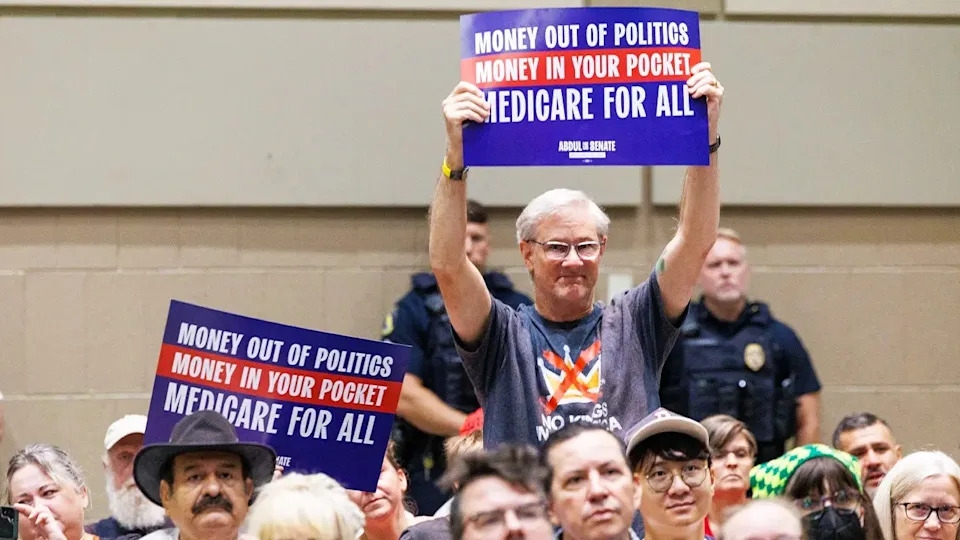
Progressive supporters at a joint rally for U.S. Senate candidate Abdul El-Sayed and U.S. House of Representatives candidate Will Lawrence hold up signs during a rally with U.S. Sen. Bernie Sanders and U.S. Rep. Alexandria Ocasio-Cortez in Lansing, Mich., on July 19, 2026.
Campaign Finance Reform
Lawrence also emphasized campaign finance reform as a priority. He urged overturning the Supreme Court's Citizens United v. FEC ruling by constitutional amendment if necessary and advocated for public financing of campaigns so candidates with legitimate grassroots support have equal access to funds.
Asked about controversial policy positions associated with some DSA factions—reports have suggested proposals ranging from institutional reforms to more radical changes—Lawrence declined to debate hypotheticals, saying the campaign is focused on stopping AI data centers, opposing wars abroad, and expanding health care access.
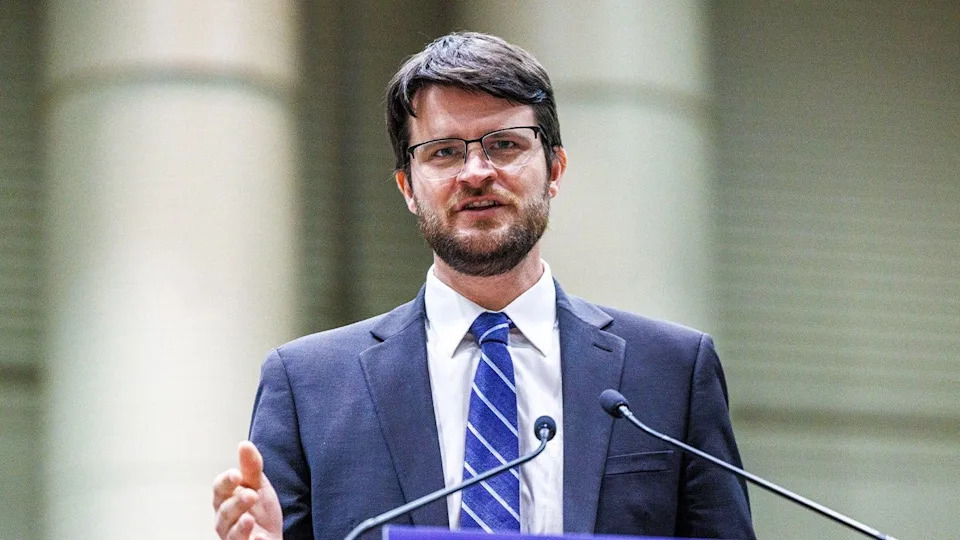
U.S. House candidate William Lawrence speaks at a rally with U.S. Senate candidate Abdul El-Sayed, U.S. Sen. Bernie Sanders and U.S. Rep. Alexandria Ocasio-Cortez in Lansing, Mich., on July 19, 2026.
Race and Context
Lawrence is competing in the Aug. 4 Democratic primary for the chance to face first-term Republican Rep. Tom Barrett in November for Michigan's 7th District. The seat opened after Rep. Elissa Slotkin ran for Senate. Among other Democratic contenders is former Obama National Security Council official and former U.S. ambassador to Ukraine Bridget Brink. Lawrence has drawn endorsements from prominent progressive figures and appeared at a July 19 rally in Lansing with U.S. Sen. Bernie Sanders and Senate candidate Abdul El-Sayed.
Fox News Digital contacted the Barrett and Brink campaigns and the DSA for comment.
Why This Matters
The debate over AI data centers raises questions about local environmental and energy impacts, the pace of advanced AI development, and who benefits from those technologies—issues that may resonate with voters as the primary approaches.
Help us improve.