Activists from Climate Action Campaign, 350.org, Third Act, Sierra Club chapters and local NAACP affiliates are staging actions in at least 20 states during congressional recess to push Democrats to speak and act on climate. Demonstrations include protests of specific lawmakers, constituent meetings and petitions urging party leaders to prioritize climate policy. Recent polling from UC Santa Barbara, Data for Progress and Yale suggests climate messaging is neutral or beneficial for Democrats and that a majority of Americans see increasing extreme weather and worry about global warming.
Activists Push Back Against 'Climate Hushing,' Press Democrats to Act During Recess
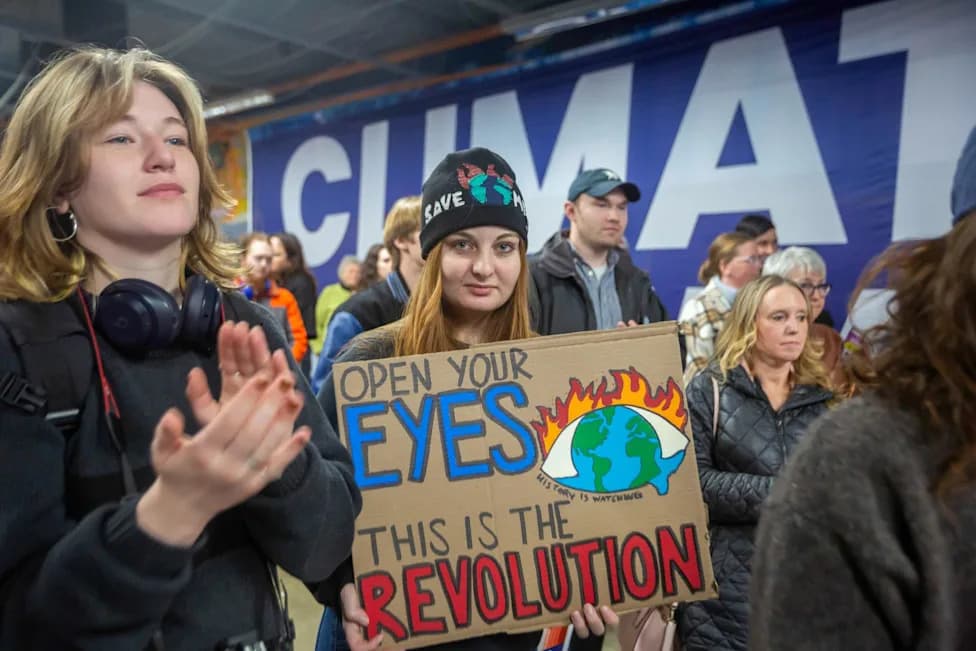
Michigan residents rally against Trump administration policies that are endangering clean air and water on 15 February 2025 in Detroit.Photograph: UCG/Universal Images Group/Getty Images
This summer's extreme weather — from torrential rains that swept away Texas neighborhoods to prolonged, dangerous heat and smoke from Canadian wildfires reaching as far south as Florida — has sharpened attention on the climate crisis. Research increasingly links global warming to the growing frequency and severity of such events, yet climate policy has receded from much of the national political conversation.
Grassroots Pressure During Congressional Recess
In response, a coalition of environmental and justice groups is staging demonstrations and constituent meetings during House and Senate recesses to urge elected officials to bring climate back into the political foreground. The Climate Action Campaign is coordinating actions in at least 20 states that will involve local Sierra Club chapters, Third Act (a senior-led climate group co-founded by Bill McKibben), 350.org and local NAACP affiliates.
“The long history of the climate movement proves that we move fastest when there's real pressure from the grassroots,” said Bill McKibben, co-founder of the climate nonprofit 350.org. “All the evidence shows those grassroots are as worried about [the] climate crisis as they ever were.”
Margie Alt, director of the Climate Action Campaign, described the effort as broad-based.
“The message is: talk about climate, climate can't wait, and we want to see action,” she said.
Local Actions And Targets
Actions launched on Thursday and will take many forms: street demonstrations, town-hall visits and meetings with lawmakers. In Michigan, protesters plan to target Republican Rep. Bill Huizenga for supporting legislation activists say benefits fossil-fuel expansion. In Arizona, young activists will meet with Representative Adelita S. Grijalva — described by organizers as a climate ally — to encourage continued public leadership on the issue. Other organizers are circulating petitions urging House Democratic Leader Hakeem Jeffries and Senate Democratic Leader Chuck Schumer to prioritize climate policy and to explicitly link recent heatwaves and extreme events to the broader crisis.
Polling, Politics And The Case Against "Climate Hushing"
The campaign comes as new research challenges the rationale for so-called "climate hushing" — the strategy of downplaying climate messaging for political reasons. July research from the University of California, Santa Barbara found that emphasizing climate change is neutral to beneficial for Democratic candidates, suggesting climate messaging does not cost votes and may help in competitive races. A July poll from Data for Progress found 61% of likely voters say extreme weather has increased over the past five years, including nearly half of Republicans; a Yale survey in June reported roughly two-thirds of Americans are worried about global warming.
“Smart politicians will grab on to this issue,” McKibben said. “There's perhaps no other question where the gulf between MAGA and the general public is higher.”
Alt warned that ignoring climate concerns amounts to political avoidance. “I don't think that ignoring the climate crisis is smart politics,” she said. “I think that it is dropping the ball on the biggest threat the U.S. and the world faces.”
What This Means: Activists hope that visible, coordinated pressure during the congressional recess will push lawmakers to speak more openly about climate risks and to make concrete policy commitments ahead of upcoming legislative and electoral cycles.
Help us improve.