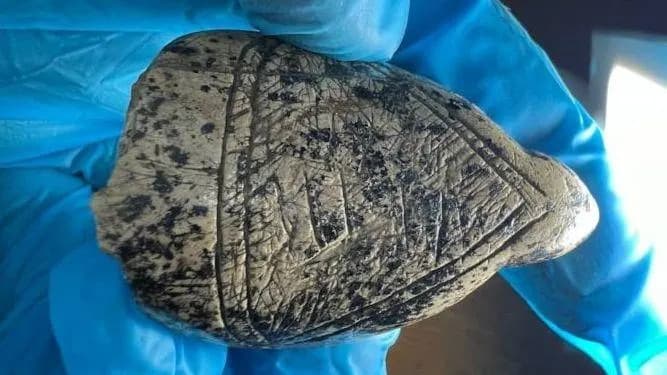
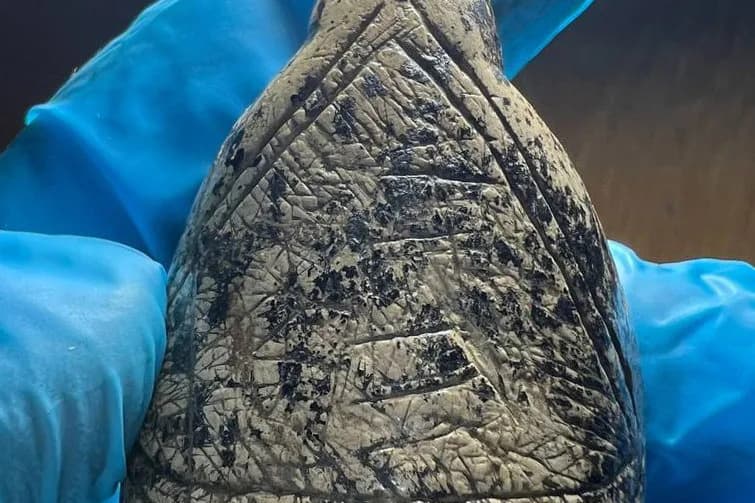
Researchers from the University of Tübingen have discovered two tiny mammoth-ivory bird carvings in the lower layers of Hohle Fels cave, attributed to the Aurignacian culture. One figure appears to show a resting or brooding bird, the other a bird with outstretched wings; one measures just 2 cm and may be the smallest Ice Age artwork found in the region. Incised feather markings and fine detail allow study of posture and possible behaviour, though exact species—ptarmigan or capercaillie, for example—remain uncertain. The finds are on display in Blaubeuren through 4 April 2027.
Tiny Mammoth-Ivory Bird Sculptures — 40,000-Year-Old Finds from Hohle Fels
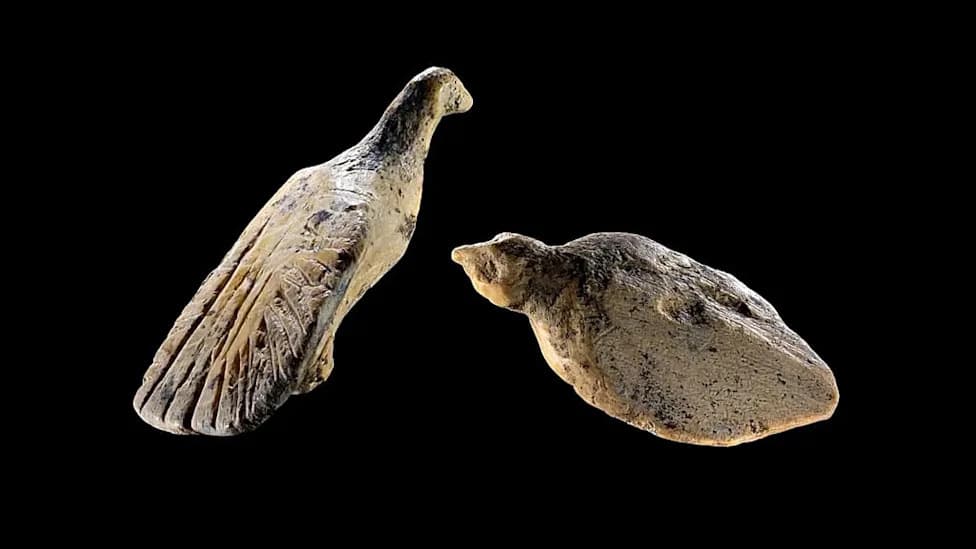
Find in German cave: 40,000-year-old mammoth ivory bird figures discovered
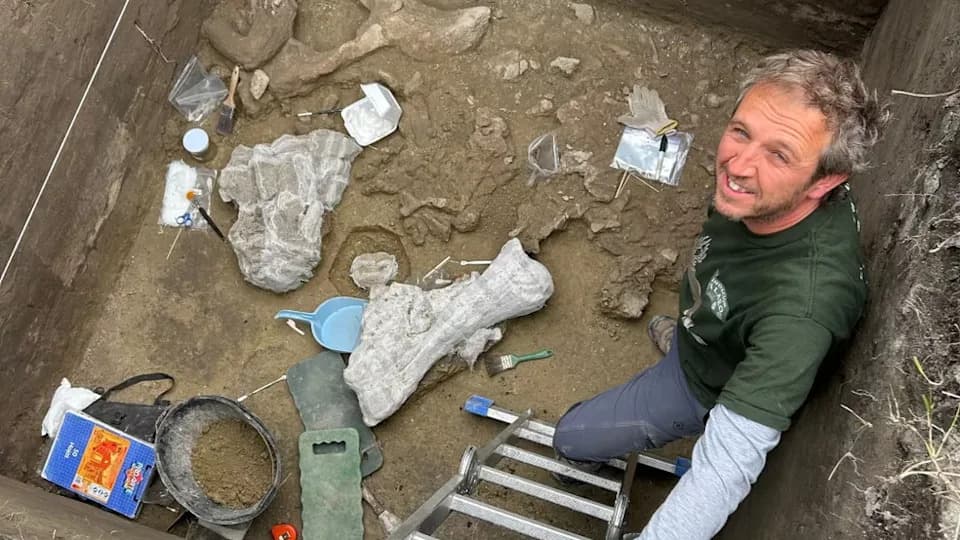
Archaeologists from the University of Tübingen have unearthed two tiny bird figurines carved from mammoth ivory in the lower layers of Hohle Fels cave. Dated to the Aurignacian period of the Upper Palaeolithic, the discovery enriches the cave's exceptional record of early human art and symbolic behaviour.
The better-preserved carving depicts a bird at rest—possibly brooding—while the second shows a bird with outstretched wings; its left wing is broken. The two objects were found about 1.5 metres apart. Both are minute enough to fit on a fingernail and weigh just 1.3 and 0.7 grams respectively. The outspread-wing example measures only 2 centimetres and is currently considered the smallest Ice Age artwork documented in the region.
One figurine bears parallel incised lines on its wing that are interpreted as feather markings, a detail noted by Ralf Ehmann of Universität Tübingen.
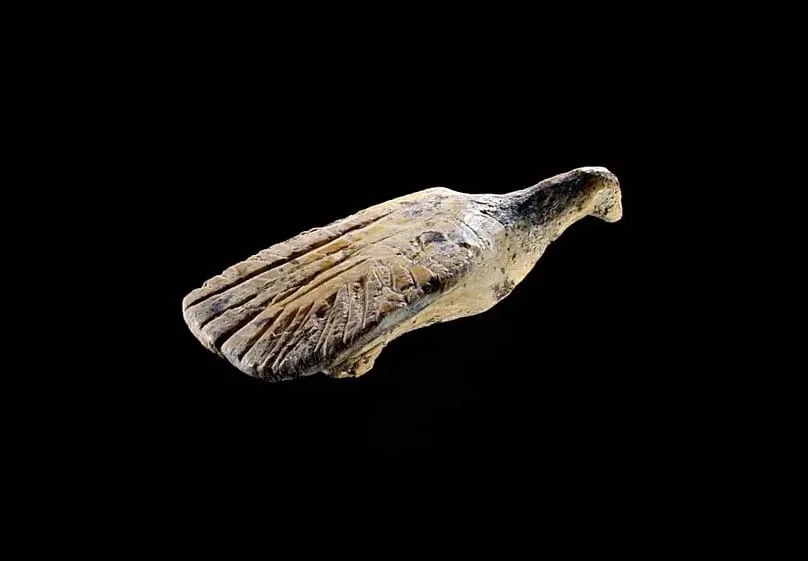
One of the bird figures bears parallel lines on its wing, which are thought to represent feathers. - Ralf Ehmann, Universität Tübingen
"Mammoth ivory was not simply used here to create a simplified form of a bird's body," says Nicholas Conard, head of the excavations. "Detailed observations of nature were translated into figurines whose richness of detail even allows us to investigate which bird species is depicted and what it is doing."
Researchers suggest the carvings could represent cold-adapted birds such as ptarmigan—whose bones commonly appear at prehistoric sites in the area—or larger, pheasant-like species such as the capercaillie, known for elaborate courtship displays. The tiny size and stylised execution make a definitive species identification difficult, but the level of detail permits comparisons of body shape, posture and plumage depiction, and offers clues to behaviour (brooding, courtship, take-off or landing).
Context and Cultural Significance
Hohle Fels, one of six Swabian Jura caves protected as a UNESCO World Heritage site, was occupied by early Homo sapiens during the Aurignacian roughly 43,000–28,000 years ago. The site has produced some of Europe's earliest figurative art and musical instruments, including the famous 41,000-year-old "Venus of Hohle Fels." These new bird carvings add nuance to our understanding of Ice Age creativity, observation of nature and symbolic expression.
The figurines are on display at the Museum of Prehistory and Ice Age Art in Blaubeuren until 4 April 2027.
Help us improve.