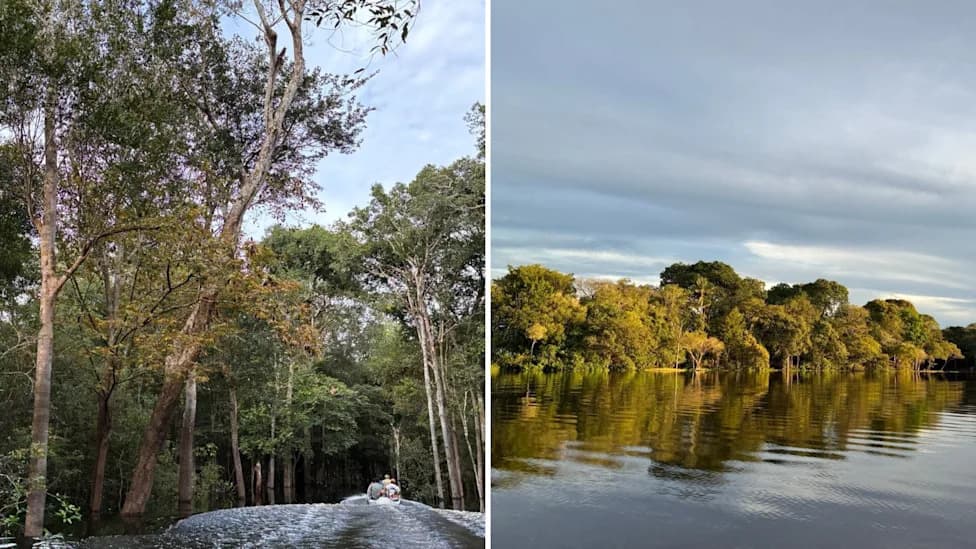
Colombia recorded a 5% increase in national deforestation in 2025, losing 119,483 hectares (295,000 acres), but overall loss remains 31% below 2021 levels. More than 65% of the clearing occurred in the Amazon, which saw roughly 77,805 hectares cleared — nearly unchanged from 2024. Officials point to illegal land grabbing, cattle ranching and road expansion as the main drivers, and highlight arrests and community conservation and policy measures, even as a new administration prepares to review environmental priorities.
Colombia Sees Small Rise in Deforestation in 2025 as Amazon Pressure Holds Steady
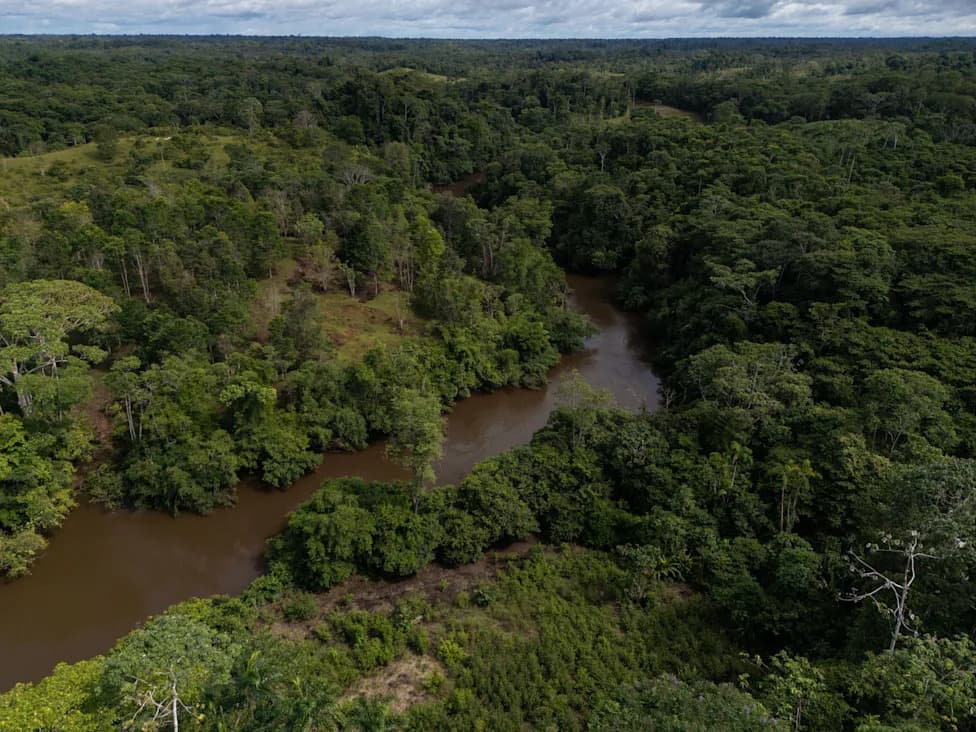
FILE - The Putumayo River flows near visible spots of deforestation on the outskirts of Puerto Asis, Colombia, Nov. 26, 2025. (AP Photo/Ivan Valencia, File)(AP Photo/Ivan Valencia)
Colombian authorities reported a modest uptick in nationwide forest loss in 2025 but said the country still exceeded its four-year reduction target set under President Gustavo Petro. The Environment Ministry and IDEAM, the national meteorological agency, said Colombia lost 119,483 hectares (295,000 acres) of forest in 2025 — a 5% increase from 2024.
Context and National Progress
Officials emphasized that, despite the rise, overall deforestation remains 31% below 2021 levels, meaning the administration surpassed its goal of cutting annual forest loss by at least 20% from the 2021 baseline. The government credits measures such as expanded conservation incentives, cooperation with rural communities and a cattle traceability law designed to keep beef linked to illegal clearing out of supply chains.
Amazon Remains the Main Theater of Loss
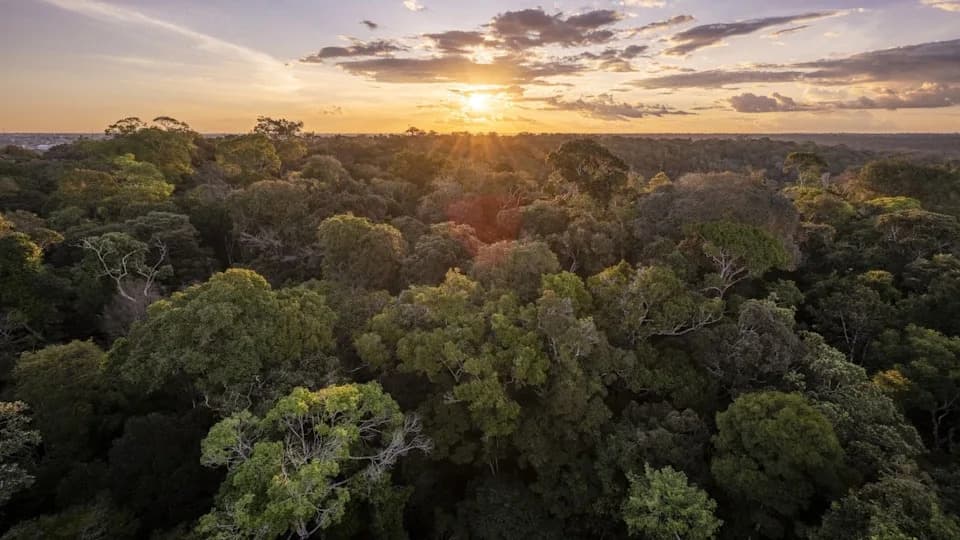
More than 65% of Colombia’s forest loss occurred in the Amazon, where 77,805 hectares (192,000 acres) were cleared in 2025 — essentially unchanged from the 77,124 hectares recorded in 2024. The monitoring system identified 10 active deforestation hotspots concentrated in the northwestern Amazon.
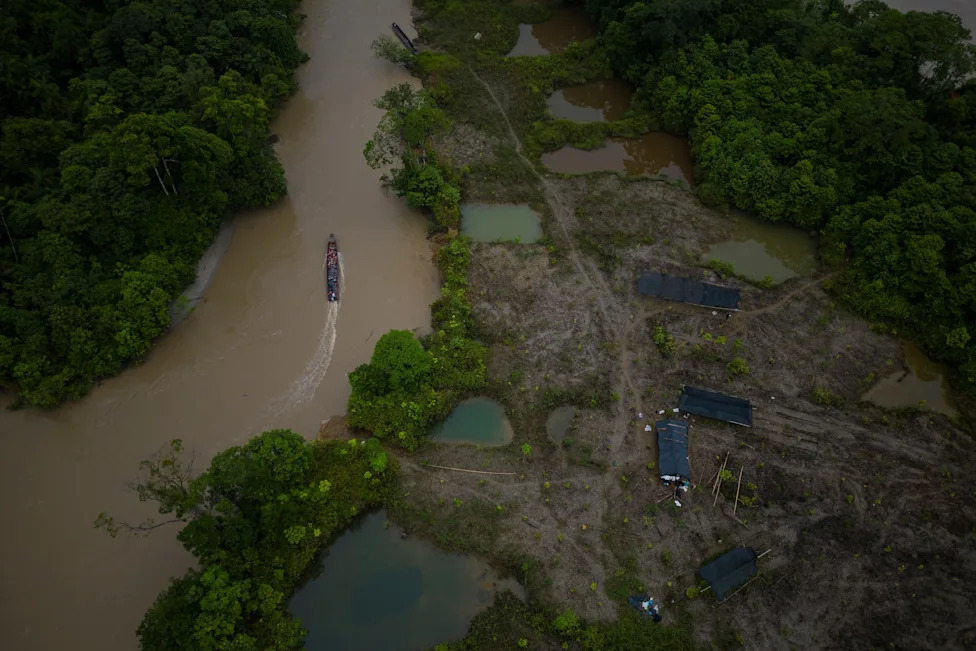
FILE - A boat, with gasoline to be taken to illegal mining machinery, maneuvers past an area that was mined and is being reforested by Asociacion Nuestra Casa Comun, or Our Community House Association, near Paimado, Colombia, Sept. 24, 2024. (AP Photo/Ivan Valencia, File)(AP Photo/Ivan Valencia)
Hotspots, Drivers and Local Impacts
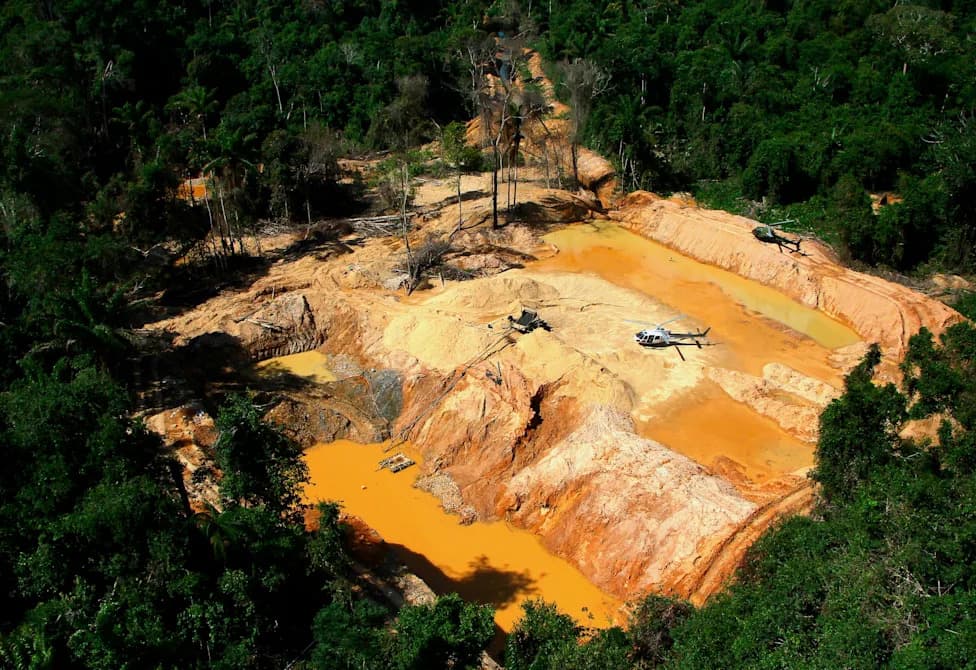
The municipalities with the highest recorded deforestation were Cartagena del Chaira (Caquetá), Mapiripán (Meta), San Vicente del Caguán (Caquetá) and Calamar (Guaviare), areas long known as Colombia’s "arc of deforestation." Authorities say the principal drivers are illegal land grabbing, expansion of extensive cattle ranching and unplanned road construction rather than coca cultivation.
Environment Minister Irene Vélez highlighted stronger cooperation with rural communities, incentives for conservation, and targeted investigations as reasons for progress in some areas. A major probe in Mapiripán led to the arrest of 17 people allegedly tied to a criminal network involved in illegal land grabbing, deforestation and large-scale cattle ranching.
Protected Areas and Policy Outlook
The government reported that deforestation inside Colombia’s national parks fell nearly 19% from the previous year, to 9,388 hectares (23,200 acres). Officials credited payment-for-conservation programs, large-scale restoration work and the country’s first forestry concession that grants communities long-term rights to manage public forest sustainably.
These 2025 figures will form a benchmark for the incoming administration of President-elect Abelardo de la Espriella, who has said he plans to expand oil and mining development and review several of Petro’s environmental policies. The release followed criticism from the incoming Environment Minister, Fabio Arjona, who accused the outgoing government of delaying publication.
Bottom line: While Colombia has sustained lower deforestation than in 2021, recent years show the challenge of maintaining steep reductions — with criminal land-grabbing and cattle ranching continuing to drive most forest loss, especially in the Amazon.
Help us improve.