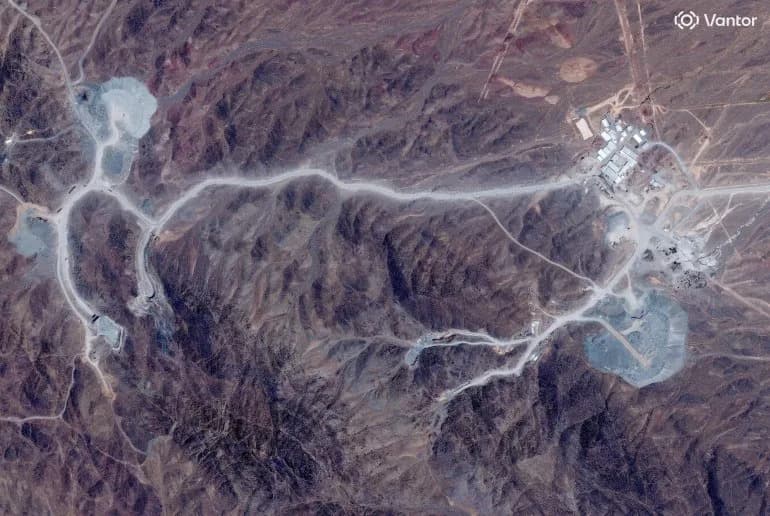
Pickaxe Mountain (Kuh-e Kolang) is an underground site south of Iran’s Natanz complex where satellite images show ongoing construction and fortification. President Trump has threatened strikes on the site amid unverified claims it could store centrifuges or enriched uranium. Analysts say parts of the facility may lie roughly 100 m underground, making complete destruction difficult even with bunker‑buster munitions; strikes could still damage entrances, ventilation and support systems. The IAEA has not been granted access, so the facility’s true purpose and contents remain unconfirmed.
What Is Iran’s Pickaxe Mountain (Kuh-e Kolang) — And Why Has Trump Threatened to Bomb It?
[BBC]
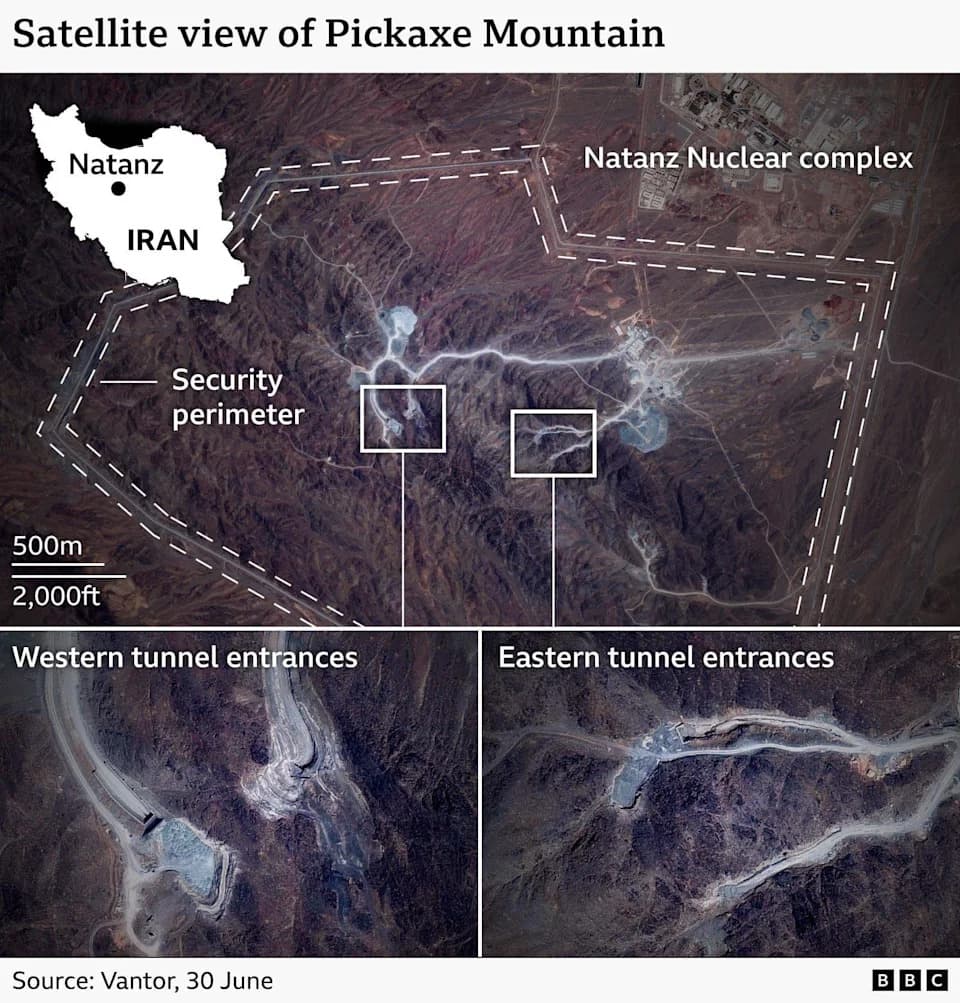
Pickaxe Mountain (Kuh-e Kolang) is an underground complex immediately south of Iran’s Natanz uranium enrichment site that has drawn international attention after recent satellite images showed construction activity. US President Donald Trump has repeatedly warned he may strike the site, citing concerns about its possible role in Iran’s nuclear programme.
Background
The site lies just south of the Natanz enrichment complex, Iran’s largest declared uranium-enrichment facility. Natanz was struck in 2025 and 2026 in attacks attributed to foreign actors. Iranian officials have suggested the mountain complex could serve as a replacement or protected location for activities previously carried out at Natanz, including centrifuge assembly.
What Officials Have Said
On 21 July President Trump told reporters:
"We'll be hitting that area pretty soon, and very heavily."He reiterated on 28 July:
"I know exactly what's going on at Pickaxe. It's not a big problem - we took out their nuclear sites, and we'll have to take out Pickaxe if we don't make a deal."
[BBC]
Iran’s foreign ministry spokesman Esmail Baghaei responded on 22 July that "no nuclear activity is taking place" at Pickaxe Mountain and described US threats as "a fabricated pretext for aggression, destruction, and sabotage."
Satellite Imagery And On-Site Activity
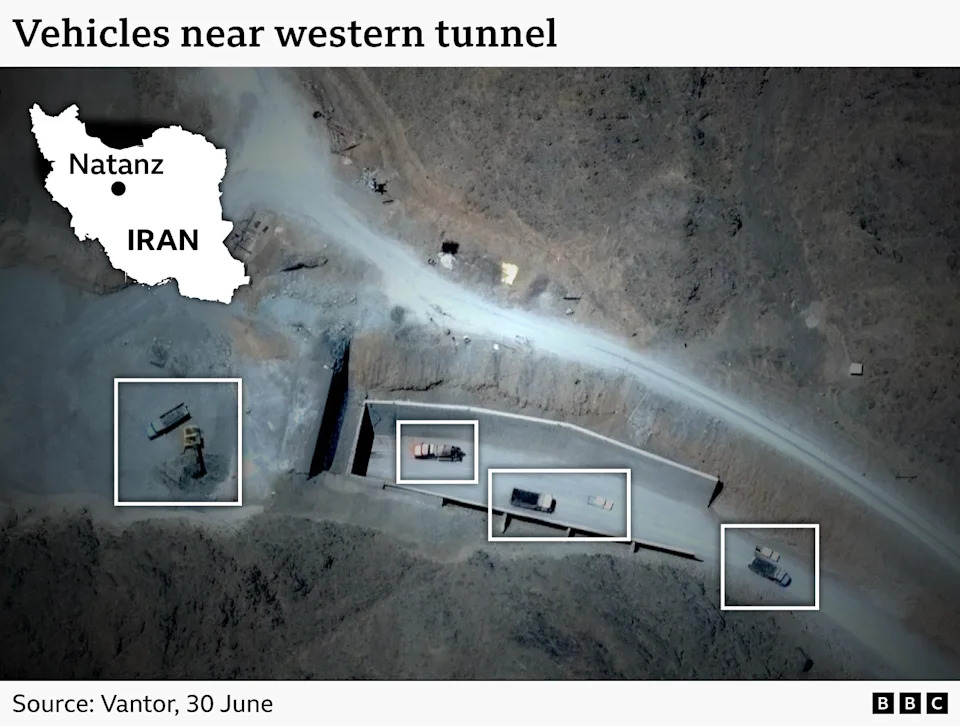
Open-source and commercial satellite analysis indicates Pickaxe Mountain has multiple tunnel portals (commonly reported as two east and two west portals), perimeter fencing erected after a June 2025 Israel–Iran escalation, and ongoing ground activity. Images from 30 June 2026 show construction vehicles near a western entrance; subsequent imagery suggests continued work on access roads and tunnel mouths.
Analysis by the Institute for Science and International Security (ISIS) says Iran has partially backfilled the two eastern tunnels to deny surface access and has engaged in steady excavation and hardening inside the mountain.
[BBC]
What Might Be Underground — And What Is Not Confirmed
Precise details of the facility’s internal layout and contents are not publicly known. The International Atomic Energy Agency (IAEA) has not been given access to Pickaxe Mountain. Tehran has indicated an intent to place sensitive activities underground, and in 2025 the IAEA estimated Iran held roughly 440 kg of uranium enriched to 60% purity. There are unverified claims that some enriched uranium or centrifuges could be stored at Pickaxe Mountain, but no public, independently verified evidence confirms weaponization or active production of weapons-grade material at the site.
Military Options And Limitations
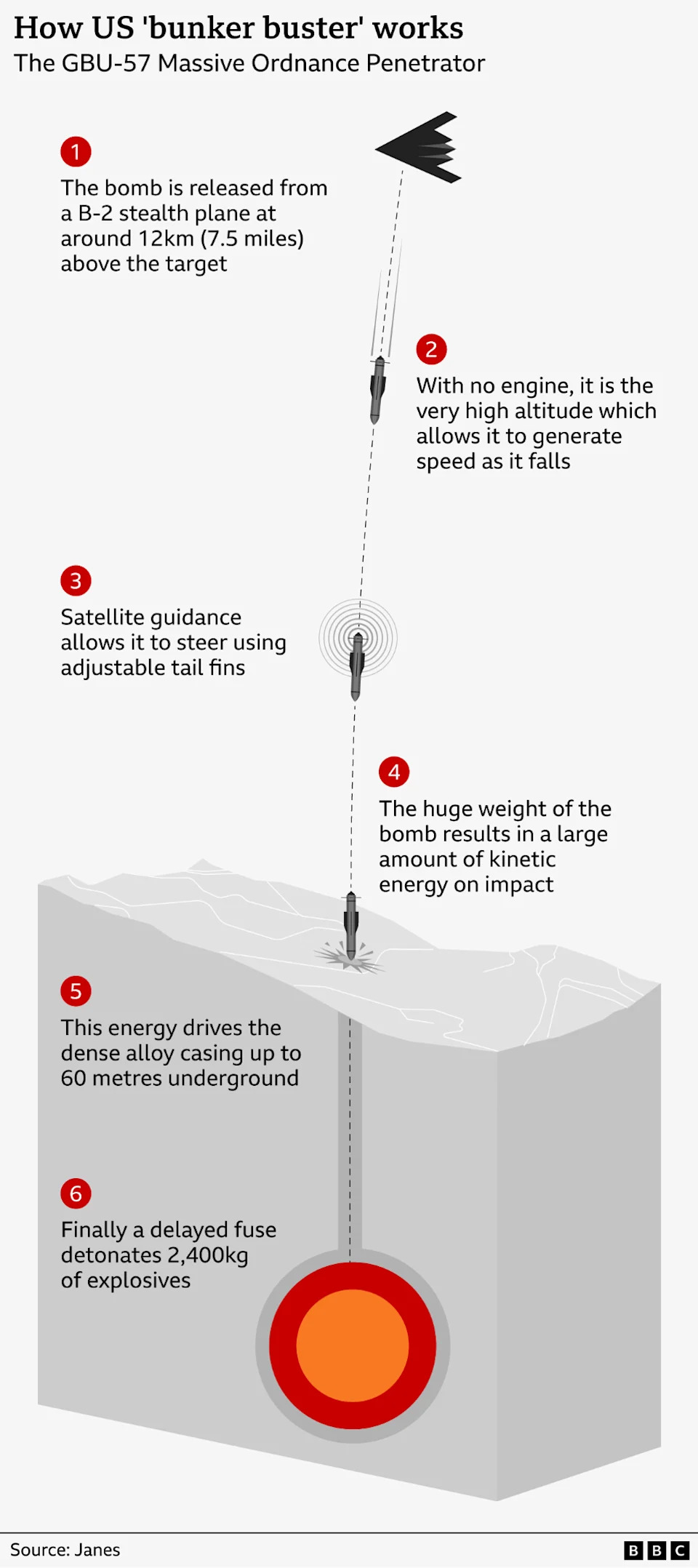
Experts say the facility may be hundreds of metres underground — some estimates put parts of it around 100 m (328 ft) beneath the surface — which would make complete destruction difficult. The US GBU-57 Massive Ordnance Penetrator (commonly cited in reporting) weighs roughly 13,000 kg and is reported to penetrate about 18 m of concrete or 61 m of earth before detonation. Even so, analysts caution that such munitions would be unlikely to "obliterate every underground chamber" because of the facility’s depth, potential branching tunnels and uncertain internal layout.
Analysts note that a strike could still significantly degrade or disable the site by targeting surface infrastructure — tunnel portals, ventilation shafts, access roads, communications and support systems — which could impede operations even if deep chambers survived.
International Oversight And Concerns
The IAEA has said Iran announced an intention to have nuclear activity in a mountain site near Natanz, but access has not been granted. International monitors stress the importance of inspections to verify whether declared or undeclared nuclear activities are taking place.
Conclusion
Pickaxe Mountain remains shrouded in uncertainty: satellite imagery shows activity and fortification; analysts warn the site could be used to protect sensitive nuclear-related equipment or materials; and Iran denies nuclear activity there. Without on-site verification by the IAEA or other inspectors, many claims about the facility’s purpose and contents remain unproven. Any military strike would face technical limits and carries significant geopolitical risk.
Help us improve.