Sawfish — rays with a distinctive saw-like rostrum — are critically endangered, yet their rostra are being carved into rooster spurs for cockfighting. A study published in Conservation Letters (April) used interviews from 2016–2022 to identify Peru as a major hub for this clandestine trade. Researchers found a single rostrum can sell for up to $5,600 and yield roughly $8,000 in carved spurs, and they warn that weak enforcement and persistent demand threaten sawfish with extinction.
How One Sawfish Can Net Poachers Up To $8,000 — Rostrum Teeth Carved Into Cockfight Spurs Threaten Critically Endangered Species

Close up of a longcomb sawfish resting on the bottom of the sea (Genova, Italy)© Eyem/Shutterstock.com
Sawfish are among the ocean's most distinctive and imperiled animals, yet a little-known illegal trade is driving further declines. Poachers target the saw-like rostrum — the flattened snout lined with tooth-like projections — which is being carved into spurs for fighting roosters in parts of South America. A single rostrum can generate thousands of dollars on the black market, creating a powerful incentive to harvest an already critically endangered species.
Biology and Function
Sawfish are rays characterized by a long, flattened rostrum edged with modified teeth. That rostrum houses part of the skeletal structure and electroreceptive organs that help the animal locate prey and dig for bottom-dwelling crustaceans and shrimp. Sawfish use the rostrum to swipe and stun fish — an evolutionary tool that has unfortunately made parts of the animal highly desirable to collectors and illegal markets.
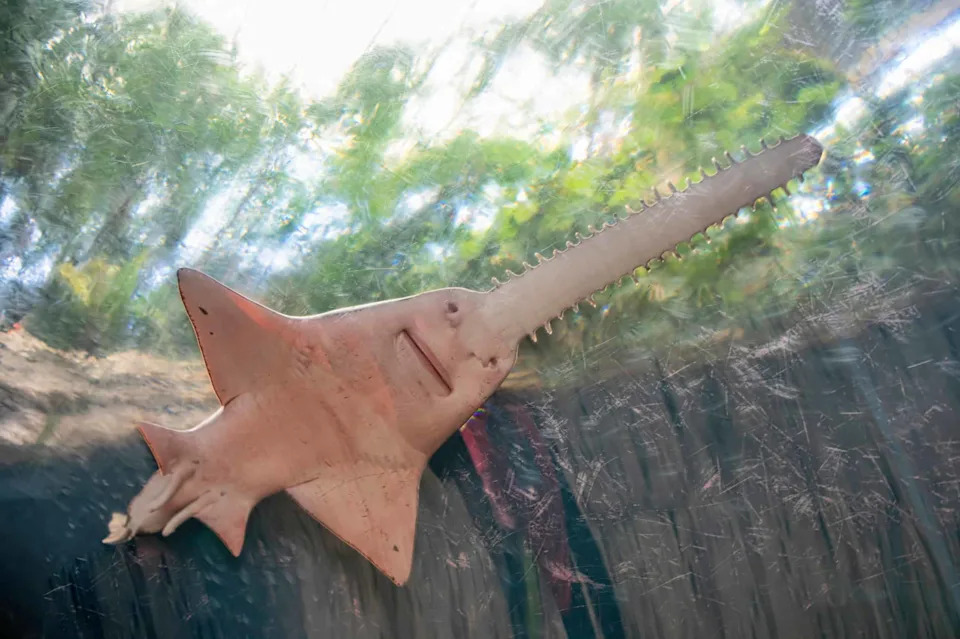
Sawfish are now Critically Endangered, yet remain at risk due to an illegal land practice.©Bonnie Taylor Barry/Shutterstock.com
Legal Status and Historical Threats
The smalltooth sawfish was listed under the U.S. Endangered Species Act in 2003, and by the mid-2010s all five sawfish species were classified as Critically Endangered by the IUCN. Historically, rostra were taken as trophies. Today, a grimmer market persists: rostrum teeth are carved into rooster spurs for cockfighting, a practice that remains legal or tolerated in some regions.
New Findings From Field Research

Some sawfish rostrums sell for thousands of dollars on the black market.©Chaos2Light Images/Shutterstock.com
A study published in April in Conservation Letters draws on interviews and field investigation conducted from 2016–2022. Researchers interviewed 47 cockfighting practitioners and five representatives across Peru, Mexico, Ecuador and Puerto Rico. The team identified Peru as a major hub for this clandestine commerce, which is largely hidden from authorities and difficult to quantify because much of the material is locally sourced.
Study lead author Mariano Cabanillas-Torpoco and other researchers warn that the trade operates under the radar, with little coordinated enforcement or monitoring to measure or stop it.
Economics of the Trade
Investigators documented that a single rostrum can fetch up to about $5,600 on the black market. Because one rostrum can yield multiple carved spurs, individual pairs sell for roughly $100–$130, allowing fishers and middlemen to generate an estimated total of around $8,000 from a single animal. Teeth from the center of the rostrum are especially prized for their hardness and durability, making them more likely to hold up in fights; some fishers carve spurs themselves to increase resale value.

Cockfighting is sadly still legal in some South American nations, and spurs are a way to ensure victory.©golibtolibov/iStock via Getty Images
Why This Matters
Geography and weak oversight compound the problem: sawfish occur in coastal waters near places such as the Florida Everglades and the Ten Thousand Islands, enabling traffickers to move rostra into South American markets with minimal scrutiny. The combination of high black-market prices, local demand tied to cockfighting, and gaps in enforcement creates a serious extinction risk for sawfish.
Call to Action
The authors of the study call for urgent steps: improved monitoring of coastal trade, better enforcement of existing protections, targeted investigations into trafficking routes, and demand-reduction campaigns aimed at cockfighting circuits. Without coordinated action to curb both supply and demand, this hidden trade could push these unique marine animals closer to extinction.
Note: All facts in this article reflect findings reported in the April issue of Conservation Letters and follow-up interviews reported between 2016 and 2022.
Help us improve.