Researchers at the University of Michigan have reclassified a fossil long held in an Oregon museum as a nearly complete specimen of Mesocyon coryphaeus, a pre-Ice Age canid more than 30 million years old. The skeleton — missing only the tail and parts of the hands and feet — shows Mesocyon was stockier and not adapted for sustained running, but capable of rotating its forearms for climbing or grappling. The specimen preserves an osteochondroma and a baculum, confirming it was male, and highlights a now-extinct canid ecology distinct from modern dogs.
Nearly Complete 30-Million-Year-Old Fossil Reclassified As Early Dog — Mesocyon Reveals Lost Canid Ecology
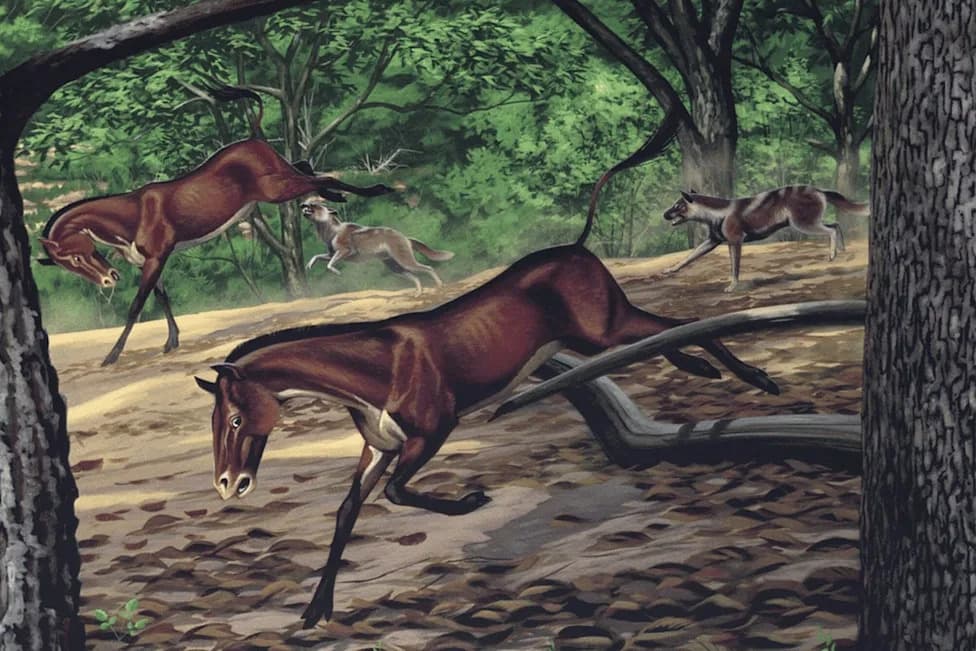
Unique and nearly-complete fossil from 30 million years ago found to be of early dog
For decades a fossil encased in a block of rock in an Oregon museum collection was misidentified as belonging to an ancestor of sheep or pigs. New research from paleontologists at the University of Michigan shows this specimen is actually one of the most complete remains yet discovered of a pre-Ice Age canid, identified as Mesocyon coryphaeus and dated to more than 30 million years ago.
Canines first appeared in North America roughly 40 million years ago, when much of the continent was covered in dense forest. The earliest canids, belonging to the family Hesperocyon, were adept climbers — quite unlike most modern dogs. Mesocyon emerged about 10 million years later during a period of global cooling and appears to represent a different ecological strategy.
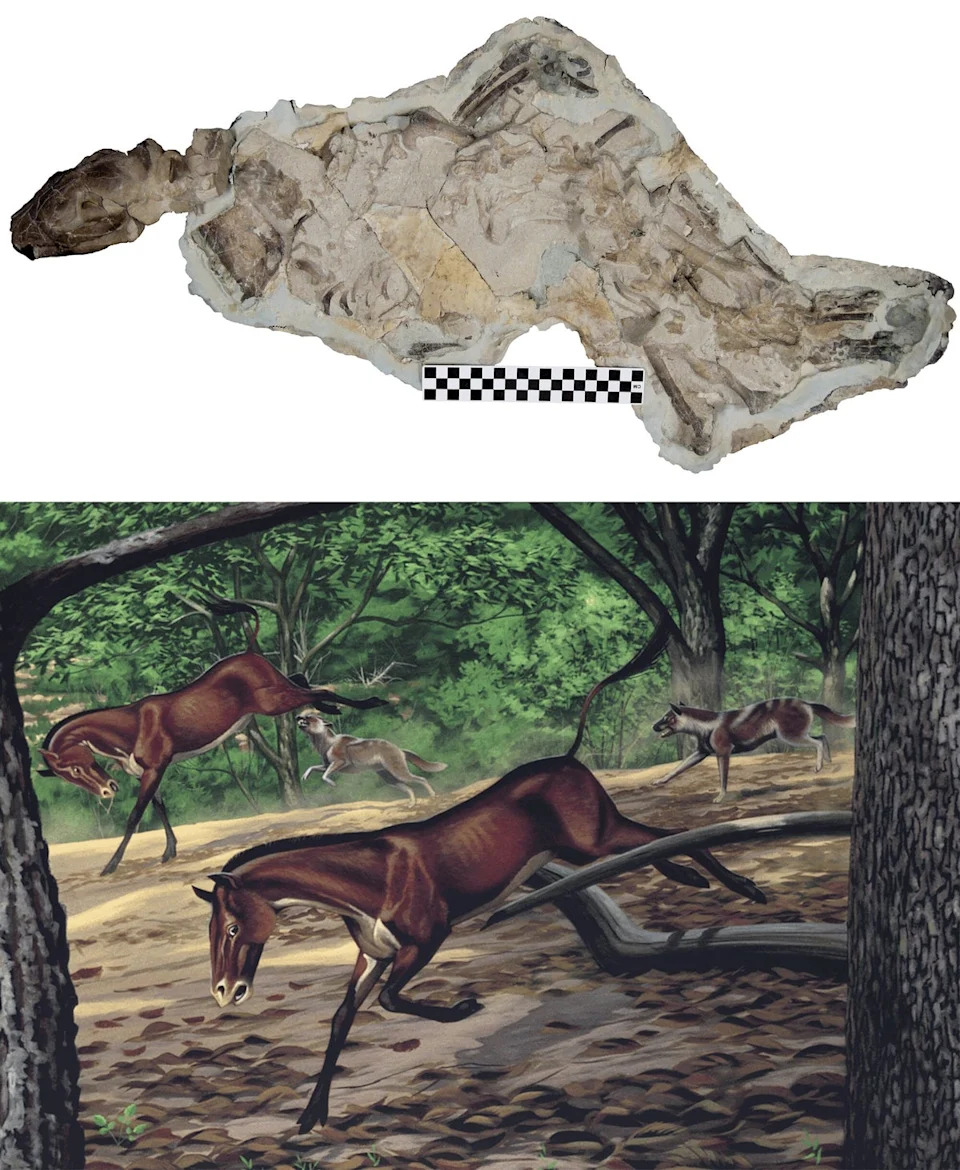
Illustration of prehistoric canid Mesocyon chasing prey (National Park Service/Roger Witter)
What the Skeleton Shows
Researchers examined the nearly complete skeleton — missing only the tail and parts of the hands and feet — and concluded Mesocyon was not built for sustained running. Instead, the animal had short, robust limb bones and a stockier build, consistent with an animal capable of climbing or grappling rather than long-distance pursuit.
"The answer is pretty definitely no... Mesocyon also just has more robust bones in general. It's shorter and stockier," said Anne Kort, a study author from the University of Michigan.
Detailed comparisons with other canid fossils revealed additional features: a hereditary bone growth at the end of the wrist (an osteochondroma), a trait found in many early dog fossils, and a preserved baculum (penis bone), confirming this specimen was male. The forearm anatomy indicates the animal could rotate its forearms — a capability linked to climbing and manipulating prey — and some evidence suggests it sometimes walked heel-down rather than on its toe tips like modern cursorial dogs.
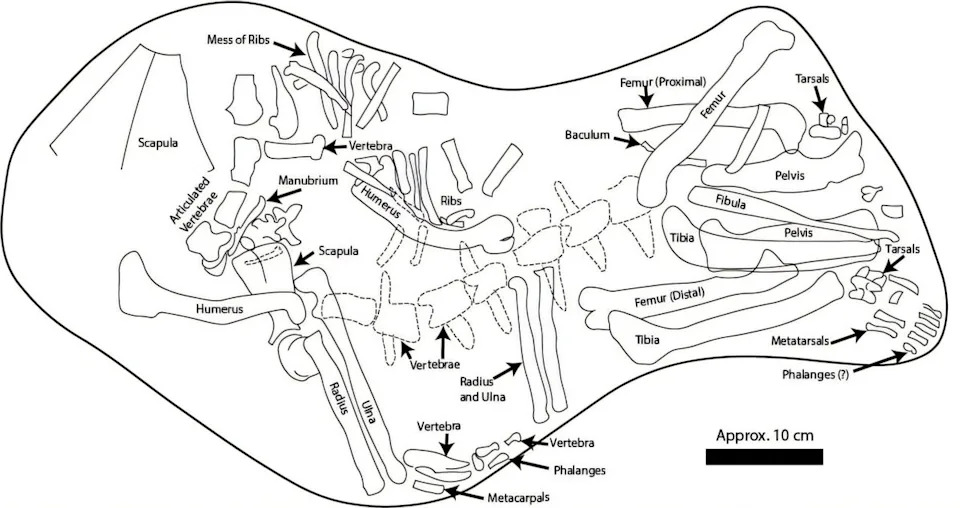
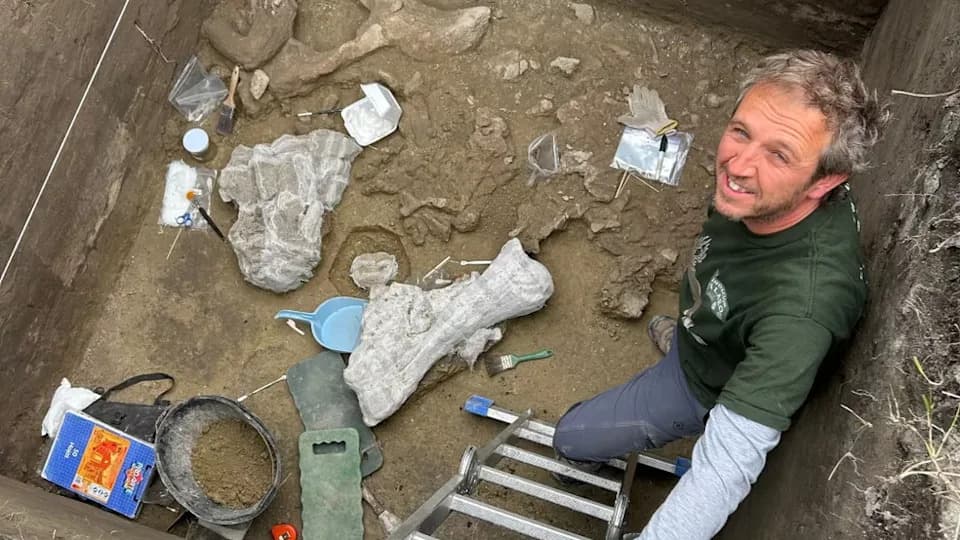
One of the most complete Mesocyon coryphaeus specimens yet discovered was found with everything but its tail and parts of its hands and feet (University of Michigan)
How the Fossil Was Recovered
In the 1990s, researchers carefully removed the fossil and surrounding matrix, encased it in a protective plaster jacket, and separated the skull for display, initially identifying it as a canid. In the 2010s they removed the remaining matrix and realized how complete the skeleton was, allowing for the comprehensive study published in the Journal of Palaeontology.
Why It Matters
This Mesocyon specimen represents a lineage that later went extinct, revealing a lost canid ecology quite different from that of modern dogs. Its combination of climbing adaptations and robust limbs shows that early canids explored a wider range of ecological niches than the strictly cursorial (running) habits seen in many later canids.
Reference: University of Michigan study published in the Journal of Palaeontology. Illustration credit: National Park Service / Roger Witter.
Help us improve.