The UK has cut emissions substantially, but its small share of global CO2 means unilateral measures have limited global impact. The article argues net zero has become costly and largely symbolic, and recommends shifting emphasis from costly mitigation mandates to practical adaptation: water infrastructure, heat-resilient buildings, better land management and affordable energy. It calls for market-driven clean-technology adoption and targeted reform of subsidies and carbon governance to prioritise resilience and affordability.
Britain Can’t Stop Climate Change — Scrap Net Zero, Focus On Adaptation and Practical Energy Policy
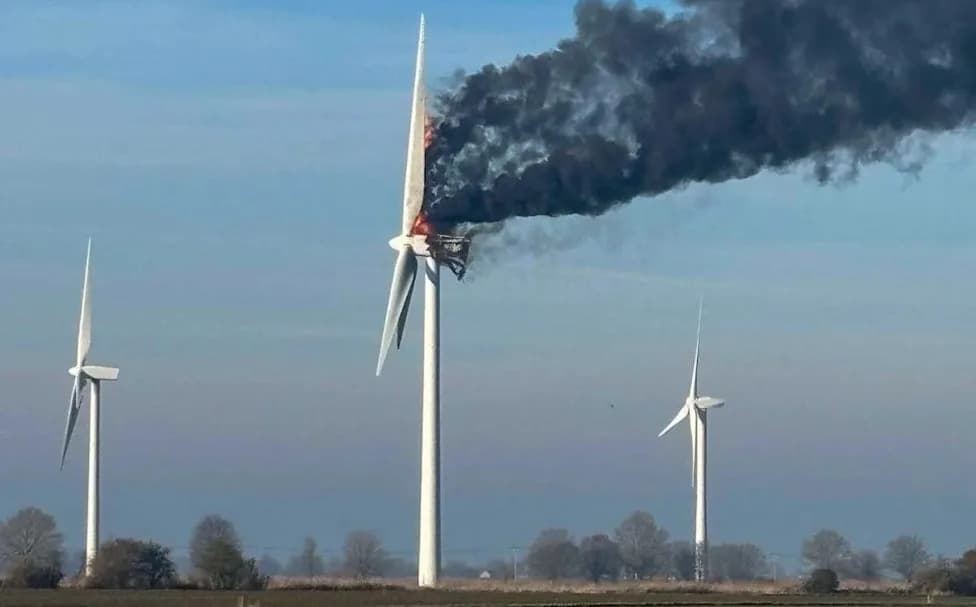
It's time to cease building wind turbines - Terry Harris
Climate change is real, but Britain’s ability to alter the global trajectory of warming is extremely limited. Decades of ambitious mitigation policies — and considerable economic cost — have delivered substantial domestic emission reductions, but have not meaningfully changed the global balance where emissions continue to grow in other parts of the world.
Why the Debate Matters
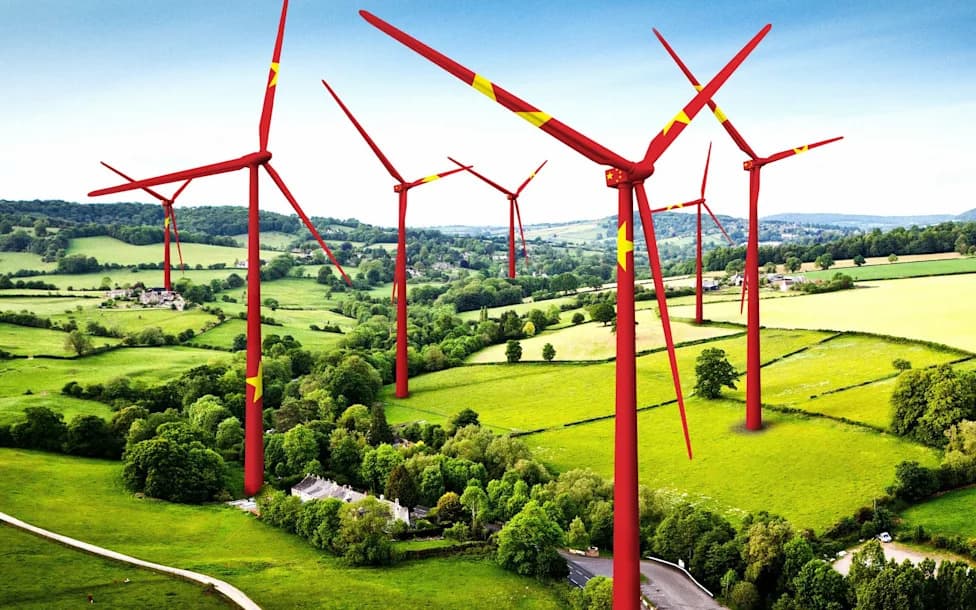
The UK contributes roughly 0.8% of global CO2 emissions from fossil fuels. According to the International Energy Agency, UK emissions fell about 44% between 2000 and 2023, yet global emissions continue to be dominated by other large economies. The People’s Republic of China now accounts for roughly 32.1% of global emissions and, by some measures cited in public debate, has emitted substantially more CO2 than it did in 2000. These differences in scale matter when assessing what unilateral national policies can realistically achieve.

A volunteer helps firefighters tackle a forest fire in western France - AFP
Key premise: Policy must be judged by real-world consequences. If domestic mitigation delivers high costs with little discernible global impact, policymakers should reconsider priorities.
Adaptation Over Symbolic Mitigation
Given the global context, this piece argues that the UK should rebalance policy toward adaptation: preparing communities and infrastructure for a warmer, drier and more variable climate. That means investing in:
- Air conditioning and heat-resilient buildings — redesigning housing and public buildings to avoid overheating rather than relying on retrofit-only approaches that can be costly and ineffective.
- Water security — reservoirs, pipelines, irrigation systems and desalination where appropriate to manage drought risk.
- Land and fire management — improved forestry and agricultural practices, fuel-reduction measures and dedicated firefighting capacity, including aircraft.
- Urban amenities and public health measures — more public pools, shading, green infrastructure and heatwave response systems.
Energy Policy: Affordable, Reliable Power First
Adaptation depends on abundant, low-cost electricity. The author contends that continuing large-scale, subsidy-driven green deployments while tolerating rising grid-integration costs is counterproductive. Citing the Prosperity Institute, projected grid and green-support costs could exceed £40bn a year by 2030–31. The recommendation is to remove distortive subsidies and regulatory burdens that raise consumer bills, while allowing market competition to drive down costs and encourage cleaner technologies when they become demonstrably better and cheaper.

The population is growing in the south of France - Getty Images
On Net Zero and Political Economy
The article critiques net zero as an overambitious, and in places performative, policy given Britain’s modest share of global emissions. It warns of geopolitical consequences — including increased dependence on supply chains and materials dominated by larger emitters — and suggests that internationally binding net-zero enforcement would be unlikely without strong buy-in from the largest emerging economies.
Practical Recommendations
The policy agenda proposed here includes:
- Dismantling or reforming costly net-zero apparatus where it produces high domestic cost with little global benefit (e.g., some subsidies, rigid carbon budgets, or prescriptive mandates).
- Prioritising investment in adaptation infrastructure and resilience.
- Letting consumers and markets adopt low-carbon technologies voluntarily when they clearly offer better value (for example, many drivers already prefer electric vehicles).
- Pursuing a pragmatic, technology-neutral energy policy that emphasises affordability and reliability.
A Nuanced Conclusion
Accepting the inevitability of some climate impacts does not mean abdicating responsibility. Rather, it calls for a rebalancing: preserve targeted mitigation where it is efficient and globally impactful, but shift the centre of gravity toward resilience, affordable energy and policies that protect those most vulnerable to climate harms. That approach aims to reduce harm while harnessing potential economic opportunities in a changed climate.
Help us improve.