The smooth hammerhead shark (Sphyrna zygaena) has been documented in the Galápagos Islands for the first time in over 20 years after a 2024 sighting of juvenile sharks was verified by genetic tests. Researchers believe the discovery may indicate an important nursery area and are using acoustic telemetry, underwater video and DNA comparisons to map movements and population links across the Eastern Tropical Pacific. Protecting these roughly 12-foot-long juveniles is urgent, as the species remains vulnerable to overfishing once individuals leave reserve boundaries.
Smooth Hammerhead Sharks Return to the Galápagos After 20+ Years — Possible Juvenile Nursery Found
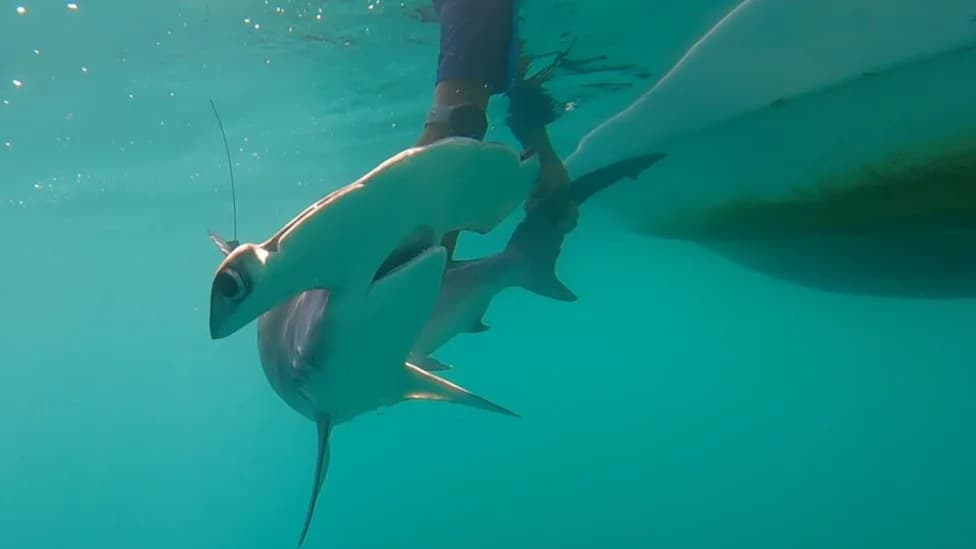
A team of researchers from Texas A&M University at Galveston studying the ecology and conservation needs of the smooth hammerhead shark.
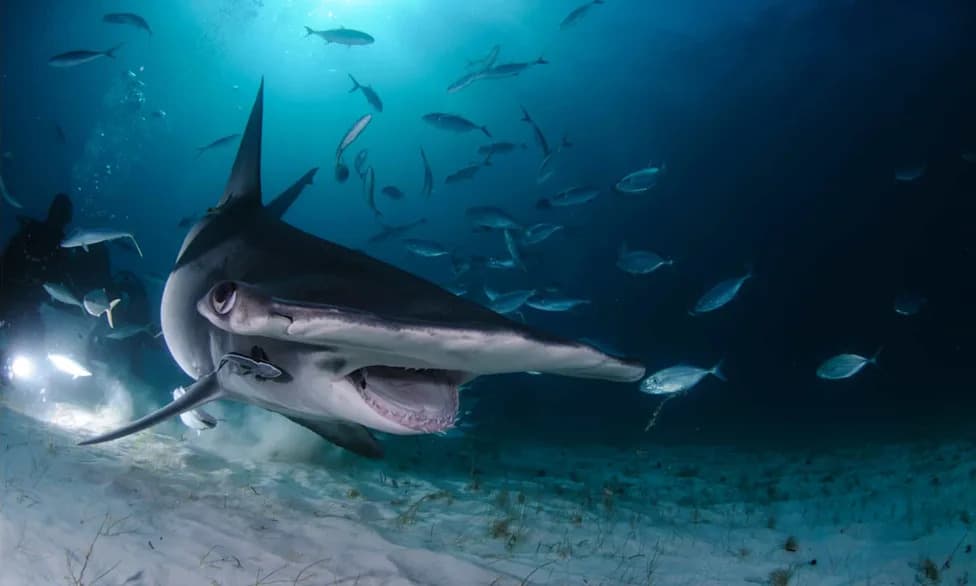
British naturalist Charles Darwin would likely have been intrigued: researchers have recorded the elusive smooth hammerhead shark (Sphyrna zygaena) in the Galápagos Islands for the first time in more than two decades. A 2024 survey led by marine biologist María Antonia Izurieta Burbano De Lara has documented a group of juvenile smooth hammerheads in the archipelago and verified the sighting through genetic analysis.
Evidence of a Possible Nursery
The juveniles, roughly 12 feet (about 3.5 meters) long, may indicate a critical nursery site — shallow coastal areas where young sharks spend their earliest life stages before moving into open waters. If confirmed, this Galápagos site would offer a rare chance to study the early life history and ecology of a poorly understood Eastern Tropical Pacific species.
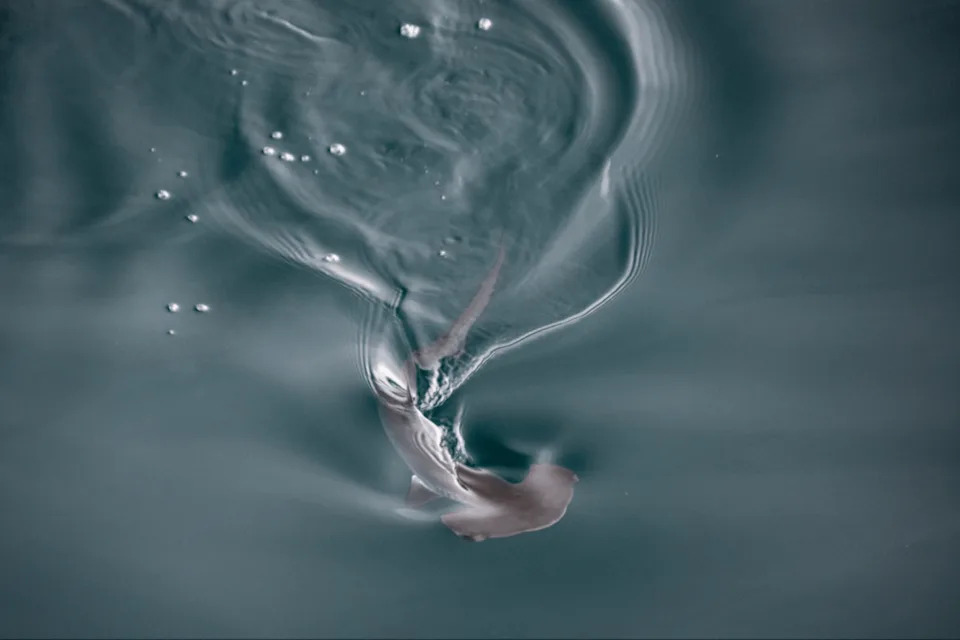
Understanding the migration patterns of smooth hammerhead sharks is crucial to finding ways to protect them.Image: Texas A&M University at Galveston.
How Researchers Confirmed the Sharks
Researchers combined field observations with genetic testing to confirm the species identity. Smooth hammerheads (Sphyrna zygaena) can be difficult to distinguish from scalloped hammerheads (Sphyrna lewini) at a glance: smooth hammerheads lack the central notch on the front edge of the head that scalloped hammerheads display, a subtle difference easily missed during surface surveys.
"Once we confirmed they were smooth hammerheads through morphology and genetic analysis, we realized we had an incredible opportunity," said María Antonia Izurieta Burbano De Lara, a marine biologist at Texas A&M University at Galveston. "Now we're trying to understand why they use this area, how long they stay in the bay, where else on the islands they can be found and whether they connect with other populations across the Eastern Tropical Pacific."
Tracking Movements And Diet
To answer those questions, the team is deploying a suite of techniques: acoustic telemetry, underwater video systems, genetic comparisons and dietary studies. Juvenile sharks have been fitted with acoustic transmitters so researchers can monitor their movements within the Galápagos Marine Reserve. DNA samples from the juveniles are being compared with samples across the Eastern Tropical Pacific to determine population links between northern and southern regions. Scientists are also analyzing fecal samples to identify juvenile diets and better understand local food webs.
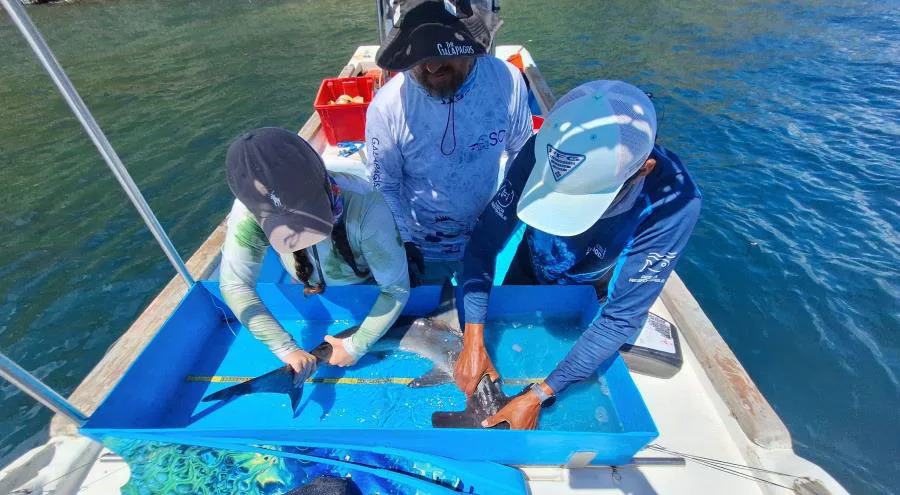
Researchers measure a juvenile smooth hammerhead shark in the waters of the Galápagos islands.Image: Texas A&M University at Galveston.
Conservation Implications
Like other hammerhead species, smooth hammerheads face significant pressure from overfishing. Although protected inside marine reserves, many individuals travel beyond protected waters into international zones where fishing fleets operate. Mapping critical habitats and migratory corridors could help inform stronger protection measures and international conservation strategies.
For María Antonia, the project combines scientific curiosity with personal commitment. "Growing up in Ecuador inspired me to become a biologist," she said. "Being able to contribute to the conservation of one of the least-understood shark species is incredibly rewarding. Every new discovery brings us one step closer to ensuring these animals remain part of the Galápagos ecosystem for generations to come."
Help us improve.