Mexico will announce a coordinated plan to tackle a record sargassum outbreak affecting Quintana Roo. Authorities have removed more than 92,000 tons so far and expect up to 119,000 tons by year-end. The federal strategy includes more offshore collection vessels, expanded processing and recycling, and coordinated federal-state action to protect beaches and the tourism economy.
Mexico to Unveil Comprehensive Sargassum Plan as Quintana Roo Battles Record Influx
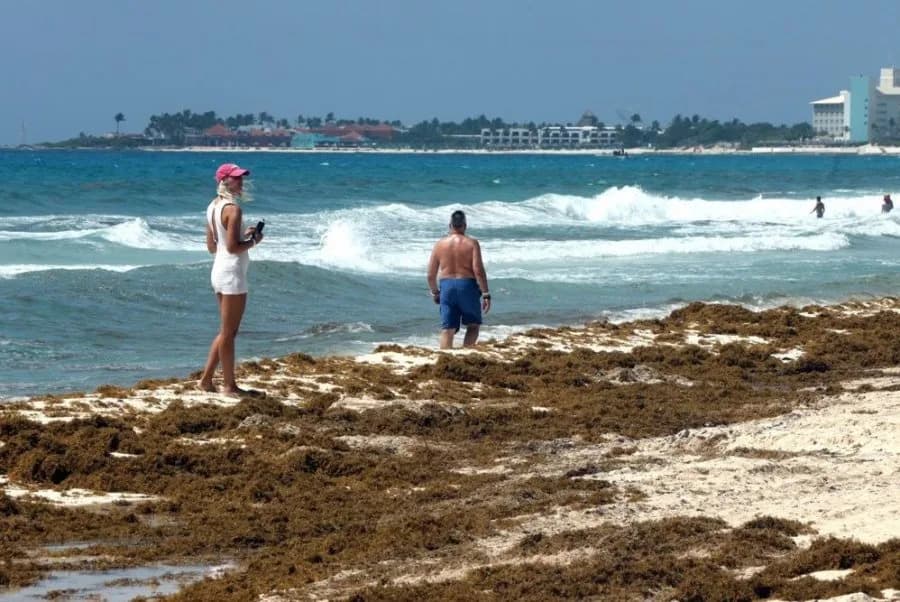
People walk on a beach covered in sargassum in Cancun, Quintana Roo, Mexico, earlier this month. Photo by Alonso Cupul/EPA
Mexican President Claudia Sheinbaum announced Wednesday that her administration will unveil a comprehensive agreement to tackle an unprecedented sargassum emergency affecting the Mexican Caribbean. The announcement followed meetings with Quintana Roo tourism leaders as the state confronts the largest recorded influx of the brown macroalgae.
Speaking at her daily Mañanera del Pueblo press conference, Sheinbaum said federal and state officials met with tourism representatives to define a joint strategy. "This afternoon, we will reach an agreement on the management of sargassum, which we will announce at Thursday's Mañanera," the president said.
Scope of the Problem
Officials from the Quintana Roo Secretariat of Ecology and Environment report the state has removed more than 92,000 tons of sargassum so far this year, and they expect up to 119,000 tons to reach the coastline before year-end — far exceeding the previous record of about 96,000 tons recorded in 2025. The heavy accumulation has prompted temporary beach closures in several popular tourist spots and sharply increased costs for the region's primary industry.
Economic Impact
Quintana Roo Gov. Mara Lezama told La Nación that managing sargassum is costing the state roughly 11% of its GDP — an estimate equivalent to about $2 billion annually. The Riviera Maya Hotel Association estimates hotels and resorts spend approximately $150 million each year removing seaweed from their shorelines. By late June, the Quintana Roo Sargassum Monitoring Network reported that about 92.5% of the state's beaches were experiencing "excessive" sargassum levels.
Federal Response And Strategy
As part of the response, Sheinbaum said the federal government will purchase additional vessels to intercept sargassum offshore, which she described as the most effective approach. The plan also includes expanding processing and recycling efforts for collected algae and coordinating federal and state operations ahead of 2027.
"We are going to buy more boats to capture it at sea, which is the best way to do it," the president said, adding that the strategy will scale up reuse and processing options.
Tourism Secretary Josefina Rodríguez said the initiative aims to make Mexico an international benchmark in sargassum management, combining offshore collection, systematic beach cleaning and comprehensive uses for the harvested macroalgae.
Current Navy Operations
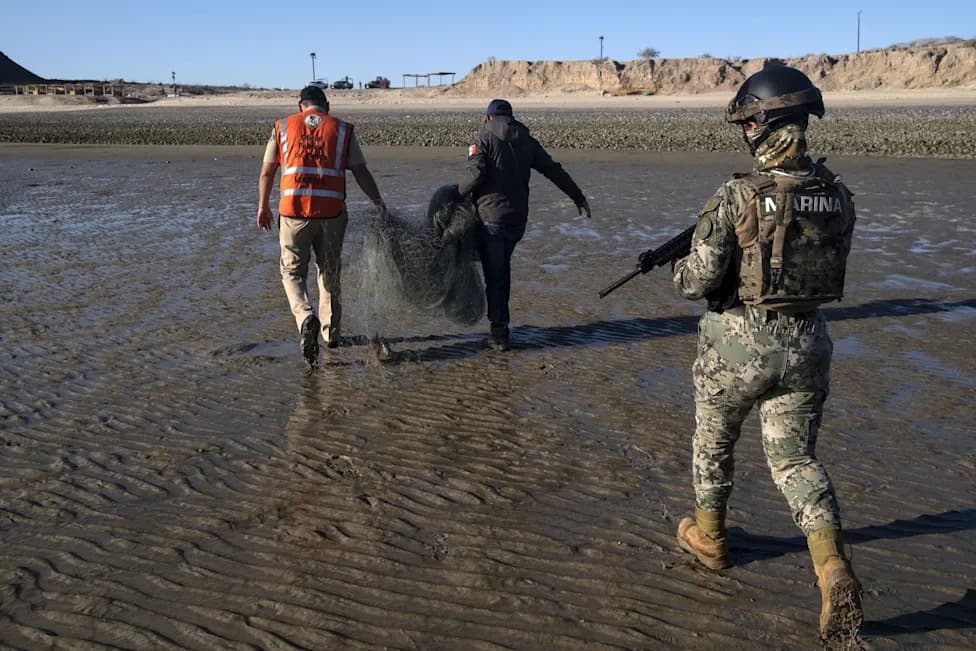
Official information from the Secretariat of the Navy describes an active operation that includes 11 specialized vessels, one amphibious harvester, 18 support boats, two barges, four drones and more than 29,500 feet of containment barriers deployed to protect key coastal areas.
Scientific Context
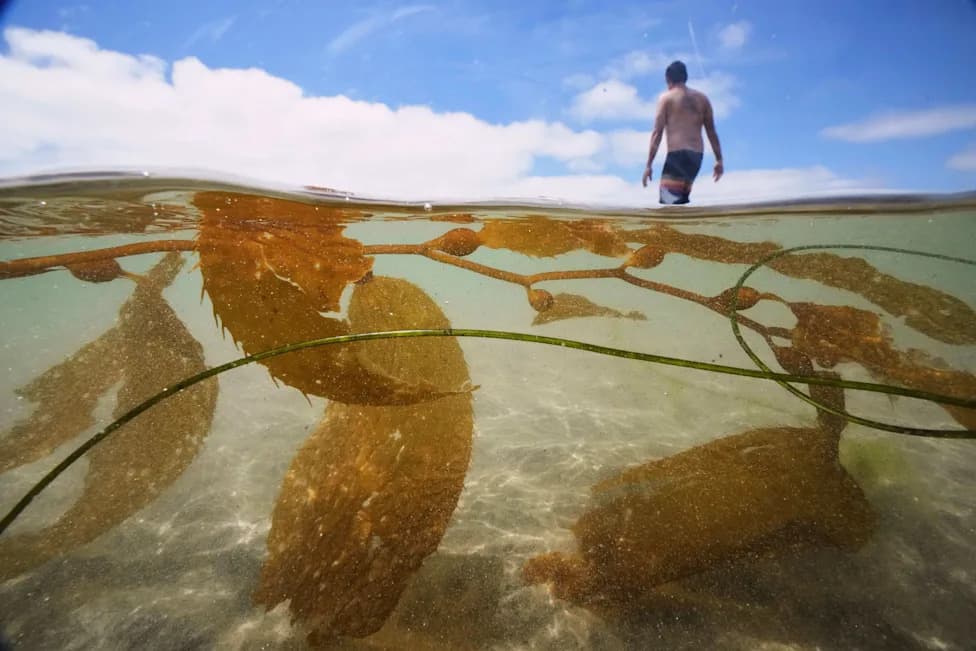
Experts attribute the surge in sargassum to a combination of warmer ocean temperatures, increased nutrient availability, and prolonged solar radiation — conditions that favor accelerated macroalgae growth across the tropical Atlantic. La Nación quoted Brian Barnes, an assistant research professor at the University of South Florida College of Marine Science, noting that these environmental drivers have fueled rapid expansion of sargassum in recent years.
What’s Next
Officials say the forthcoming agreement will outline immediate operational steps (more offshore collection vessels and expanded processing) and longer-term coordination between federal, state and municipal authorities and private tourism stakeholders. The goal is to reduce beach impacts, lower removal costs, and develop sustainable uses for the harvested algae.
Help us improve.