A senior diplomatic source told The Jerusalem Post that Iran is hiding centrifuges at a site called Pickaxe Mountain, and that Israel believes Tehran’s nuclear program has been set back but not eliminated. Netanyahu presented maps to President Trump to highlight Israel’s limited presence in Syria and argue it is intended to deter regional threats. Trump is reportedly weighing three responses to Iran: negotiate a new deal, intensify sanctions, or escalate military action. Netanyahu also urged a shift from U.S. aid to joint defense partnership over the next decade.
Israel Says Iran Is Hiding Centrifuges at 'Pickaxe Mountain'; Netanyahu Presses Trump on How to Respond
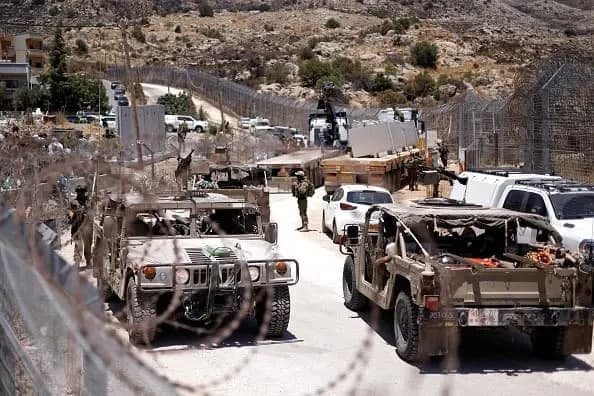
Israel military vehicles drive along the border fence into Israel, near the town of Majdal Shams, in the Israeli-annexed Golan Heights, on July 17, 2025. (photo credit: Jalaa MAREY / AFP via Getty Images)
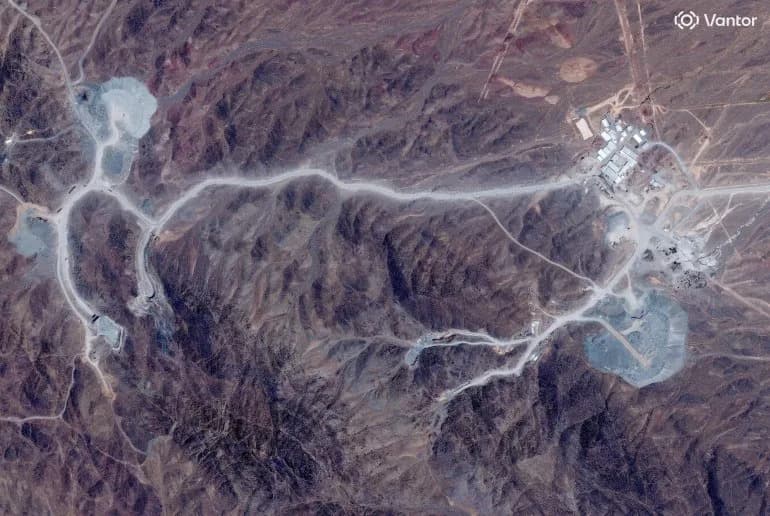
A senior diplomatic source told The Jerusalem Post that Iran is concealing centrifuges at a site known as Pickaxe Mountain, and that Israel does not believe Tehran's nuclear program has been completely eliminated.
What the Source Said
According to the source, Israeli operations have targeted nuclear scientists, enrichment facilities, centrifuges and other related infrastructure, significantly setting the Iranian program back — but not permanently.
"The goal is how to bring the nuclear program to an end," the source said. "There are centrifuges at Pickaxe Mountain even if enrichment is not currently taking place."
The source warned that Israel would not hesitate to act again should Iran attempt to rebuild its nuclear capabilities or restore its ballistic-missile network.
Netanyahu's Meetings in Washington
The source described Prime Minister Benjamin Netanyahu’s Tuesday meeting with U.S. President Donald Trump as a focused strategic consultation. Netanyahu reportedly presented maps to put Israel’s limited footprint in Syria into context and to counter calls for Israeli withdrawal from parts of Syrian territory.
One map shown, the source said, depicted Turkey controlling roughly 5% of Syrian territory while Israel holds about 0.1%, underscoring Netanyahu’s argument that Israel’s small presence is intended to deter threats from Iran, Hezbollah, Palestinian Islamic Jihad and other militant groups.
"Sometimes the president has certain assumptions, and if you don't change them, they become fixed," the source said, explaining why Netanyahu used visual material during the briefing.
U.S. Options On Iran
The source said President Trump is weighing three broad options for confronting Iran after the recent setbacks to Tehran’s nuclear program: negotiate a new agreement, maintain and intensify economic pressure and sanctions, or escalate military action. "This was not a meeting where we came to check a box," the source said. "It was a genuine consultation in which each of the options was examined on its merits."
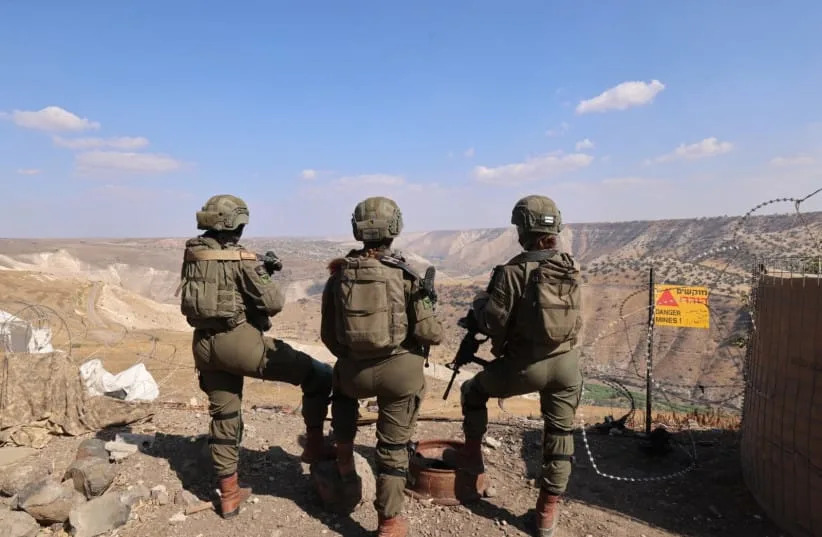
IDF soldiers on Israel's border with Syria, September 9, 2025. (credit: MARC ISRAEL SELLEM)
Iran's Domestic Situation
Describing conditions inside Iran, the source cited mounting economic pressure: fuel shortages, long queues at petrol stations, soaring inflation and local protests. The source said Tehran’s greatest fear is an economic collapse that could trigger widespread unrest.
Other Remarks and Meetings
The source confirmed that Mojtaba Khamenei, though largely out of the public eye, remains alive and present behind the scenes in Iran’s internal dynamics: "He is essentially completely absent, but he exists," the source said.
Domestically, Netanyahu reportedly advocates a push for Israeli financial independence and autonomous weapons production, aiming to move Israel from being primarily a recipient of U.S. aid to a full partner in defense development within about a decade. The source identified two current pillars of U.S.-Israel cooperation — Foreign Military Financing (FMF) and ballistic missile defence (BMD) — and suggested both should evolve toward true co-development and joint industry projects.
One notable side meeting occurred Tuesday evening when Netanyahu privately met with U.S. Vice President J.D. Vance at Blair House at the prime minister’s request. The source described the encounter as "a good, honest and genuine conversation" but declined to provide details.
Regional Dynamics and Public Perception
The discussions also touched on Turkey, with Netanyahu warning that President Recep Tayyip Erdogan seeks broader regional influence that can clash with Israeli interests. The leaders also covered developments involving Saudi Arabia and other regional challenges.
On domestic politics, the source reiterated that Netanyahu does not raise his ongoing criminal trial with President Trump; instead, Trump brings it up on his own, the source said. Regarding U.S. public support for Israel, the source blamed the war in Gaza and social media campaigns — which the source claimed are, in part, backed by Qatar, China and Russia — for eroding some American backing.
Despite public criticism, the source stressed that Israel continues to engage and cooperate with a range of countries, including Arab states that value Israel as a security and technological partner.
IDF soldiers on Israel's border with Syria, September 9, 2025. (credit: Marc Israel Sellem)
Help us improve.