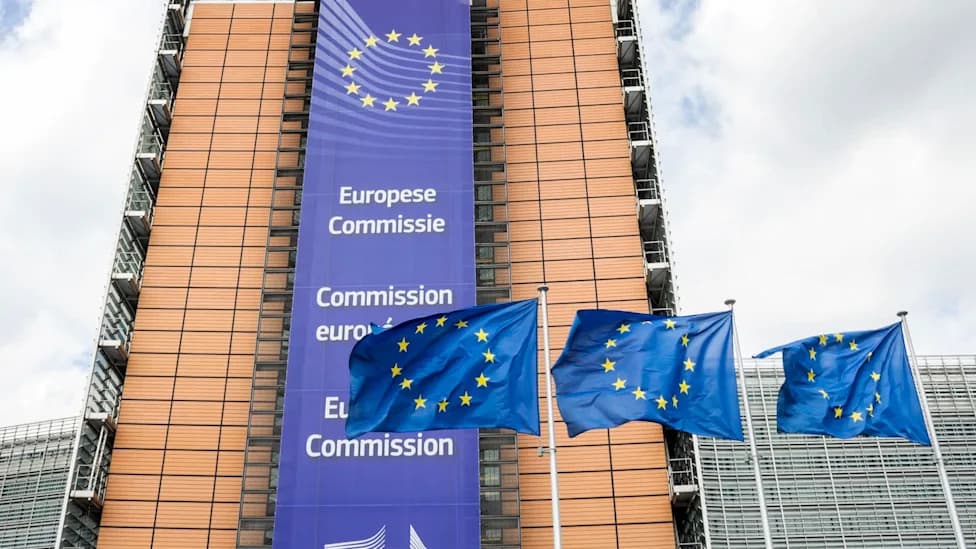
The European Commission has proposed weakening parts of the EU Emissions Trading System by slowing the annual reduction of carbon allowances and extending free permits to some heavy emitters. Instead of a 4.4% annual decline through 2039, the draft would cut allowances by 3.7% (2031–2035) and just 1.7% thereafter — a shift that analysts estimate could permit about 2 billion metric tons more CO2 than the previous plan. Supporters say economy-wide 2040 targets remain achievable if other sectors accelerate, while critics warn the move would raise near-term emissions, enrich large polluters and risk encouraging similar rollbacks internationally.
EU Proposal Would Weaken Landmark Emissions Trading System — Could Let ~2 Billion Tons More CO2
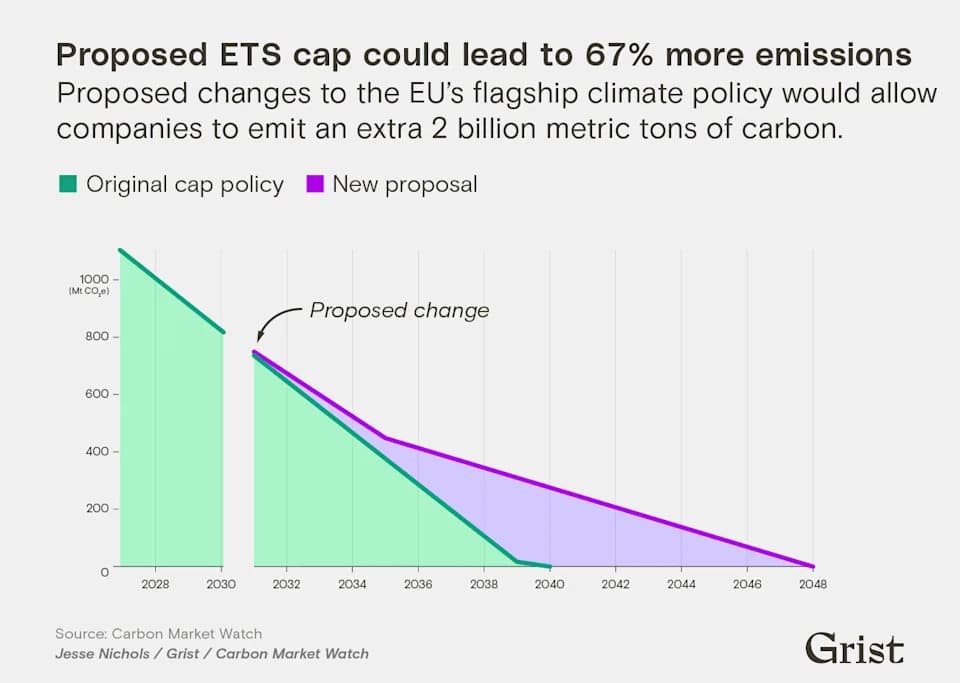
A graph comparing the EU's original cap-and-trade program with the program changes proposed in 2026. The recent proposal would lead to an estimated 2 billion metric tons of carbon emissions, representing 67% more pollution.
The European Union's Emissions Trading System (ETS), long hailed as the global "gold standard" for market-based climate policy, faces a potentially significant rollback after new proposals from the European Commission. Since 2005 the ETS has helped cut industrial carbon emissions by roughly 50 percent and influenced similar programs from California to South Korea. Critics say the commission's changes would slow decarbonization, enrich big polluters and risk setting a precedent for backsliding elsewhere.
What the Commission Proposes
Under the ETS, about 10,000 large facilities — oil refineries, power plants and heavy industry — must hold permits (allowances) to cover their annual emissions. The system reduces the total number of allowances each year so companies have to cut emissions or buy fewer permits.
Previously, the ETS trajectory aimed to steer covered sectors to net-zero by 2039 through an annual allowance decline of 4.4%. The commission's draft revises that pace to 3.7% per year from 2031–2035 and only 1.7% per year thereafter. In addition, it would continue issuing free allowances to certain firms the commission deems at risk of relocating production.
Projected Impact
Critics warn the combination of slower annual cuts and continued free allocations could permit roughly 2 billion metric tons of extra CO2 emissions across covered sectors compared with the previous pathway. That figure is material against the planetary context: scientists estimate the global remaining carbon budget for a two-thirds chance of limiting warming to 1.5°C is on the order of 80 billion metric tons of CO2.
“The ETS only looks at where we're going to be in 2040. What happens between 2030 and 2040 is actually what matters to the climate,” said Sven Harmeling of Climate Action Network Europe.
Winners, Critics and Political Stakes
Large industrial firms — including steelmaker ArcelorMittal and chemical group BASF — lobbied for more generous free allocations. Historically, some ETS-covered companies have received surplus free permits and sold them for large profits, drawing criticism that such allocations can blunt incentives to decarbonize.
Supporters of the commission's approach argue the change would "bring relief to industry" while preserving the EU's broader legal commitment to cut economy-wide emissions by 90% below 1990 levels by 2040. Analysts such as Milan Elkerbout at Resources for the Future say slower cuts inside the ETS could be offset by faster decarbonization in other sectors like agriculture and construction.
International Implications
Observers worry that a diluted ETS could provide political cover for industry groups to push for weaker carbon pricing in other jurisdictions. Wijnand Stoefs of Carbon Market Watch warned the move could become “a belt of ammunition for industrial lobbyists” outside the EU. Some regions are already moving in similar directions — for example, California recently expanded free allowances for certain oil refineries.
Next Steps
The commission's text is not final. It will be negotiated with the Council of the EU and the European Parliament, and some environment ministers have pledged to "fight tooth and nail" against weakening the ETS. Lawmakers aim to finalize the rules by early next year.
Bottom line: The proposed changes would slow the pace of emissions reduction for ETS-covered sectors and continue free allocations to some firms. That could meaningfully increase cumulative CO2 emissions in the coming decade, complicating the EU's role as a global leader on carbon pricing and potentially encouraging similar rollbacks abroad.
Help us improve.