European Parliament MEPs voted to remove a clause that would have allowed temporary suspension of the EU's carbon border levy, favoring the use of levy revenues to offset price impacts instead. The levy, active since Jan 1, targets imports such as steel and fertilisers to level the playing field with EU producers. Lawmakers also tightened aluminium rules by lowering the shipment threshold from 50 to 5 metric tons and extending the levy to post-consumer scrap. Final rules will be decided in negotiations between member states and MEPs.
EU Lawmakers Move To Remove Emergency 'Brake' From Carbon Border Levy, Tighten Aluminium Rules
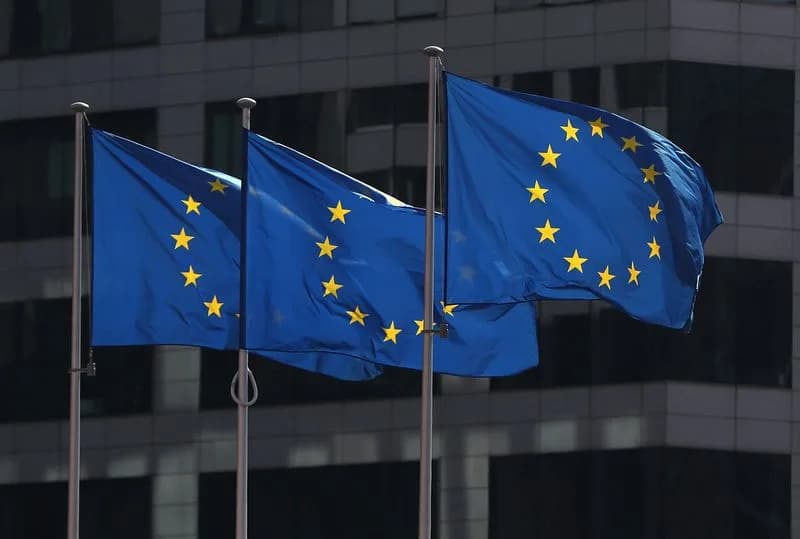
European Union flags fly outside the European Commission headquarters in Brussels, Belgium, April 10, 2019. REUTERS/Yves Herman
BRUSSELS, Sept 15 — European Parliament members voted on Tuesday to delete a provision that would have allowed the EU to temporarily suspend its carbon border levy if the measure pushed up import prices, setting the stage for tense negotiations with member states that support an "emergency brake."
The carbon border levy, in force since January 1, charges importers for CO2 emissions embedded in certain goods — including steel, fertilisers and other industrial products — to prevent cheaper imports from undercutting European producers who already face costs for their emissions.
In the vote, MEPs backed removing a clause that would permit temporary exemptions when "serious and unforeseen circumstances" cause price spikes. Instead, they propose using revenue from the levy to compensate affected sectors for any price impacts while preserving the incentive to invest in low-carbon production.
Negotiations between EU governments and the European Parliament will now determine the final regulation. Those talks are also expected to consider expanding the levy to additional product categories such as washing machines and car parts.
Several member states want to keep an emergency brake option. One proposed trigger would allow suspension if the price of the affected product rises by more than 50% within six months — a measure aimed at protecting consumers and sensitive industries from sudden shocks.
The European Commission proposed the emergency brake last year after France urged a temporary suspension of the levy on fertilisers to ease costs for farmers. The proposal remains divisive: industry groups warn that suspending the fee could undermine investment in low-carbon manufacturing and weaken the protection the levy is intended to provide for domestic producers.
Aluminium Loopholes Closed
Lawmakers also moved to tighten rules on aluminium imports. They voted to lower the shipment threshold that triggers the levy from 50 metric tons to 5 metric tons — a change intended to capture high-value, low-weight aluminium parts used in cars, doors and solar panels.
MEPs additionally backed extending the levy to include post-consumer aluminium scrap. That category had been excluded initially, raising concerns that foreign suppliers could increase scrap use to sidestep the levy and undercut European producers.
"Our companies will get absolutely eaten alive if these problems aren't solved," said Paul Voss, director general of industry association European Aluminium.
With divergent positions between capitals and Parliament, EU officials expect a series of "trilogue" talks to reconcile the competing priorities — balancing cost containment for consumers and farmers with long-term incentives for decarbonisation and industrial competitiveness.
(Reporting by Kate Abnett; editing by Inti Landauro and Kirsten Donovan)
Help us improve.