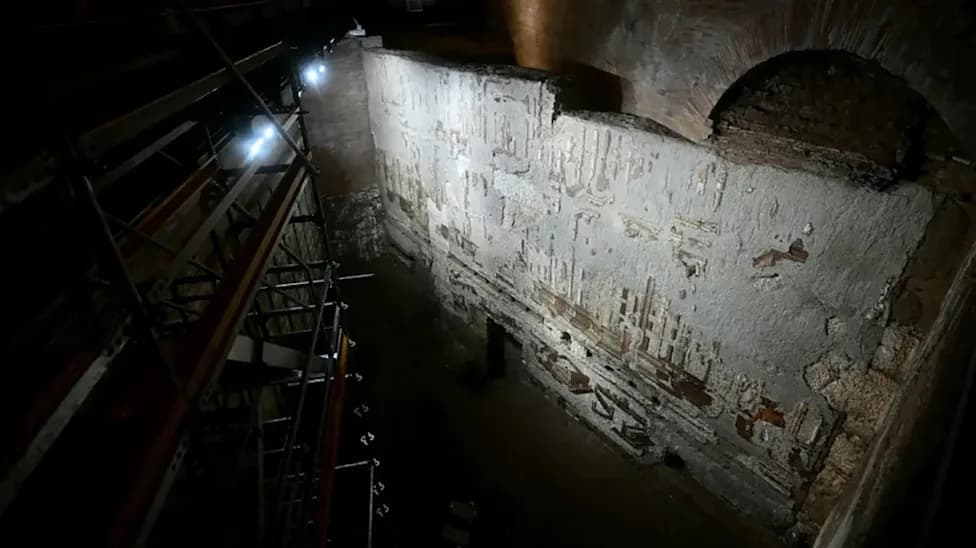
Teams at the Pompeii Archaeological Park have partially reassembled a vaulted ceiling fresco shattered by Mount Vesuvius in AD 79, recovering roughly 1,000 plaster fragments from a bakery-residence complex in the IX Region. Conservators have restored over 25% of the vault and identified the central scene as the myth of Dionysus and Ariadne. A custom, modular curved support allowed fragments to be aligned in the original arch; the reconstruction was unveiled at an international workshop and work continues to integrate newly excavated pieces.
2,000-Year-Old Pompeii Ceiling Fresco Partially Reconstructed — Myth of Dionysus and Ariadne Returns
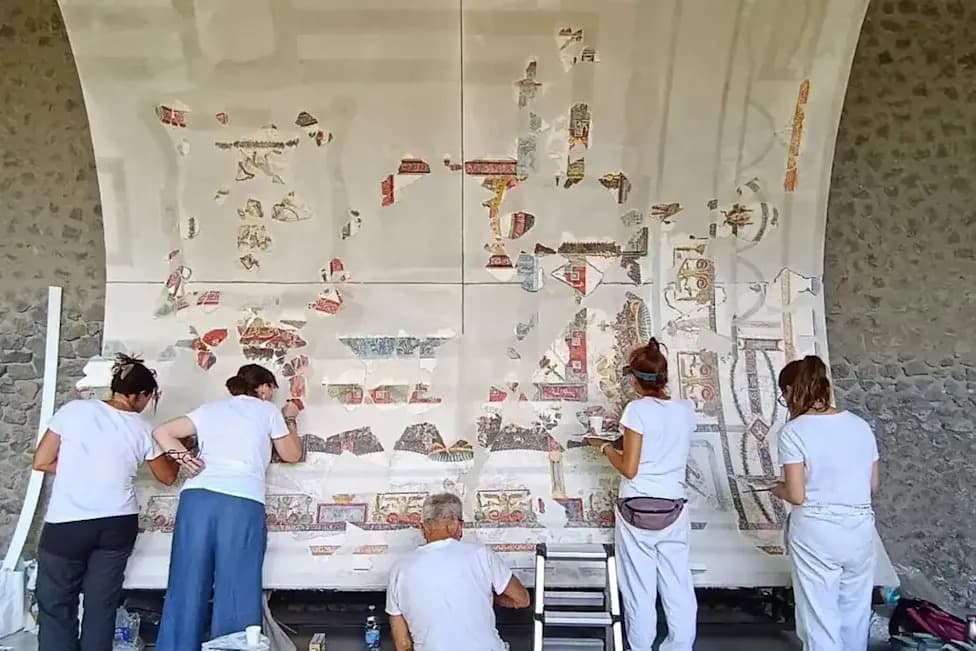
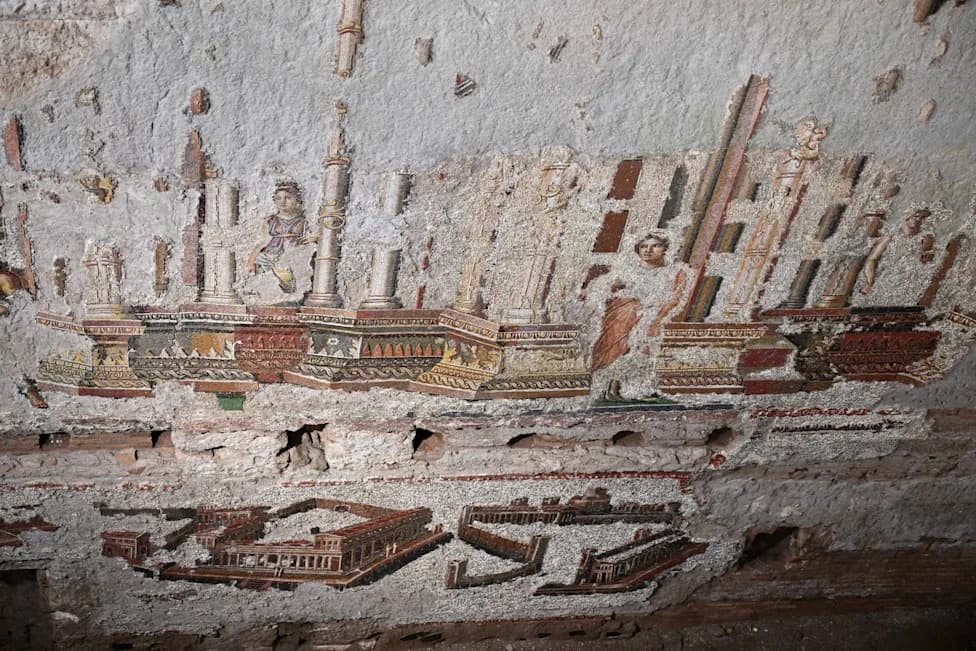
Restorers in Pompeii meticulously assembling thousands of fragile plaster fragments to rebuild a 2,000-year-old vaulted ceiling. ©Image Credit: Pompeii Archaeological Park
Imagine solving a 1,000-piece jigsaw with no box picture, half the pieces missing and the rest crushed by a volcanic blast nearly two millennia ago. That is the scale of the task facing conservators and archaeologists at the Pompeii Archaeological Park, who have now partially reassembled a vaulted ceiling fresco destroyed by Mount Vesuvius in AD 79.
Discovery and Context
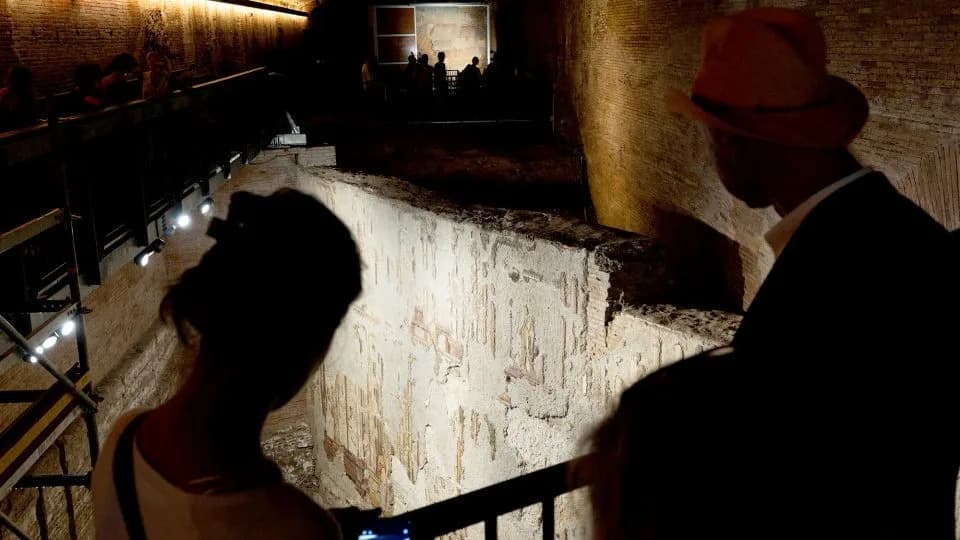
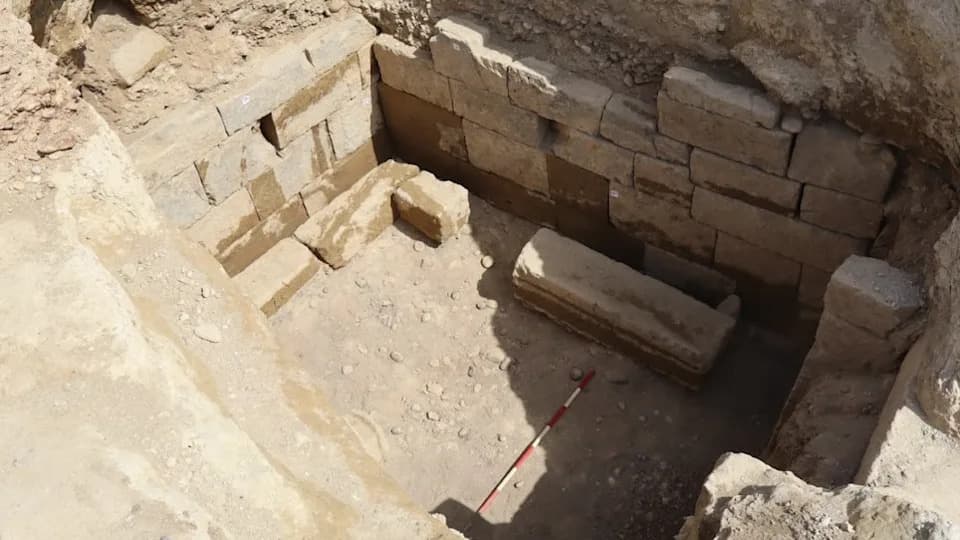
Excavations in Pompeii's IX Region revealed roughly 1,000 tiny plaster fragments from an arched banquet-hall vault buried beneath meters of volcanic ash. The fragments were found inside a complex that combined a bakery with an opulent residence — a building experts have described as a "bakery-prison," where enslaved workers reportedly toiled alongside donkeys to grind grain in cramped, dim conditions.
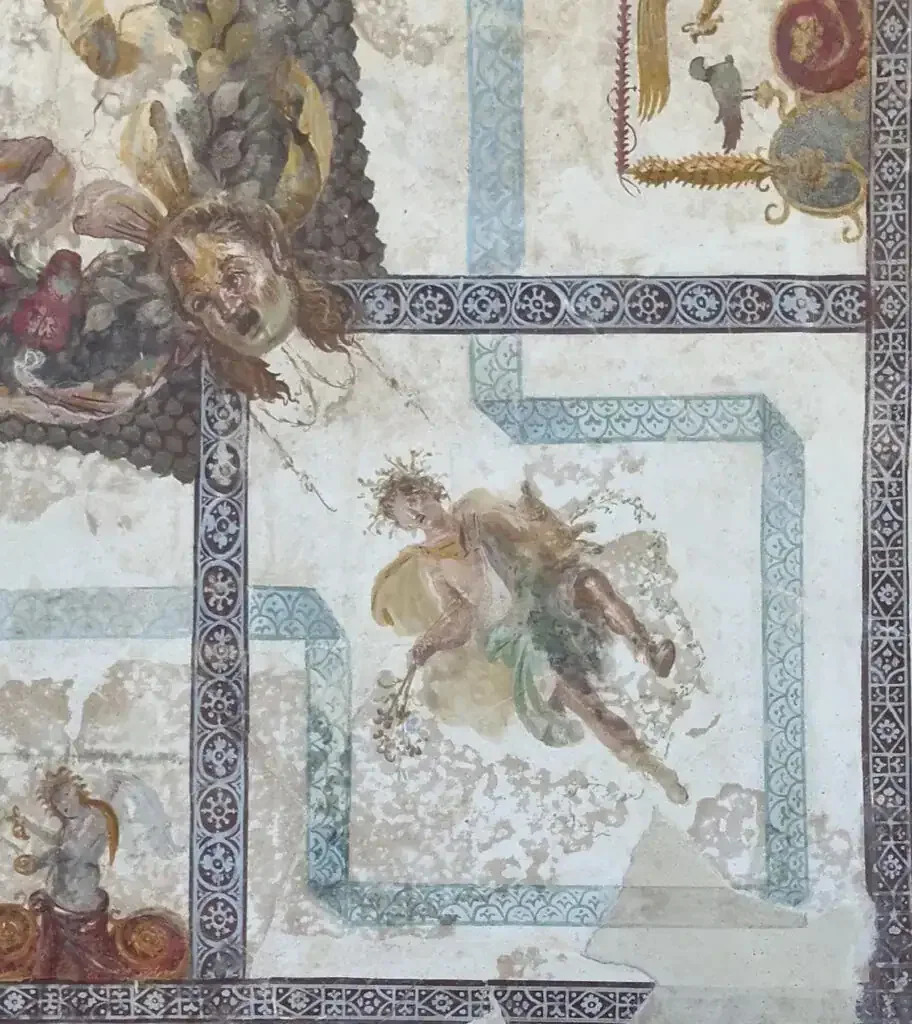
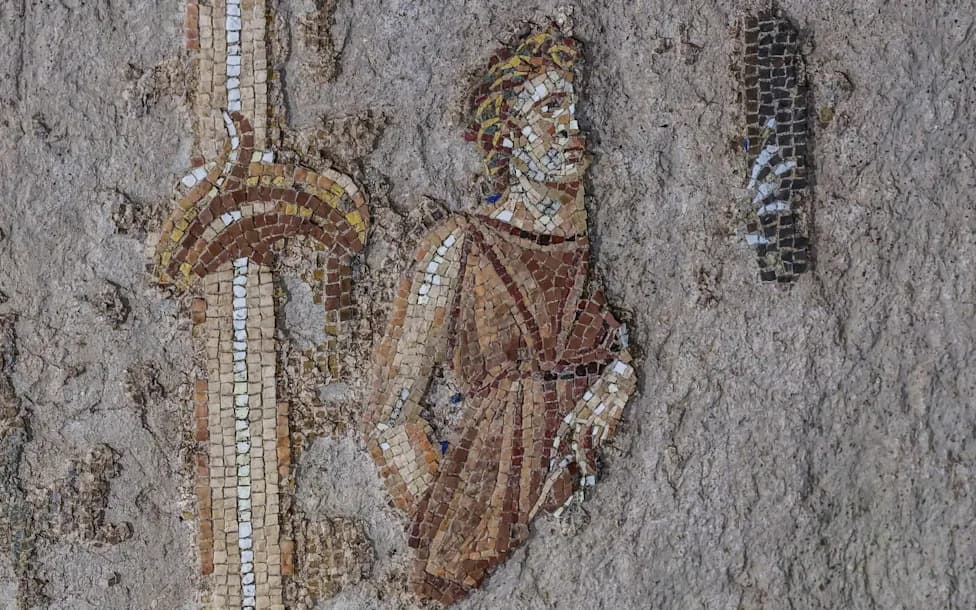
With just 25% of the masterpiece restored, archaeologists say the 2,000-year-old Pompeii ceiling fresco depicts the mythical romance of Dionysus and Ariadne. ©Image Credit: Pompeii Archaeological Park
What the Fresco Shows
Conservators have now reassembled more than 25% of the vaulted fresco. By comparing recovered fragments with other ancient imagery, researchers identified the central subject as the mythic romance of Dionysus and Ariadne — the god of wine discovering and taking Ariadne as his immortal partner after she was abandoned on Naxos. The surviving fragments reveal architectural motifs, slender figures and pigments that remarkably survived under the ash.
How Restorers Rebuilt a Curved Vault
Reconstructing a wall fresco is challenging; rebuilding a curved ceiling is harder still. To restore original perspective, conservators designed a bespoke, modular curved support that matches the vault's arch. Plaster fragments are positioned on this three-dimensional scaffold so images can be aligned in situ. Because the support is modular, newly excavated fragments can be slotted into the reconstruction as they are cataloged and conserved.
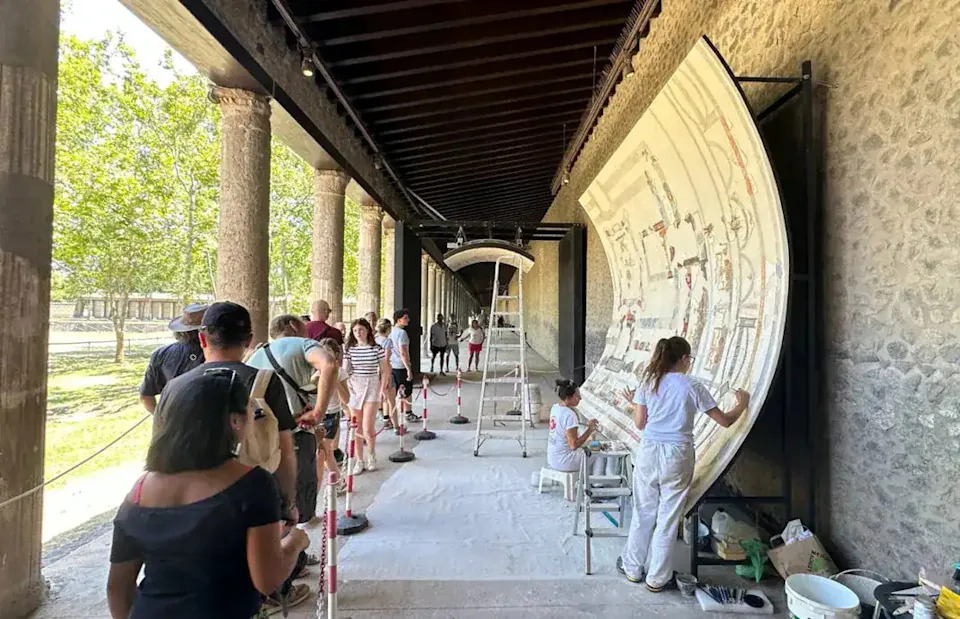
Researchers used innovative curved support structures to piece together the lost Pompeii ceiling fresco depicting the mythical lovers. ©Image Credit: Pompeii Archaeological Park
Presentation and Next Steps
The partially reconstructed vault was presented at the close of an international workshop held at the Pompeii Archaeological Park, a UNESCO World Heritage Site. Excavation and conservation continue, with teams hoping to recover and integrate additional fragments to expand the scene and refine details of the composition.
Why This Matters
Beyond its artistic value, the reconstruction offers fresh insight into Roman decorative programs, household ritual spaces, and the lived environment of a site where luxury and forced labor coexisted.
Sources: Pompeii Archaeological Park; contemporary press coverage including The New York Times, Smithsonian, and reports summarized on news aggregators.
Help us improve.