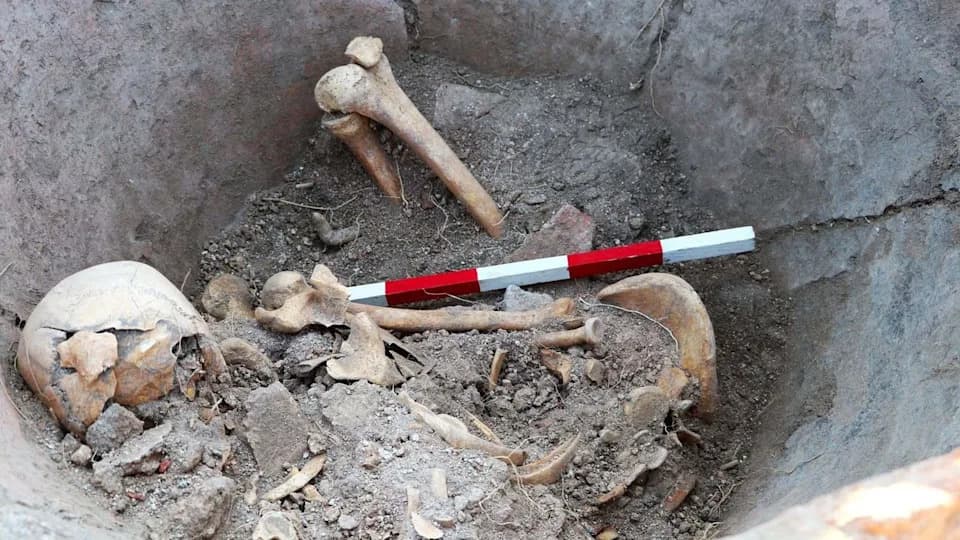
Excavation at Site 75 in Laos' Plain of Jars recovered densely packed bones from at least 37 individuals inside a single colossal stone jar. Radiocarbon dating places the jar's use across roughly 270 years, likely between A.D. 900 and 1200. Associated finds—pottery, glass beads, a copper bell and an iron blade—show long-distance links to South Asia, Mesopotamia and parts of China or Vietnam. The evidence supports the interpretation that some jars served as community-wide burial repositories and highlights broad trade and cultural connections.
Laos’ Plain of Jars Breakthrough: Giant Stone Vessel Held Remains of 37+ People
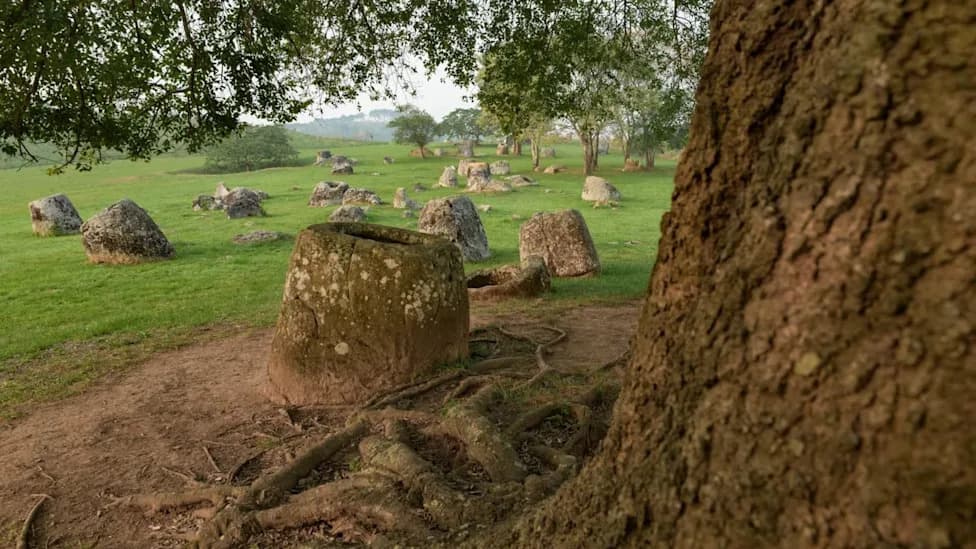
Photo Credit: James Cook University
A major excavation at Site 75 on Laos' highland Plain of Jars has produced the clearest evidence yet that some of the region's monumental stone jars were used in collective mortuary rites. Archaeologist Nicholas Skopal of James Cook University led fieldwork that uncovered densely packed human remains and grave goods inside one of the largest jars on the plateau.
What Was Found
The colossal jar—nearly 7 feet wide at its base—contained the bones of at least 37 individuals, from an infant of roughly 18 months to adults. Excavations across three field seasons recovered clustered skeleton elements alongside pottery sherds, several glass beads, a small copper bell and an iron blade.
Evidence of Intentional Burial Practice
The bones were not haphazardly deposited. Skulls were arranged around the jar's outer rim while long bones were grouped nearby, suggesting deliberate placement and an organized mortuary practice. Comparing repeated elements such as teeth and long bones allowed researchers to estimate a minimum of 37 individuals represented in the jar.
Dates, Trade Links and Broader Context
Radiocarbon dating indicates the jar was used for roughly 270 years, probably sometime between about A.D. 900 and 1200. Chemical analysis of several glass beads points to long-distance connections: some likely originated in South Asia, a couple may trace to Mesopotamia, and another possibly came from southern China or northern Vietnam. These trade links echo other regional finds that indicate extensive exchange networks across mainland and maritime Southeast Asia.
Why This Matters
This discovery helps resolve a decades-old question first raised when French archaeologist Madeleine Colani documented the jars in the 1930s. While archaeologists have recorded more than 120 jar sites, most jars are empty and their function remained uncertain. The Site 75 find supports the interpretation that at least some jars were used as collective repositories for bones—part of a mortuary tradition in which bodies may have decomposed elsewhere and cleaned bones were later interred in large stone containers.
Ongoing Research
Specialists at the Australian National University and other institutions are conducting detailed osteological analysis and attempting to recover ancient DNA. Future results could clarify kinship, population affinities, health, diet and mobility of the people whose remains were placed in the jar.
Beyond explaining a single vessel, the Site 75 excavation provides a framework for interpreting other jars on the Plain of Jars: empty jars may have once contained remains that later decayed, were removed, or were relocated. After nearly a century of speculation, this giant jar has shifted scholarly debate and opened a new chapter in understanding the social and regional connections of highland Laos.
Publication: The study appears in Antiquity; fieldwork was led by Nicholas Skopal (James Cook University) and reported in outlets including Earth.com.
Help us improve.