The latest Gallup poll finds U.S. approval of the Supreme Court at a record-low 33%, down from 39% a year ago. The decline was driven mainly by a sharp drop in Republican support, from 79% to 58%, while Democratic (12%) and independent (35%) approval remained largely unchanged. The survey, conducted July 1–19 after the 2025–26 term, notes mixed rulings for President Donald Trump. Gallup cites long-term partisan polarization as a key factor in lower approval levels.
Supreme Court Approval Falls to Record Low of 33% as Republican Support Slumps — Gallup
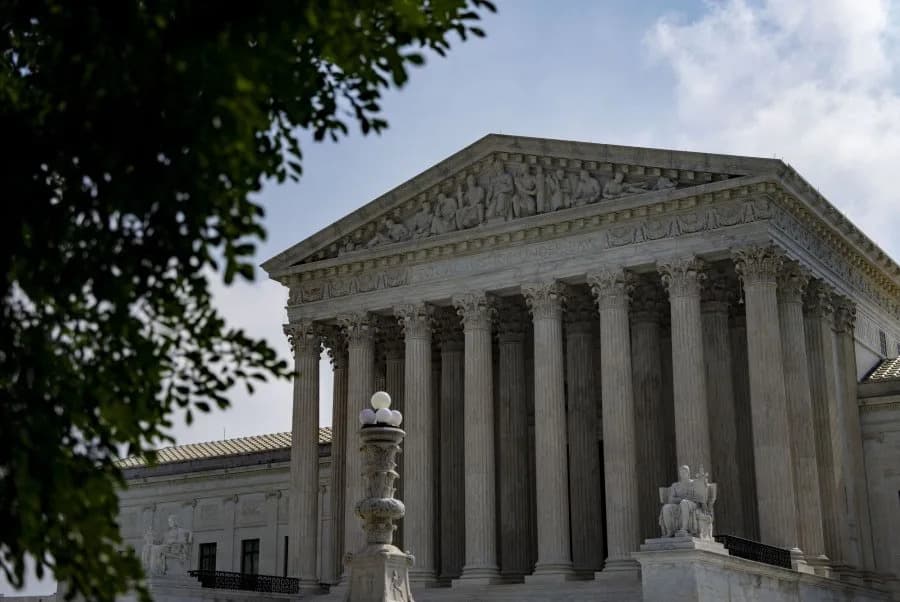
The Supreme Court of the United States is shown June 29 in Washington, D.C. Public approval of the Supreme Court is at a record low, a new Gallup poll said Tuesday. Photo by Bonnie Cash/UPI
Americans' approval of the U.S. Supreme Court's job performance has slid to a record low of 33%, according to a Gallup poll released Tuesday. The previous low was 39% recorded last year.
Gallup said the year-over-year decline was driven largely by Republicans. Republican approval fell from a near-record 79% last year to 58% in the current survey — the lowest level of Republican support since 56% in 2023. Approval among Democrats (12%) and independents (35%) remained essentially unchanged from the prior year and are near historic lows for those groups.
Gallup conducted the poll from July 1 to July 19, immediately following the close of the 2025–26 Supreme Court term. The organization noted that the court issued several mixed rulings for President Donald Trump and his administration this term: some decisions aligned with the administration's positions, while others did not.
Gallup highlighted rulings favorable to the Trump administration, including a decision that expanded the president's authority to remove members of independent administrative agencies and one that upheld state laws restricting participation of transgender female athletes in women's sports. At the same time, the court rejected the administration's legal theory for imposing tariffs without congressional approval, struck down an executive order that sought to limit U.S. birthright citizenship, and, on due-process grounds, denied an immediate attempt to remove Federal Reserve Board member Lisa Cook.
Historical Context and Partisan Polarization
The first Gallup measure of Supreme Court approval was conducted in 2000, when public approval stood at 62%. Majorities generally approved of the court's performance through about 2010. Since 2010, national approval has tended to hover around 40%, a shift Gallup attributes largely to growing partisan polarization.
From 2000 to 2010, party members' views of the court typically differed by about 18 points on average. Since 2010, that partisan gap has widened to an average of 32 points, reflecting deeper divisions in how Democrats and Republicans evaluate the judiciary.
Gallup surveyed 1,200 adults between July 1 and July 19. The poll's margin of error is ±4 percentage points.
Help us improve.