AI tools are enabling realistic but false videos to spread during Typhoon Noul and recent floods in China, creating confusion and occasionally triggering real-world panic. Authorities have detained creators and launched a nationwide crackdown on fabricated disaster content, but experts say detection still lags behind generation. Recommendations include better verification, public education, trusted early-warning channels and clearer platform accountability to limit harm.
China Battles Surge Of AI-Generated Fake Videos After Typhoon Noul
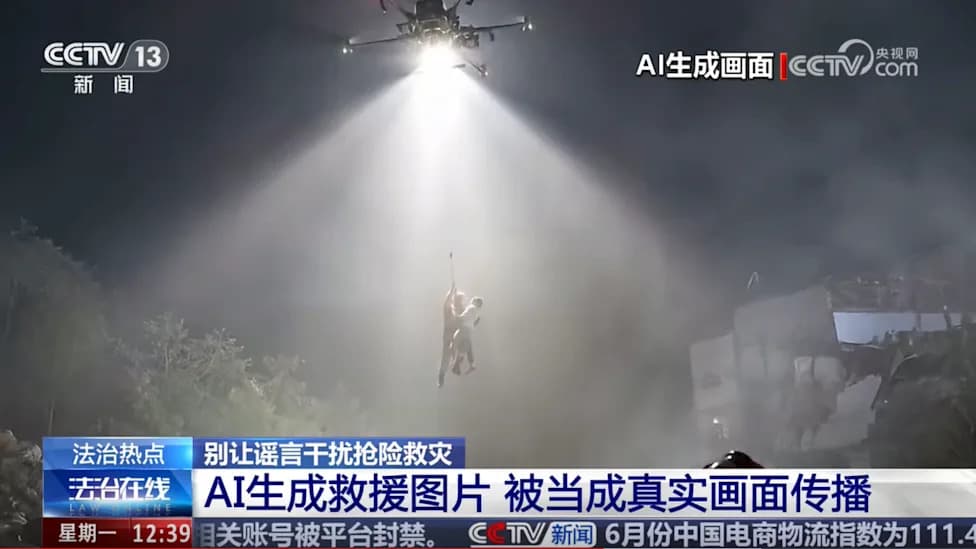
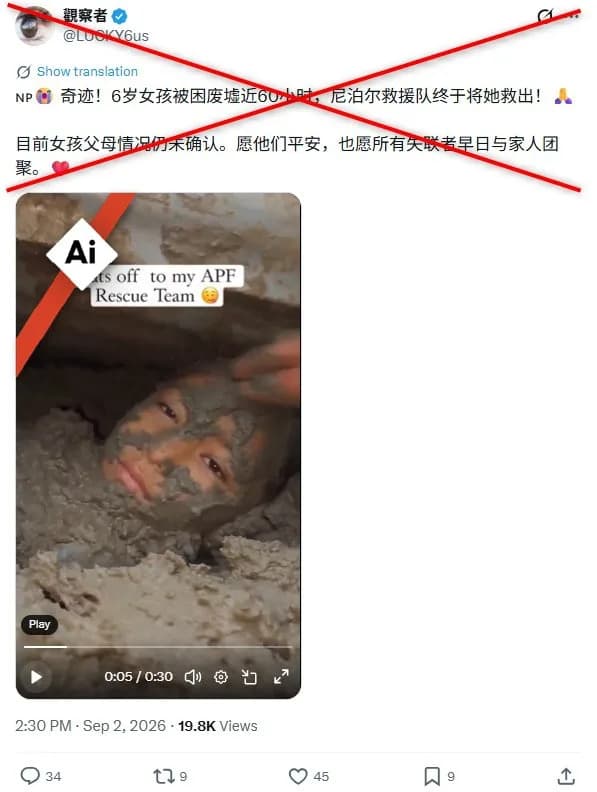
Screenshot shows Chinese state media debunking AI content [Chinese state media]
As China copes with damage from Typhoon Noul, officials are confronting a second, less visible crisis: realistic but false videos created with artificial intelligence that are spreading across social platforms and complicating rescue efforts.
Fake Videos Flood Social Media During Storms
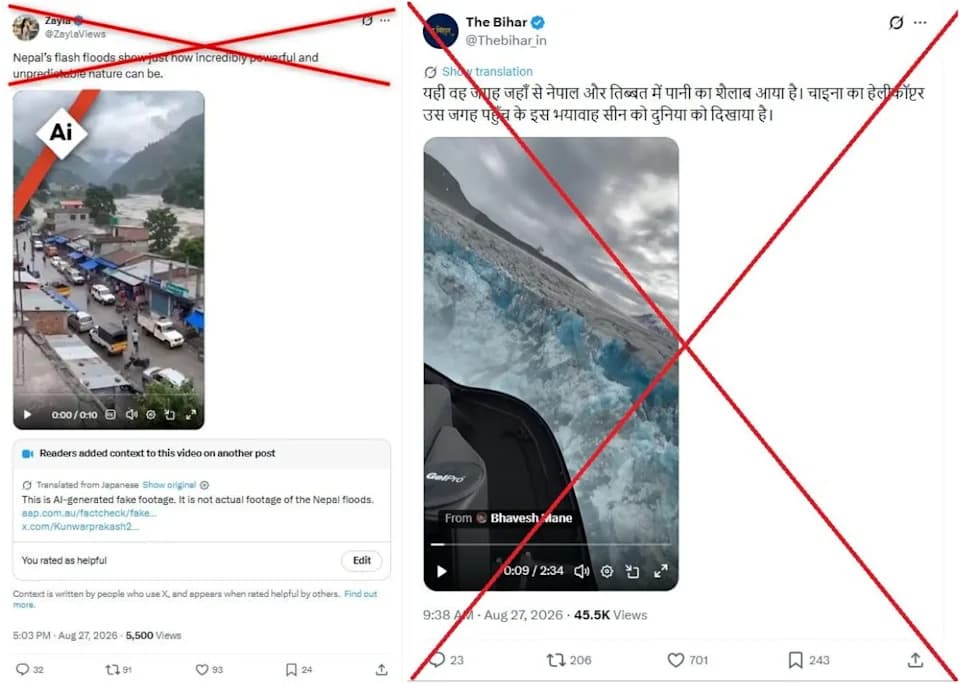
In recent months, powerful storms and floods have been accompanied by a wave of misleading footage. Examples include doctored scenes of dead bodies in floodwaters, exaggerated depictions of flooding in unaffected areas, falsified emergency responses and manipulated images that repurpose real incidents to sow confusion.
Real-World Consequences
Some fabricated clips have triggered tangible harms: false claims of power outages prompted panic buying of supplies in some communities. After floods in Hengzhou city, Guangxi, allowed hundreds of snakes to escape from a breeding farm, altered images circulated claiming crocodiles had been released into a river. In other cases, videos suggested rescuers prioritized animals over people — inflaming public outrage and undermining trust during evacuations.
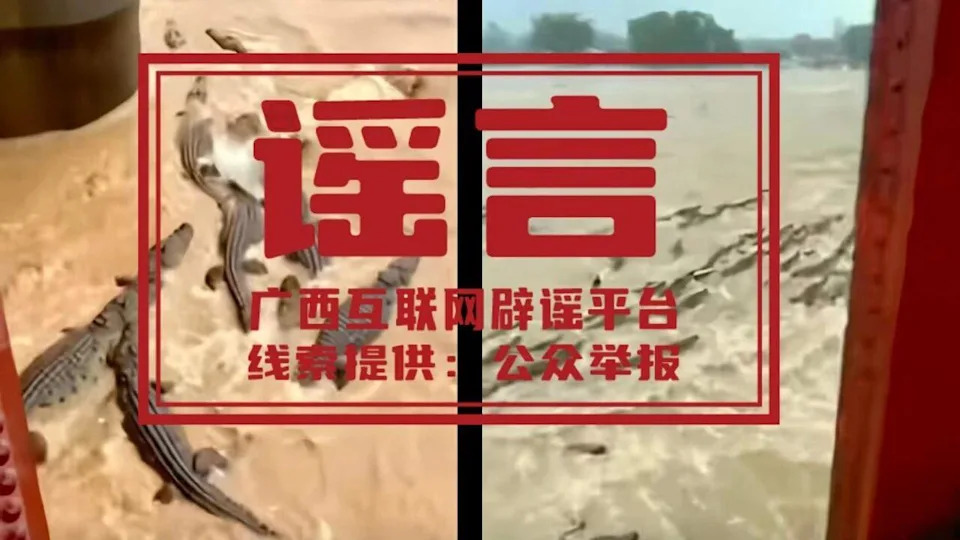
Fake content purportedly shows crocodiles being released into a river [Social media]
"Many of these content creators use disaster news to try to gain followers, knowing that more sensational or exaggerated content will garner more likes and more views. They are deliberately fabricating information to grab people's attention," Huang Zhihua, Deputy Chief in charge of online public security for Zhejiang Police Department, told Chinese state media.
Why AI Lowers The Barrier To Misinformation
Experts warn that AI tools dramatically reduce the technical skills required to generate convincing text, images, audio and video. Professor Chen Bin wrote that simple prompts can produce highly realistic but entirely fabricated material at scale. Professor Gao Fuping added that motivations range from amusement and clicks to deliberate attempts to cause panic or social unrest.
Authorities Respond — But Trust Is Fragile
Authorities have detained and punished people for producing bogus reports and manipulated video content, with penalties ranging from fines to detention and, in cases with severe fallout, prison terms of up to seven years. On 23 July, China's Cyberspace Administration ordered a nationwide crackdown on fake internet content related to floods and other disasters, directing local branches to target fabricated data, malicious editing, staged scenes, misattributed historical footage and impersonation of officials.
Police say they have created a specialised task force to monitor social media — especially short-video platforms — and to investigate and handle these cases quickly. Gao Kai of the Ningbo Public Security Bureau urged the public to "approach disaster-related information from unknown sources with scepticism and rely on official announcements."
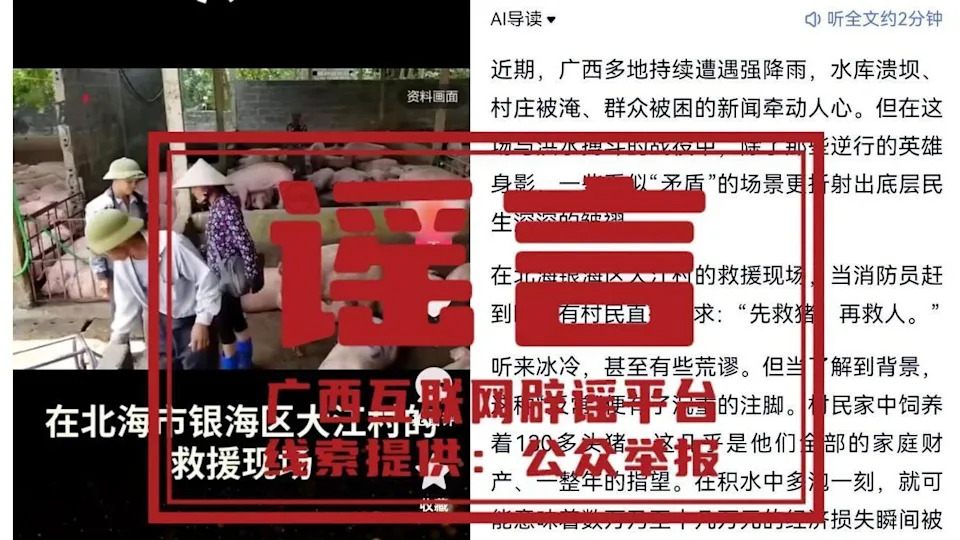
AI content purports to show the rescue of pigs prioritised over people [Social media]
Limits Of Detection And The Need For Trusted Channels
Researchers warn that detection tools currently lag behind generation methods, creating a persistent cat-and-mouse dynamic. Professor Xu Xiaoke advocates stronger verification standards — checking geographic metadata, timestamps and image sources — and the development of trusted information infrastructure such as official early-warning systems and disaster interfaces for accredited media.
Legal And Institutional Challenges
China is heavily investing in AI: state media Xinhua reports more than 6,000 AI companies. That scale raises both innovation and misuse risks. Some experts argue platforms and AI developers should share legal responsibility for enabling the spread of harmful material, while others say existing laws are adequate if enforced and publicised.
Public confidence in official sources has been weakened by past incidents. For example, local instructions to soften reporting about a Liulan Dam breach near Naning preceded a catastrophic release of water that led to at least 26 deaths; earlier controversies include accusations that officials concealed or underreported deaths after severe flooding in Henan province in 2021. Such episodes create a trust vacuum that helps false content gain traction.
What Experts Recommend
- Combine stronger verification technology with public education about spotting misinformation.
- Build trusted, transparent official channels and early-warning interfaces that journalists and the public can rely on.
- Hold platforms and creators accountable through clearer rules and targeted enforcement, while improving detection research.
- Prepare proactively for high-risk moments — elections, public-health crises, armed conflicts and natural disasters — rather than reacting after false information goes viral.
As extreme weather events become more frequent and AI tools more powerful, experts warn that misinformation will likely increase in both volume and speed. Governments, platforms and civil society will need coordinated responses to prevent fabricated content from worsening real-world harm during emergencies.
Help us improve.